
That Whirr Behind the Seats – Refurbishing Fuel Pump Assembly for Honda S2000
Honda S2000 Restoration Journal

Part of our Honda S2000 Restoration & Tuning Series
Refurbishing the fuel pump assembly on a Honda S2000 at TR imports UK.
In my previous article, Honda S2000 Restoration & Tuning Index – Our S2000 Isn't Just a Demo Car, I explained why our S2000 is much more than a demonstration vehicle.
It has become our engineering test platform.
Most of its restoration work has been preventative maintenance. We replace age-related components before they fail.
This time, we’re looking at the fuel pump and its surrounding components.
Whirr. Silence. Start.
Turn the key and switch on the ignition.
You should hear a short whirring sound from low down behind the seats.
“Whirr…”
Then silence.
Have you ever noticed it?
If not, sit in your S2000 and try it.
That sound is the fuel pump priming the fuel system.
Whirr.
Silence.
Press the start button.
Crank, crank, crank… Vroom.
That is the normal starting sequence of an S2000.
If the whirr disappears, however, the engine may crank without starting.
Age Matters, Even on a Low-Mileage Car
A fuel pump spends its life submerged in petrol.
Even the newest S2000s are now around 17 years old. The earliest cars are more than 25 years old.
Low mileage does not prevent deterioration caused by age, inactivity or old fuel.
In Japan, S2000 specialists often consider preventative fuel-pump replacement once a car has passed ten years or 100,000 kilometres.
Check your car’s service history.
Does it show that the fuel pump has been replaced?
For many S2000s, the answer will be no.
Hearing the whirr today only tells you that the pump worked this time. It does not tell you how much life it has left.
If it fails at home, the inconvenience may be manageable. If it fails during a tour or road trip, recovery becomes part of the journey.
Genuine Honda or SARD?
A genuine Honda fuel pump costs more than ¥80,000 in Japan.
Include the surrounding components and the parts cost can easily exceed ¥100,000, before labour.
Preventative maintenance gives us time to consider other options.
Many S2000 owners in Japan use a SARD fuel pump. It costs around half the price of the genuine pump and provides a higher fuel-flow capacity.
The standard pump is generally believed to deliver either 165 L/h or 195 L/h, although Honda has not published an official figure.
SARD offers 235 L/h and 265 L/h versions that can be used with the standard fuel-pressure regulator. The 235 L/h pump can support applications producing up to approximately 450 horsepower.
Our S2000 does not need 450 horsepower.
So, 235 L/h was enough.
Decision made.
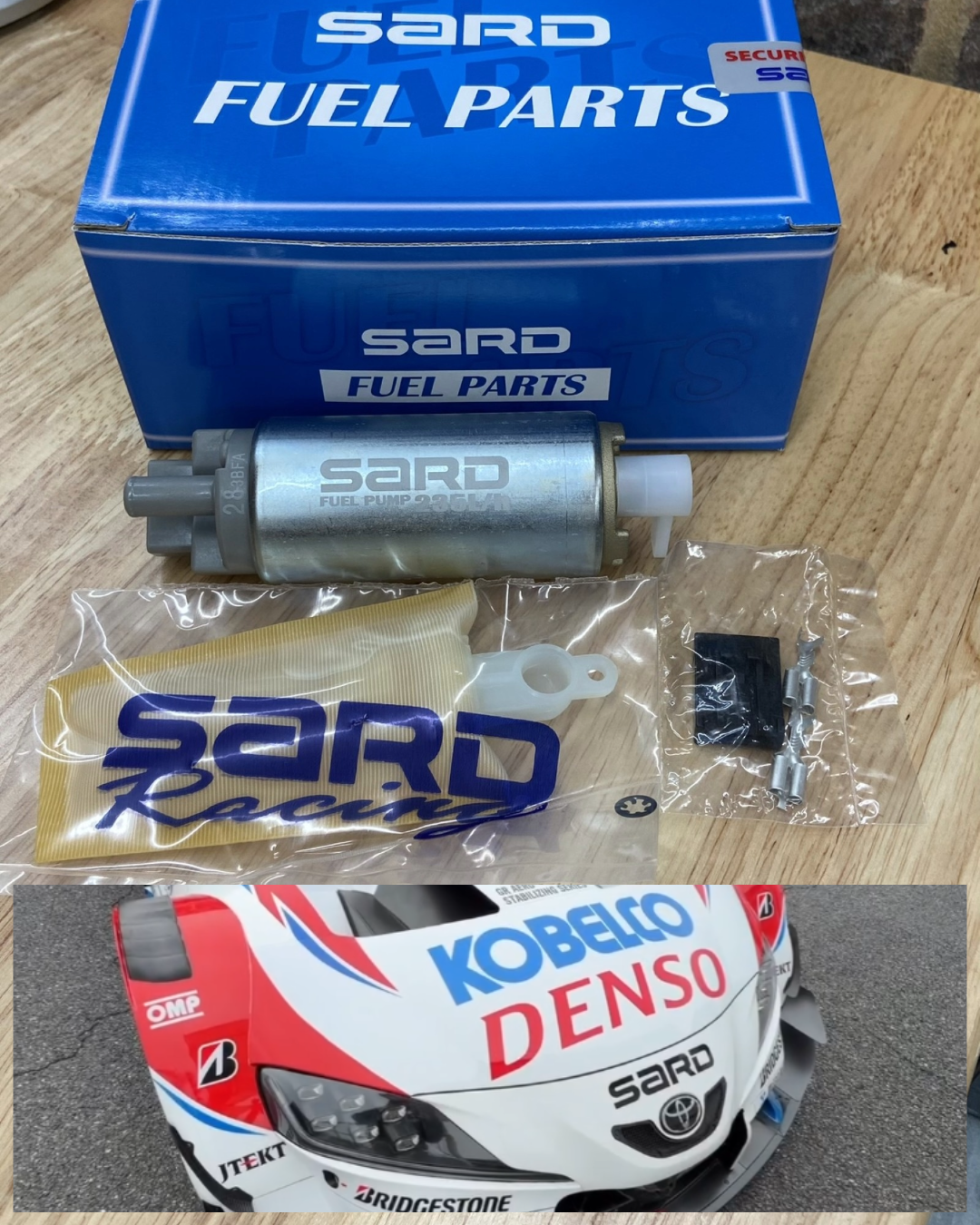

The 235 L/h SARD pump ASSY, supplied by SARD Japan, together with the genuine Honda hoses, strainer, filter, regulator, gaskets, and surrounding components used for the refurbishment.
Why We Replaced Ours
Our TR imports UK demonstration car is a 2005 AP1 UKDM (Drive-by-cable) - the equivarent of AP1-130 or the final mid-term model.
When we bought it in 2021, it was 16 years old and had covered approximately 75,000 miles, or 120,000 kilometres.
There was no record of a previous fuel-pump replacement.
We therefore included the fuel pump assembly among the first preventative maintenance jobs in the car’s restoration programme.
How We Refreshed the Fuel Pump Assembly
The replacement process looks something like this.
Access to the fuel tank is particularly restricted on a soft-top S2000. First, the storage tray behind the seats must be removed from inside the cabin. The rear bulkhead panel is then removed from the boot to create enough working space.
A hardtop setup can make access slightly easier.
Either way, this is one of those jobs where experience can save a surprising amount of time.


Removing the interior trim and rear bulkhead panel to gain access to the fuel tank.
Once access has been created, the wiring harness is disconnected, and the fuel strainer assembly can be removed.
Most of this work is carried out from the boot.
It is not particularly kind to your lower back.


The top of the fuel strainer assembly before removal.
There is another concern.
Dirt accumulated over many years, together with fragments of ageing insulation, must not be allowed to fall into the fuel tank.
The assembly is carefully lifted out while the surrounding area is kept clean.
The inside of the tank can then be inspected before the opening is covered to protect it from contamination.
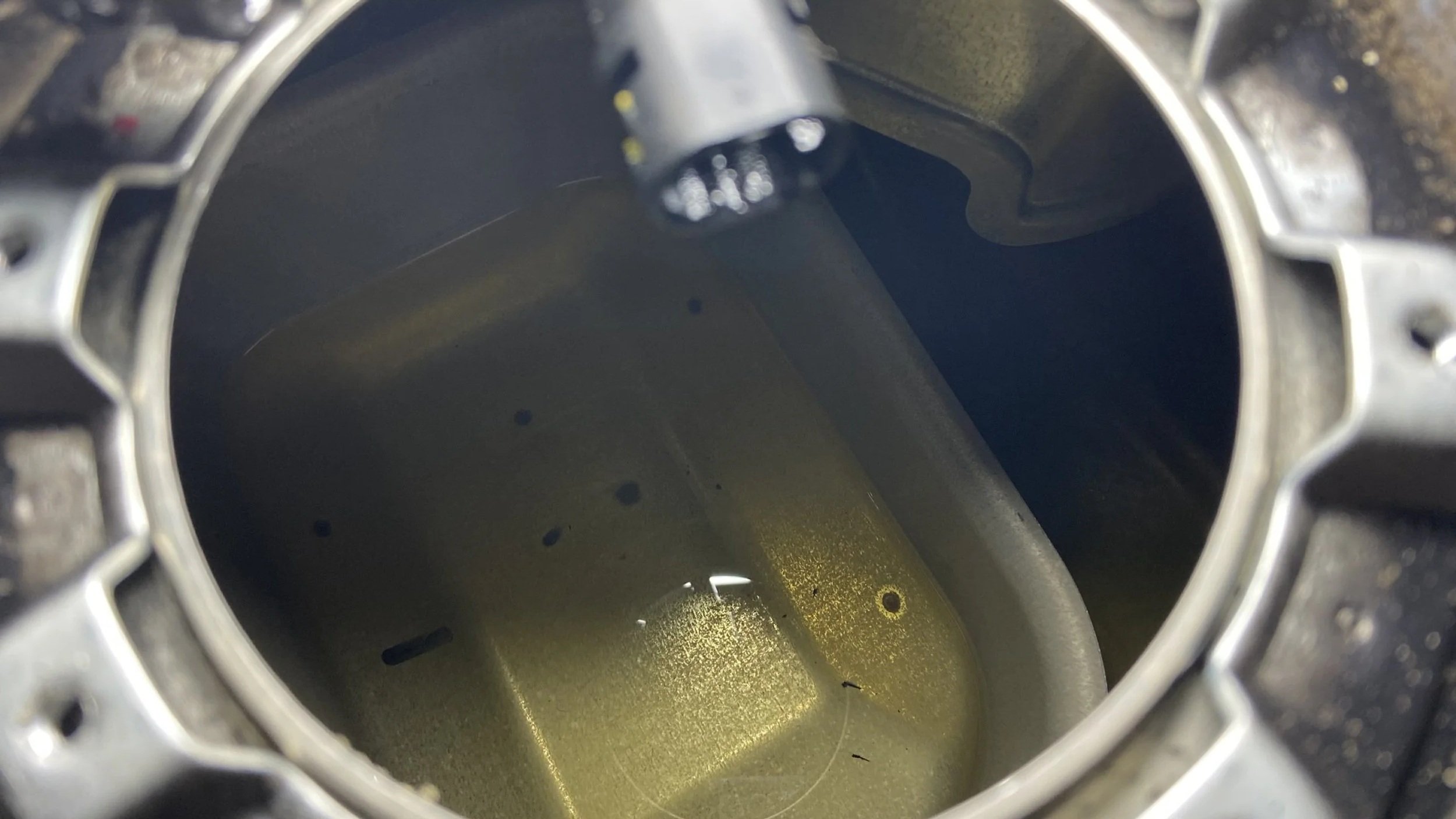
Inspecting the inside of the fuel tank before covering the opening.
The next stage takes place on the workbench.
The removed strainer assembly is carefully dismantled so that the original pump and wiring can be taken out.

The original fuel strainer assembly dismantled on the workbench.
A new pump harness is prepared, and the hoses, regulator, filters, gaskets, clips and other age-related components are renewed at the same time.
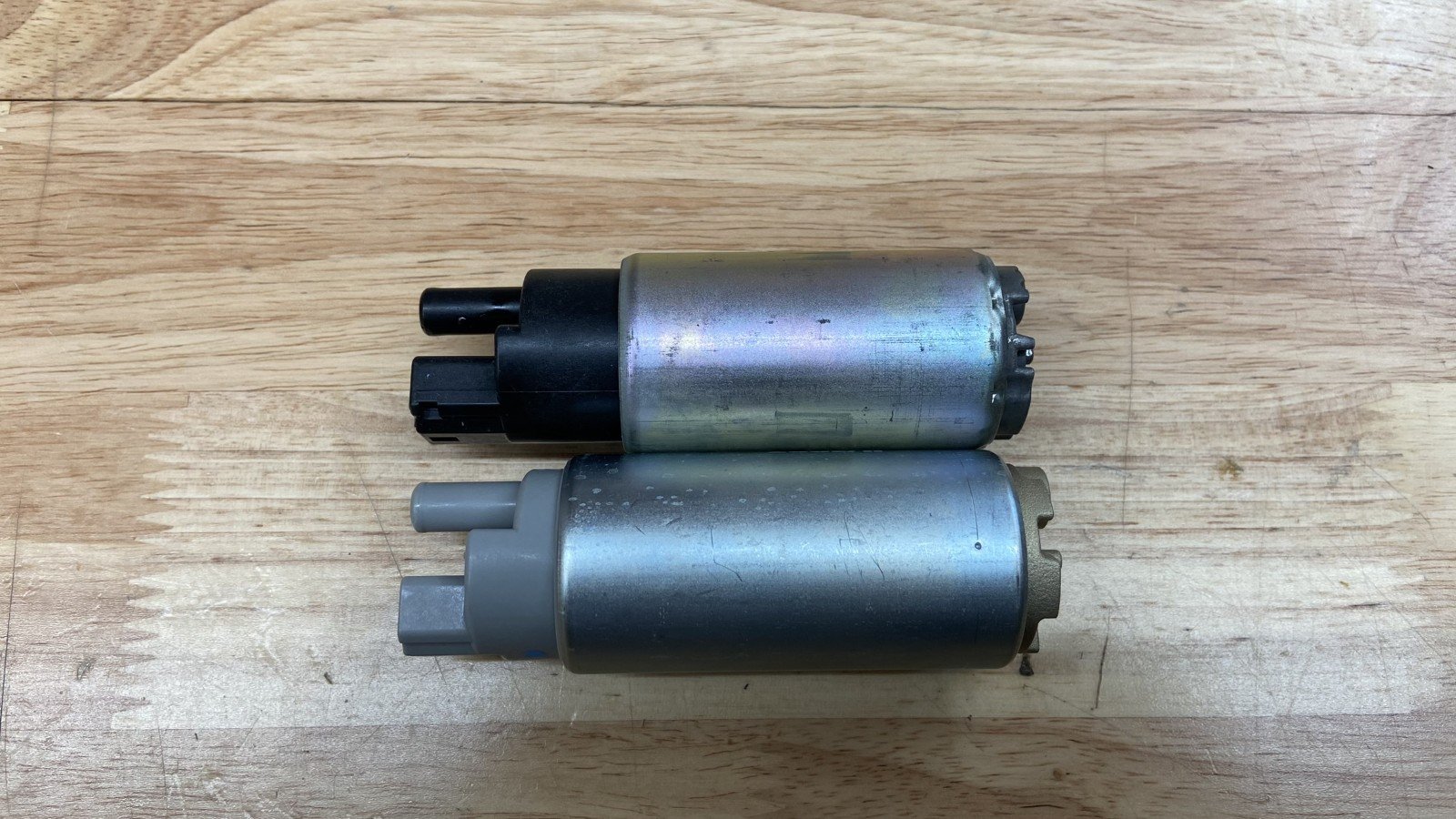

Comparing the original fuel pump with the replacement SARD unit.
This refreshes the complete assembly instead of installing a new pump among components that have already spent many years inside the tank.

The refreshed fuel strainer assembly, ready to return to the tank.
Still Whirring
The rebuilt assembly was returned to the tank and tested.
Five years later, our S2000 continues to perform reliably on the road and on the circuit.
There are several preventative maintenance jobs to consider after buying a used S2000. Components that can leave the car unable to move deserve early attention.
The fuel pump is one of them.
Every time we turn the key in our S2000, we still hear the same sequence:
Whirr.
Silence.
Start.
Your Plan
You can follow the complete restoration of our demonstration S2000 here—and start planning your own restoration journey:
