
When Should You Replace Your S2000’s Ignition Coils?
Understanding ageing, spark-plug maintenance and the choice between genuine replacements and performance coils
Part of our Honda S2000 Restoration & Tuning Journal Series
Last week, we followed the fuel into the engine bay, looking at the hose, pulsation damper, injectors and pressure regulator in our S2000 fuel-system refresh.
This week, we move to the spark that starts combustion.
When were the ignition coils on your S2000 last replaced?
You may know when its oil was changed. You may even remember the last set of spark plugs. The coils are often a different matter.
There is no familiar routine replacement date prompting the owner to renew them. Yet we know that they age and fail.
For an owner intending to keep enjoying an S2000, I think their replacement history deserves a place in the maintenance plan.
1. What Is Inside an Ignition Coil?
The S2000 uses direct ignition: each cylinder has its own coil positioned above its spark plug.
Astemo explains that an ignition coil uses two windings with different numbers of turns. Current flowing through the primary winding creates a magnetic field. When that current is switched off, the changing magnetic field produces a high voltage in the secondary winding.
That voltage allows a spark to jump across the plug’s electrodes and ignite the compressed air–fuel mixture.
Inside the assembly are fine copper windings, a magnetic core, insulating materials and electrical connections.
The insulation is essential. We want the electrical discharge at the spark plug—not somewhere inside the coil or along its outside surface.
NGK, part of Niterra, explains that these compact coils must withstand engine-bay heat, moisture and exposure to oil and petrol vapours. Their materials have to keep the high voltage where it belongs.
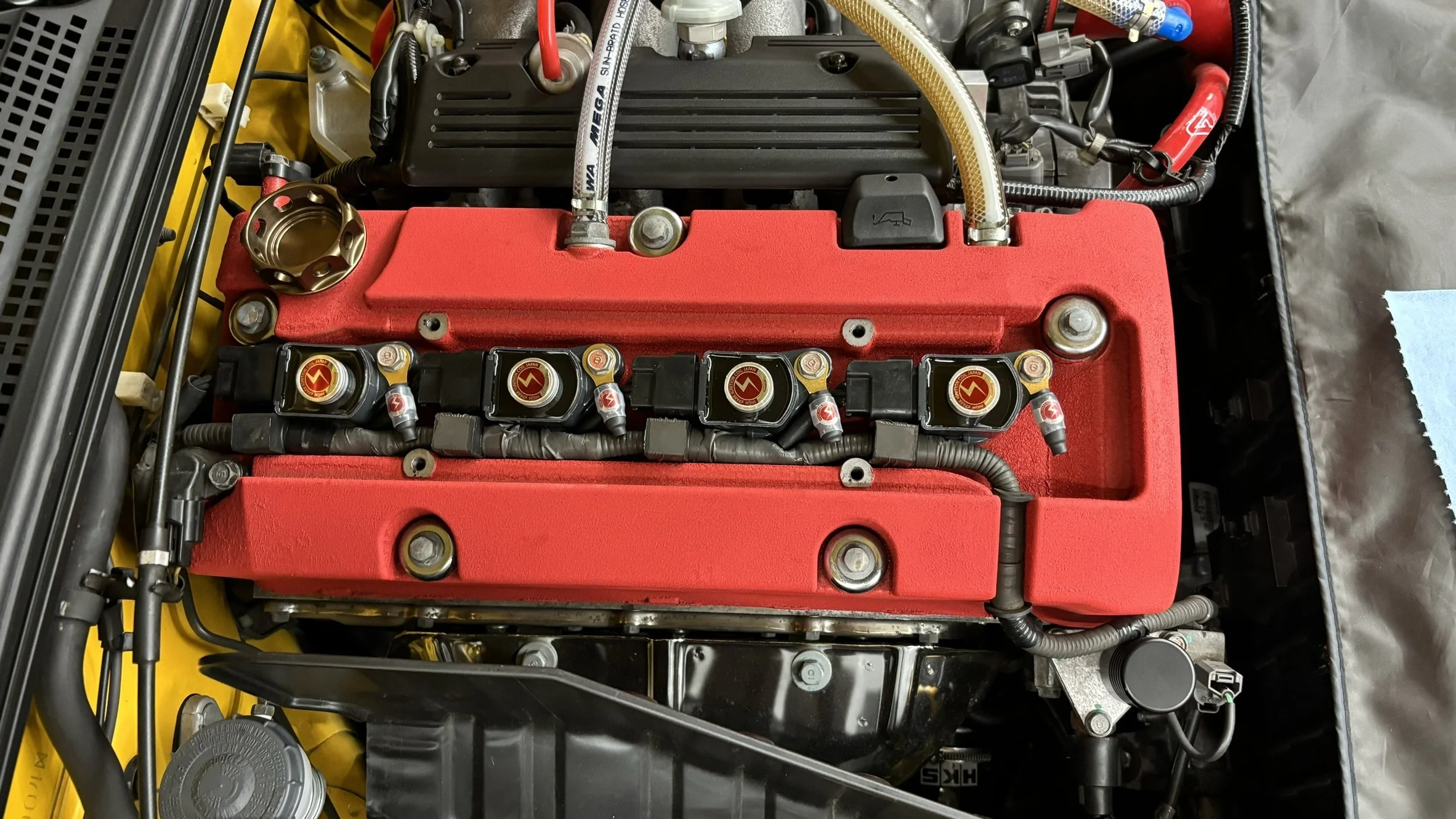
Four individual ignition coils. Each supplies the spark plug for one cylinder.
2. Why Can a Coil Seem to Fail Suddenly?
From the driver’s seat, a failure can seem sudden. Yesterday the engine ran normally; today it hesitates or misfires.
The deterioration behind that change may have been developing for much longer.
DENSO explains that the metal and resin inside an ignition coil expand by different amounts as temperatures change. Because the internal components are held together, those differences create thermal stress.
If the insulating resin cracks, the result can be a broken copper winding or a path through which high voltage escapes instead of reaching the plug.
Think about the environment of an S2000 coil: attached to a hot engine, cooling after each journey, then warming again the next time you drive.
At higher engine speeds, it also has to repeat its electrical work more frequently.
That is why I would not assess a coil’s remaining life from mileage alone. Its operating history matters too: heat, temperature changes, vibration, contamination and the condition of the rest of the ignition system.
Two cars with the same mileage need not have put their coils through the same life.
3. What Does “Misfire” Mean?
A misfire is a combustion event that does not take place properly.
An ignition-related misfire occurs when the mixture does not receive a suitable spark at the required time. The cylinder then fails to make its normal contribution to the engine’s work.
You may feel uneven idle, hesitation, interrupted acceleration or a loss of performance.
DENSO lists difficult starting, poor drivability, stalling and increased fuel consumption among the symptoms associated with ignition-coil problems. It also identifies several possible causes, including insulation deterioration, worn plugs, oil or water contamination and electrical-supply faults.
The symptoms tell us to investigate. They do not identify the coil by themselves.
As we discussed in the fuel-system article, a clear maintenance history gives that investigation a much better starting point.
4. Your Spark Plugs Affect Your Coils
This is the relationship I particularly want owners to understand.
The coil provides the electrical energy. The spark plug provides the controlled gap across which the spark must jump.
As its electrodes wear, that gap grows.
NGK explains that an enlarged gap requires a higher voltage and puts additional strain on the ignition system. A worn plug therefore affects more than the plug itself.
Astemo makes the connection directly: advanced electrode wear increases the coil’s operating load and can shorten its service life. It recommends replacing the plugs when replacing the coils.
Looking after the plugs is therefore part of looking after the coils.
Correct plugs, maintained in good condition, remove one avoidable source of electrical stress. They do not stop every other ageing process inside the coil, but they help us avoid making its job unnecessarily difficult.
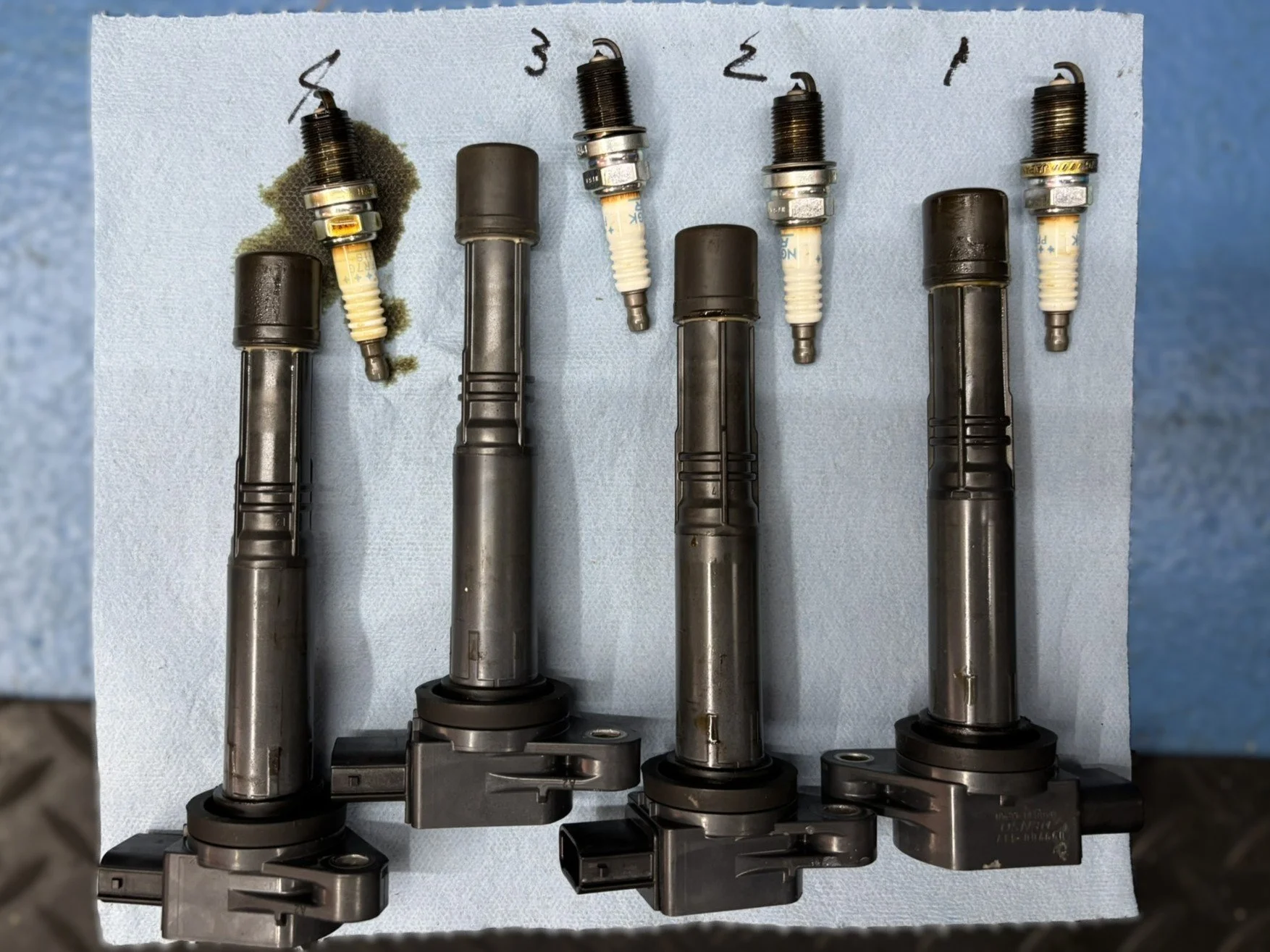
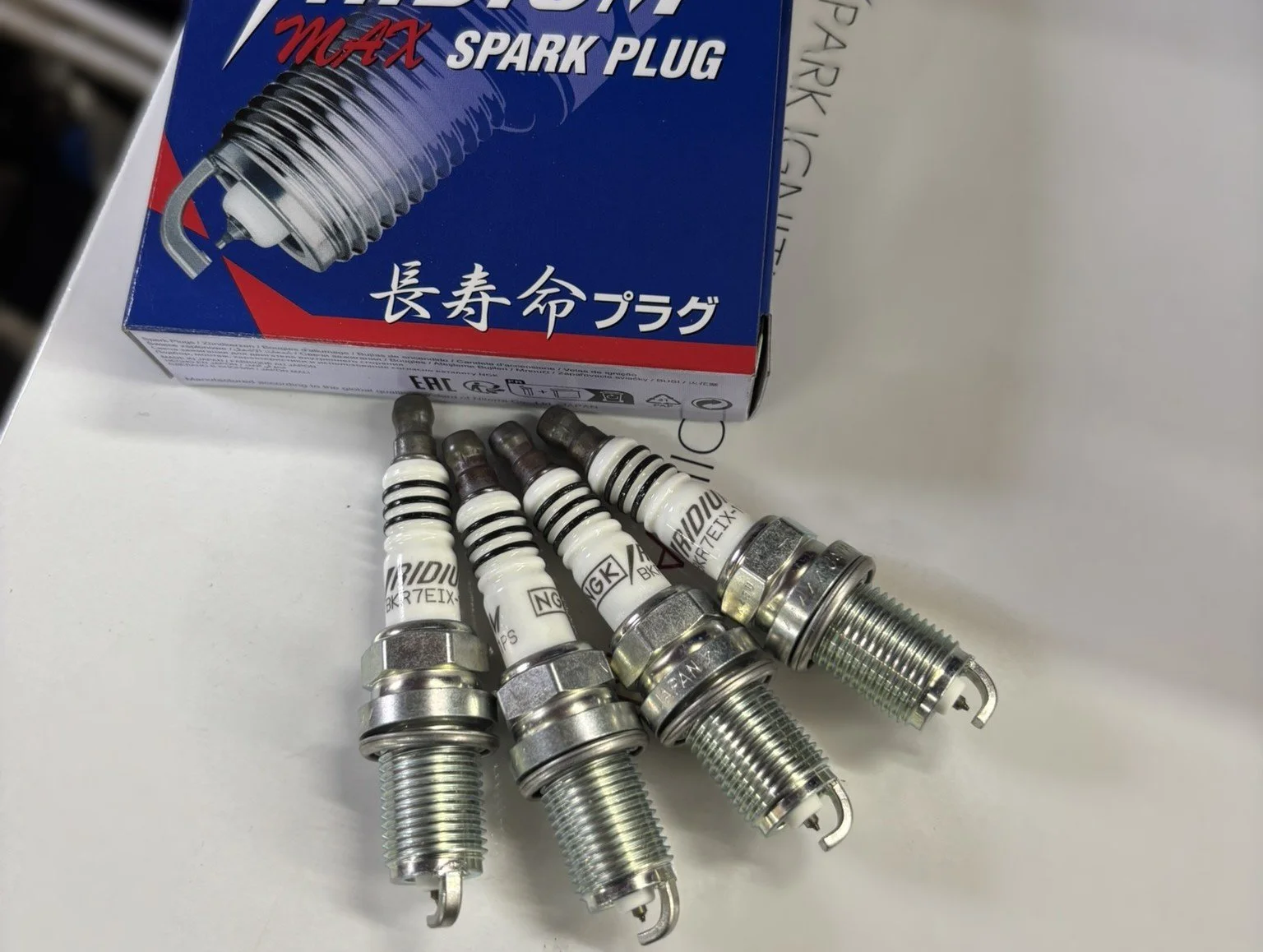
Left: Poorly maintained spark plugs affected the ignition coils. Right: Brand-new NGK IRIDIUM MAX spark plugs. The correct plug selection and condition are crucial to the entire ignition system.
A Service Limit Is Not a Target
When you inspect your S2000’s spark plugs, check the electrode gap against the specified 1.0–1.1 mm, alongside electrode wear, insulator condition and deposits.
For preventative maintenance, you do not need to wait until the plugs reach their replacement limit. Visible wear or deterioration gives you a reason to renew them sooner.
5. Start with the History of Your Own Car
Do you know when your S2000’s ignition coils and spark plugs were last replaced?
Start with your service records. Look for the replacement date, mileage and products fitted. This gives you a starting point for deciding what needs attention now.
If you have no records, inspecting the plugs is a useful first step. Their condition can help you decide whether to renew them and investigate the coils further.
When you remove the coils, also look at the boots, connectors and plug wells. Check for cracks, damaged connections, oil or water. NGK describes the coil, boot and spark plug as parts of the same high-voltage circuit, so the surrounding components matter too.
Removing the coil gives you access to inspect the plug well and surrounding connections.
You may also find it useful to drive a friend’s well-maintained S2000. How does yours compare when starting, idling and accelerating?
When you drive the same car for years, you can gradually become accustomed to a less responsive engine. A comparison can help you notice changes that have become familiar—and give you a reason to investigate your own car’s ignition system.
6. Give Your Ignition System a Known Starting Point
If your S2000’s coils and plugs have an unknown history, replacing all four coils and all four plugs together gives you a clear starting point for future maintenance.
Astemo recommends replacing the coils across all cylinders together because the remaining coils have also been exposed to ageing. It also recommends renewing worn spark plugs when replacing the coils, as they increase the electrical demand on the new components.
You can then record exactly what you fitted, when you fitted it and the mileage at replacement. The next time you assess your ignition system, you have a documented history to work from.
If your battery is old or its condition is uncertain, have it tested at the same time. A healthy electrical supply supports the ignition system. If replacement is needed, Yuasa is the battery brand we recommend.
With the coils, plugs and electrical supply brought into good condition, you have a sound basis for maintaining your S2000—and deciding whether to retain the original ignition specification or choose an upgrade.
7. Genuine Honda or High-Spark Coils?
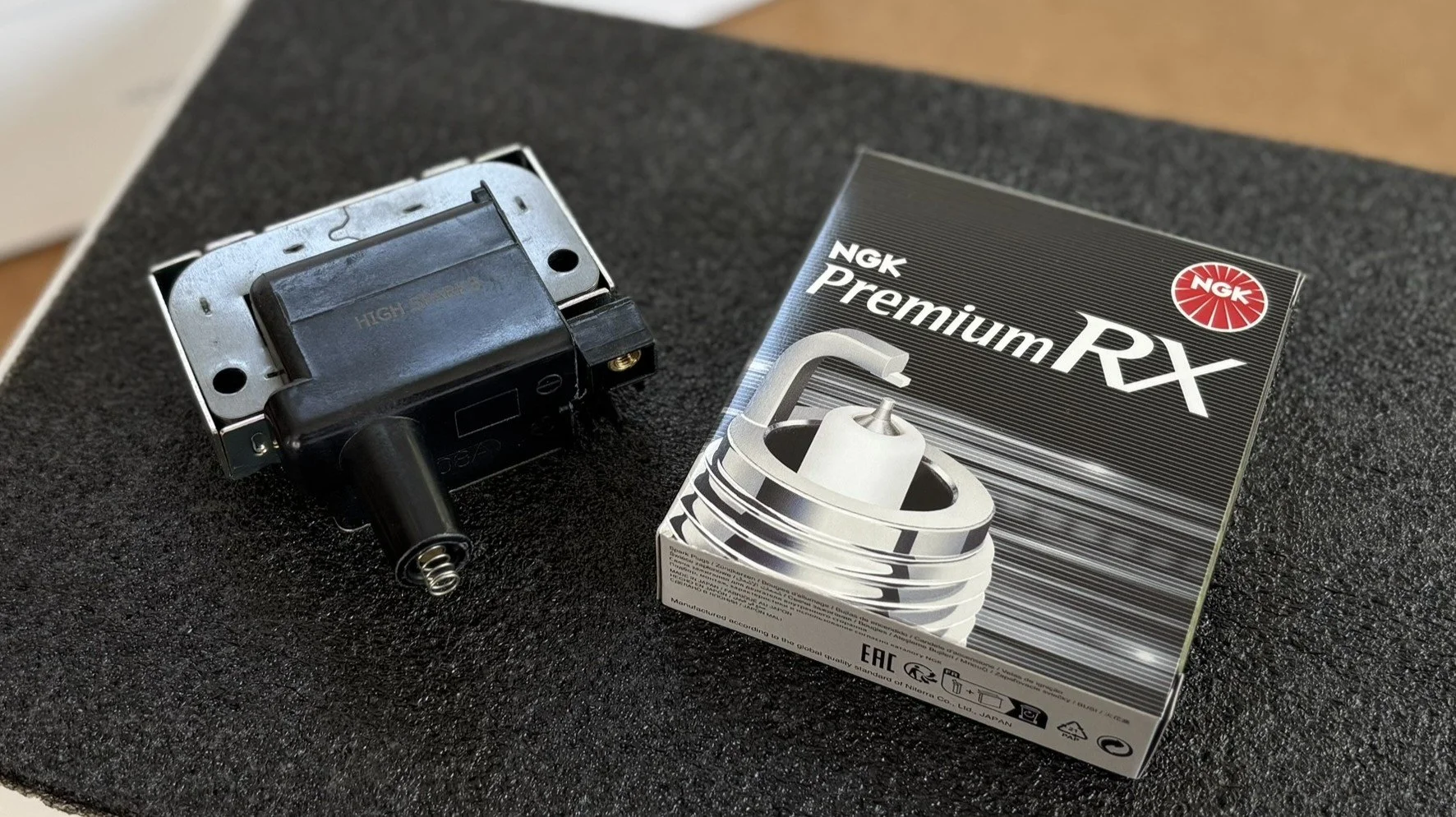
If you want to retain your S2000’s original specification, genuine Honda replacement coils are the straightforward choice. Together with healthy plugs, they allow you to renew the standard ignition system.
If you want to explore an ignition upgrade, high-spark coils offer another approach.
Several manufacturers produce these products. Each takes its own approach to the windings, materials, insulation and electrical design discussed earlier.
Their common objective is to deliver a stronger spark, helping the air–fuel mixture burn more consistently and completely. The intention is to bring the engine’s actual output closer to the potential of its existing mechanical specification.
For your S2000, that means looking beyond replacing a failed component. You are choosing an ignition system intended to help the engine make better use of the air and fuel already reaching its cylinders.
Similar Purchase Cost, Higher Performance
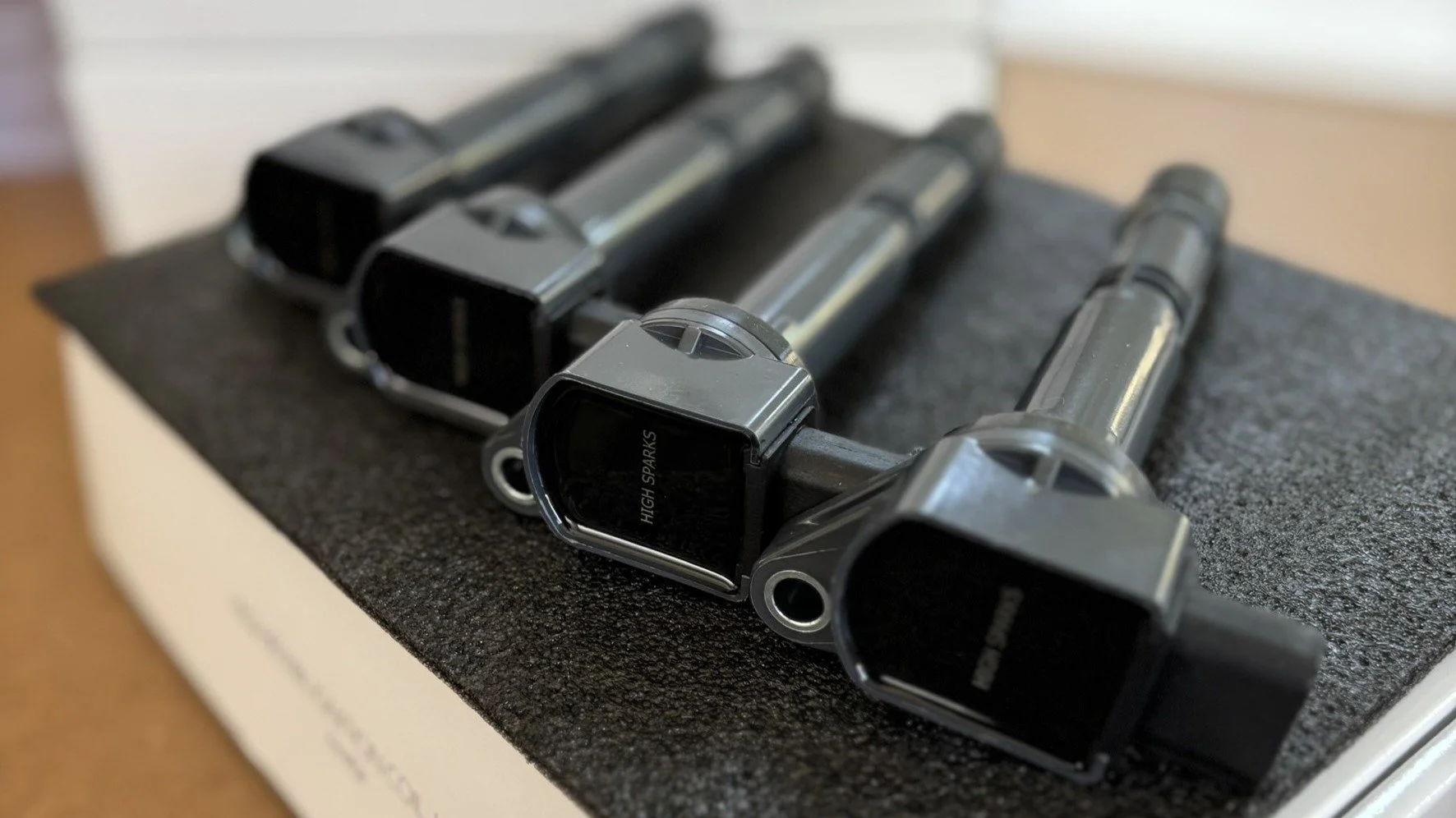
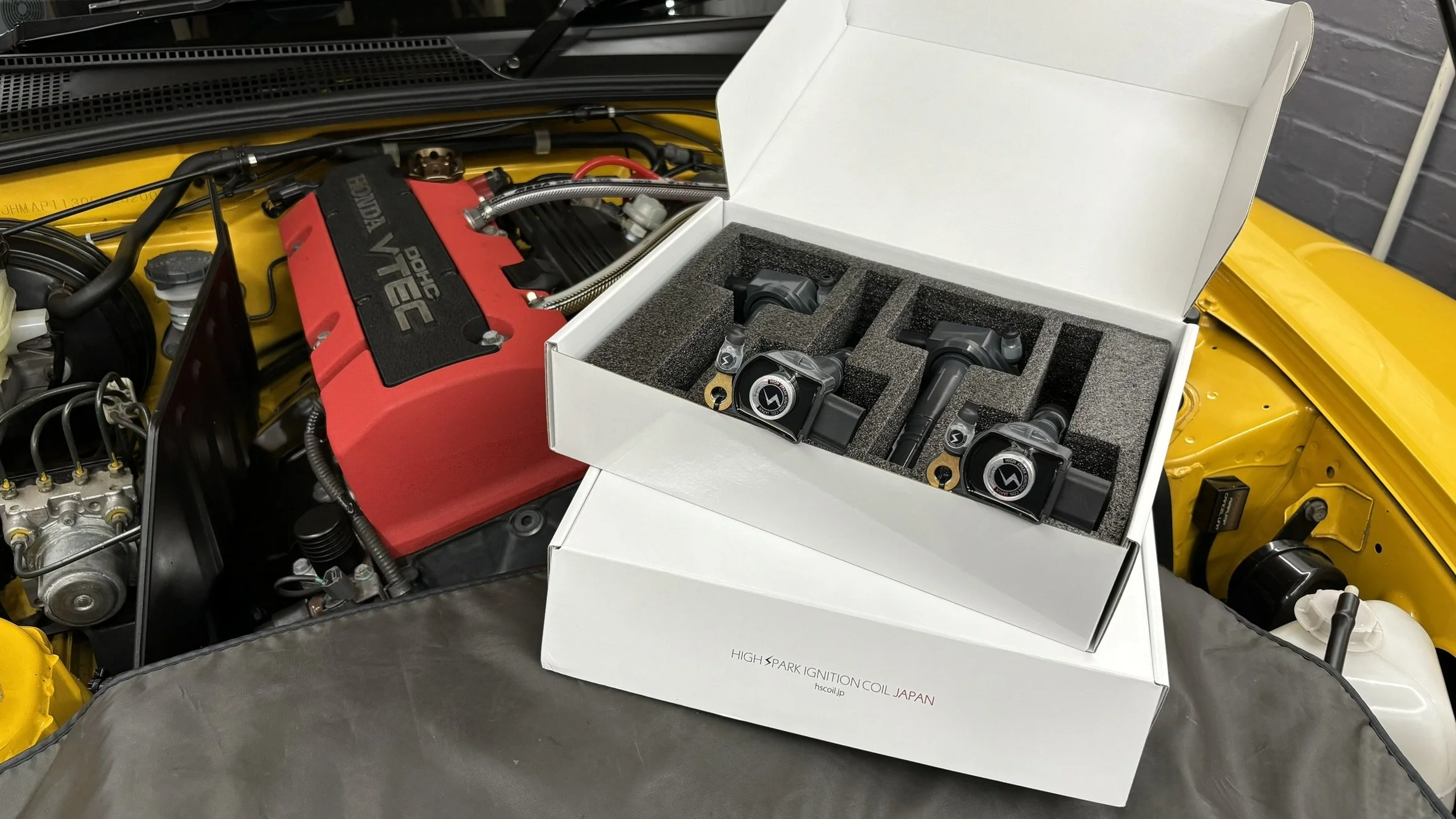
The performance-coil manufacturer we recommend is HIGH SPARK IGNITION COIL JAPAN.
You can read about the products, their construction and our approach on our HIGH SPARK IGNITION COIL JAPAN page.
The Regular HSICJ option can cost about the same as genuine Honda replacements.
8. What Could You Notice After Replacement?
When you next start your S2000, you may notice that the engine catches more readily and settles into a steadier idle.
As you pull away, you may feel a cleaner connection between your accelerator input and the engine’s response. Where you previously experienced hesitation or uneven acceleration, you may now feel a smoother, more continuous delivery.
If you choose high-spark coils, these are also the qualities to pay attention to. As you open the throttle and let the revs rise, does your engine respond more crisply? Does it pull more cleanly through the rev range?
You may discover that you had gradually become accustomed to a less responsive car. Driving the same S2000 for years makes small changes easy to overlook.
After renewing the ignition system, you have an opportunity to recognise those differences—and enjoy the engine’s response again.
9. Would You Like to Know the Condition of Your Ignition System?
If you cannot inspect the plugs yourself, or are unsure what their condition tells you, bring your S2000 to our workshop.
We can inspect your spark plugs, measure ignition output with our coil-output gauge and check the electrical supply and connections. If a coil is suspect, we can substitute a known working demonstration coil and compare how your engine runs.
Arrange an ignition-system inspection.
If you would like a broader understanding of your S2000’s condition, ask about our comprehensive inspection programme. We can review the car as a whole and help you decide which maintenance and refresh work to prioritise.
For advice on HSICJ products, send us an ignition-coil enquiry.
See the Complete S2000 Restoration
Explore the complete restoration and development of our demonstration S2000—and the workshop experience behind it: