
When the Prime Suspect Was Me – Diagnosing Idle Hunting on Our Honda S2000
Honda S2000 Restoration Journal
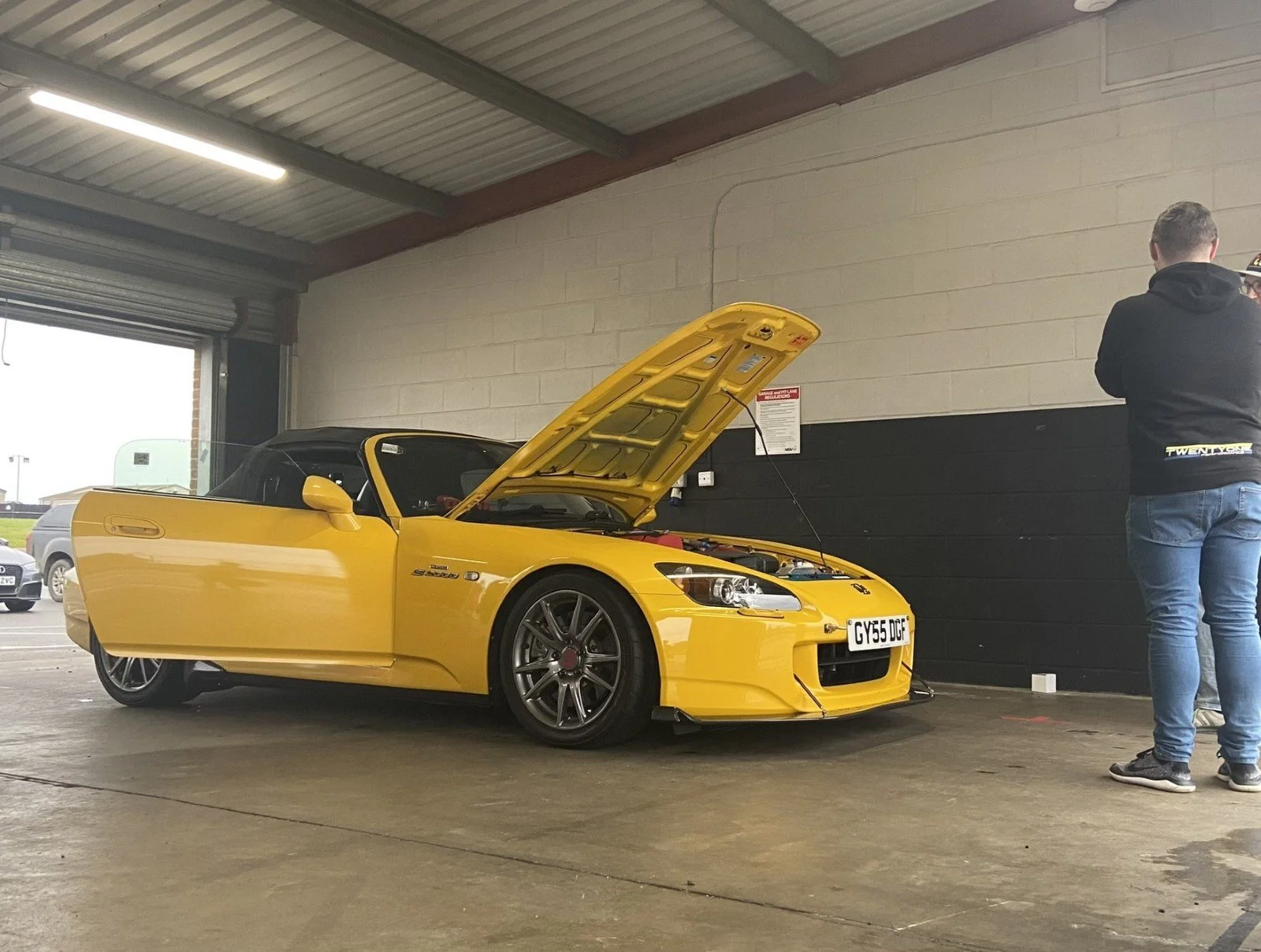
Part of our Honda S2000 Restoration & Tuning Series
In my previous article, Honda S2000 Restoration & Tuning Index – Our S2000 Isn't Just a Demo Car, I explained why our S2000 is much more than a demonstration vehicle.
It has become our engineering test platform.
Almost every restoration project has been carried out as preventative maintenance, replacing age-related components before they fail. However, sometimes faults appear before we've had the opportunity to restore them.
This time, I'd like to share one of those experiences — diagnosing an idle hunting problem.
The Symptoms
One morning, during a cold start, something didn't feel quite right.
As expected, the idle remained high while the engine was warming up.
Then the revs seemed to settle.
Only moments later, however, the idle began rising and falling by itself.
The classic symptom many Honda owners know as idle hunting.
At first glance, it seemed like a familiar fault.
But experience has taught me that familiar symptoms don't always have familiar causes.
Notes on Model Year Differences
The information in this article applies specifically to our mid-production Honda S2000 demonstrator.
For simplicity, Honda S2000 models can be divided into three groups: early, mid and late production models.
Early-production models are equipped with both the Fast Idle Thermo Valve (FITV) and the Rotary Air Control Valve Assembly (RACV). Either of these components can contribute to idle hunting.
Honda deleted the FITV on the mid-production models, leaving the RACV as the primary idle air control device.
Late-production models (drive-by-wire models, including AP1.5 and AP2) no longer use the RACV, as idle speed is controlled electronically through the throttle body.
On RACV-equipped models, the valve draws primary air from a small bypass port located upstream of the throttle butterfly. When the RACV valve opens, this air bypasses the throttle butterfly plate and is delivered directly into the intake manifold to regulate idle speed.
Every Suspect Was Already Innocent

In Japan, this symptom is often described as a Secondary Air Leak (二次エア漏れ)
Naturally, that immediately makes you think of leaking air somewhere in the intake system.
The obvious suspects came first.
The throttle body.
The RACV.
The intake manifold.
Every gasket.
Every hose.
Every hose clamp.
Normally, any of these could allow unmetered air into the intake system.
Except there was one problem.
Every one of them had already been restored.
New gaskets.
New hoses.
The throttle body, intake manifold, and RACV had already been cleaned.
Before idle hunting occurred, every obvious suspect was already innocent.
The Prime Suspect Was Me


Eventually, the investigation turned in a different direction.
The next suspect wasn't a component.
It was me.
When I cleaned the throttle body, I don’t remember if I accidentally removed the factory sealant.
Had I failed to rebuild it properly?
I held the throttle body up to the light.
Light was clearly visible through the joint.
"This must be it."
I carefully resealed the butterfly valve, waited for the sealant to cure, reassembled everything, and started the engine.
For a brief moment, I thought the problem had been solved.
Then the idle hunting returned.
The suspect I'd just arrested was innocent.
Nothing Was Wasted
Although the fault remained, none of the work had been wasted.
The throttle body was now properly sealed.
The intake system had been inspected again.
Every gasket.
Every hose.
Every fastener.
Every torque setting.
Everything had been checked.
That is often how restoration works.
Even when you haven't solved the fault, you've improved the car.
The question simply becomes:
What have I forgotten?
The Real Cause
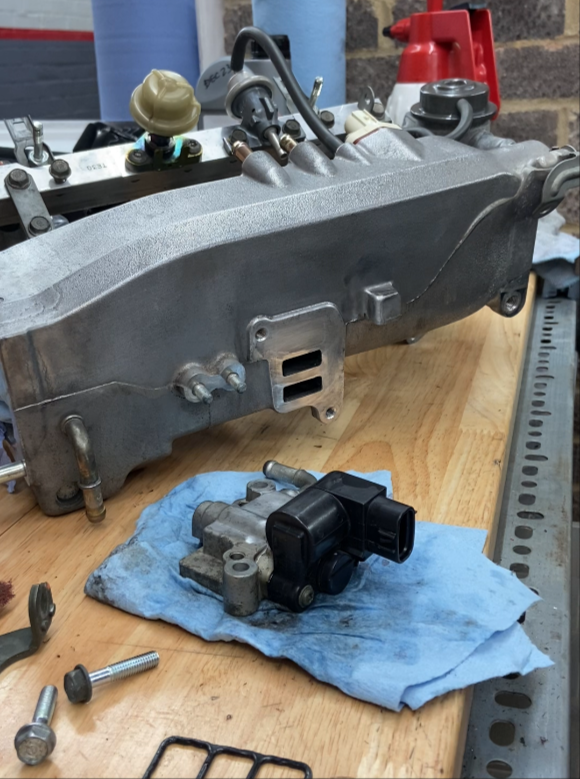
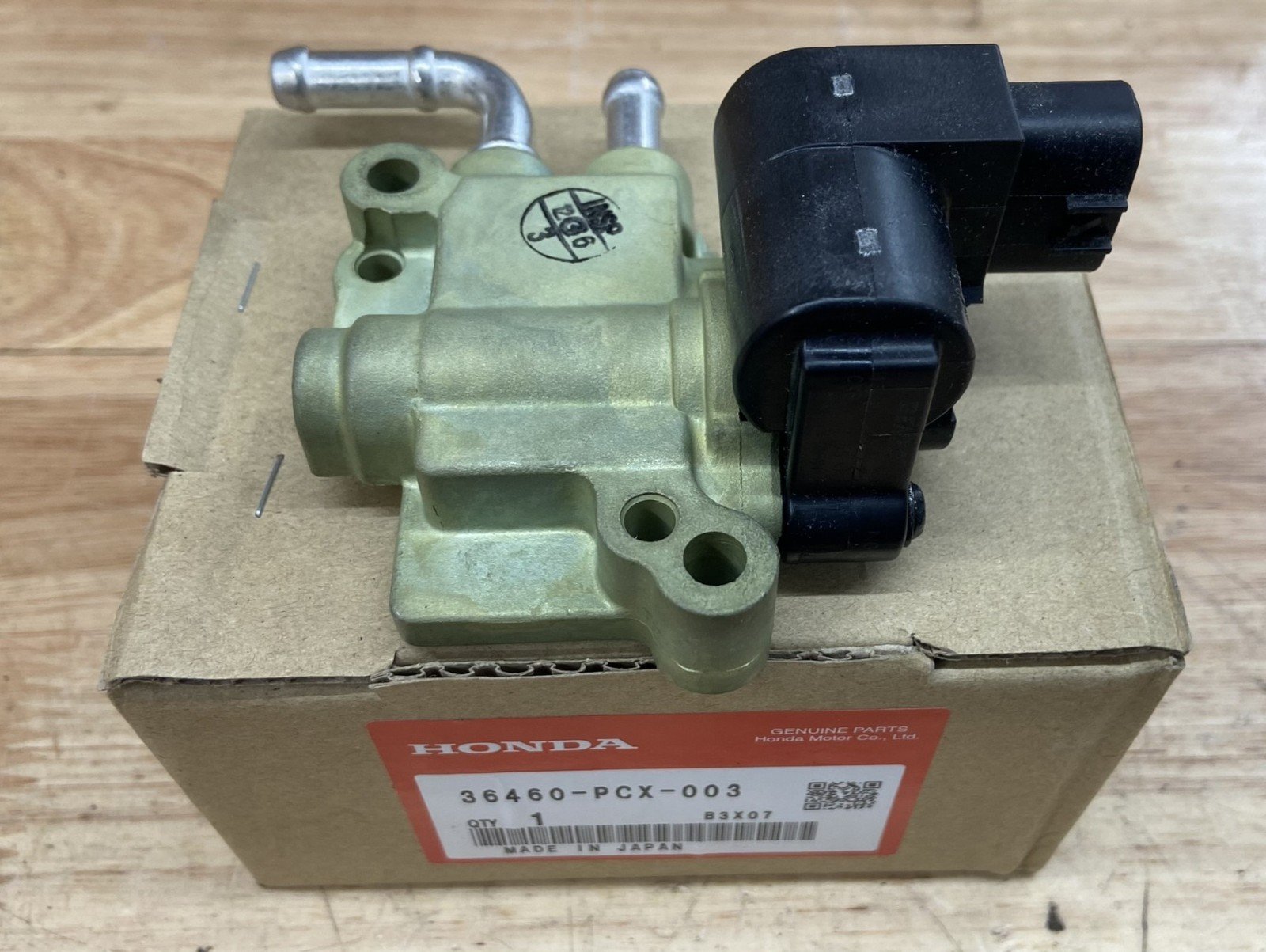
Eventually, attention returned to the RACV.
Over time, deposits can build up inside the RACV, causing the rotary valve to stick.
Cleaning may restore normal operation.
If idle hunting still remains afterwards, replacing the RACV assembly is generally the recommended solution.
The replacement part currently supplied by Honda is an updated version of the original assembly.
After replacing the RACV, the idle became completely stable.
Diagnosis confirmed.
One Final Lesson
One lesson has stayed with me throughout this project.
Replacing a part and diagnosing a fault are not the same job.
Sometimes replacing the obvious component fixes the problem immediately.
Often it doesn't.
Real diagnosis takes time.
It involves testing ideas, eliminating possibilities, occasionally proving your own assumptions wrong, and continuing until the evidence points to the real cause.
That's the part of the job most people never see.
Why We Share These Stories
One of the reasons we publish these Restoration Journals is that many age-related faults on the Honda S2000 are becoming increasingly unfamiliar to general workshops.
In the UK, even Honda dealerships are no longer able to support every issue on these cars, simply because the S2000 has become a true modern classic.
If your local garage is unable to identify the cause of a problem, we'd be happy to help.
We regularly support owners throughout the UK, either directly from our workshop in the South of England or through our trusted specialist partners in North London and the Midlands.
Whether the solution is a replacement part or a deeper investigation, correct diagnosis always comes first.
Preserving More Than Cars
If you're an experienced DIY enthusiast, I hope this article helps you better understand how idle hunting can be diagnosed.
If you're experiencing similar symptoms but aren't sure where to start, don't feel pressured into replacing parts based solely on an internet search or an AI-generated answer.
Sometimes the obvious answer is correct.
Sometimes it isn't.
As Japanese performance cars become modern classics, preserving accurate technical knowledge is becoming just as important as preserving the cars themselves.
We hope that by sharing real restoration experiences, we can help owners, workshops and enthusiasts make better-informed decisions—and contribute to a stronger body of reliable technical knowledge for the global Honda S2000 community.
Afterword
One thing still makes me smile.
Whenever one age-related fault appears on our own demonstration car, the same problem often starts appearing on customers' cars soon afterwards.
Crank pulleys, Fuel Pumps, Water Pumps, Door Checkers…
and RACVs.
Time and again, the pattern repeats itself.
Experience can tell us which parts are likely to fail.
It still can't tell us how many to keep on the shelf.
That's something I still struggle with today.
