330mm Rotors, Brake Balance and Five Years of Testing
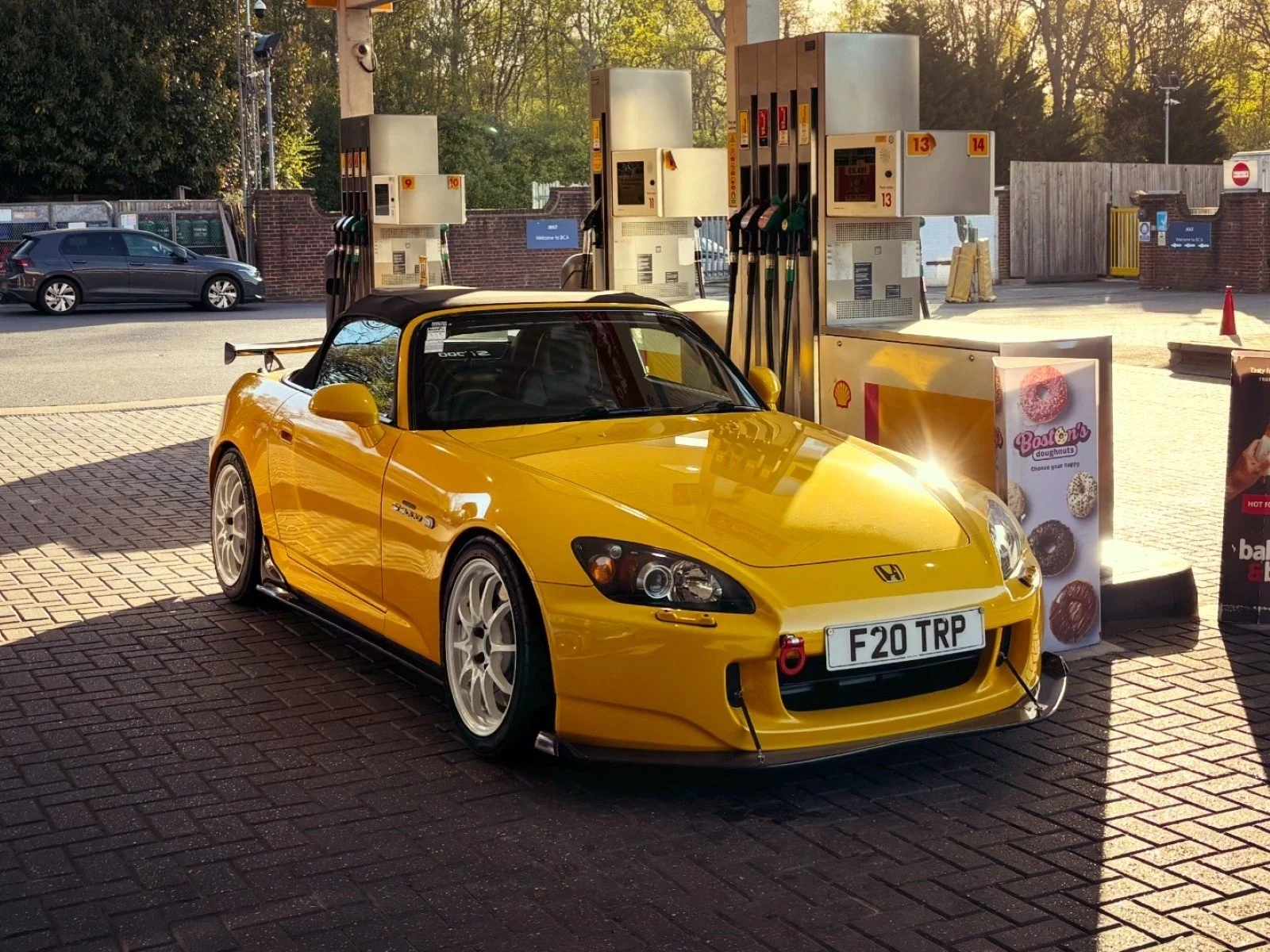
Part of our Honda S2000 Restoration & Tuning Series
In my previous article, "Honda S2000 Restoration & Tuning Index – Our S2000 Isn't Just a Demo Car", I explained why our S2000 is much more than a demonstration vehicle.
It has become our engineering test platform.
Every modification has been chosen for a reason, tested, and evaluated before becoming part of the car.
This time, I'd like to explain one of the most important decisions we made — the braking system.
The Question We Asked Five Years Ago
Five years ago, when we began developing our Honda S2000, we asked ourselves one simple question.
How could we get the very best from Honda's standard 250PS engine at Snetterton Circuit?
Even in standard form, the S2000 is capable of reaching around 125mph on the Bentley Straight.
More power was never our first priority.
Instead, we believed the greatest opportunity for improvement lay in the braking system.
Preserving What Honda Already Got Right
One of the S2000's greatest strengths has always been its balance.
Honda engineered the chassis around exceptional weight distribution, and we wanted to preserve that rather than change it.
Whenever I thought about braking, I always pictured one particular corner.
The heavy braking zone at the end of Snetterton's Bentley Straight.
During simulator training, one characteristic became very obvious.
If the rear tyres lost traction under heavy braking, the car would rotate aggressively as it approached the apex, making the rear unstable.
That led us to a different philosophy.
Rather than asking the front brakes to do even more work, we wanted the rear axle to contribute as much as possible while maintaining stability.
Why We Stayed with 17-inch Wheels

There was another decision we had already made.
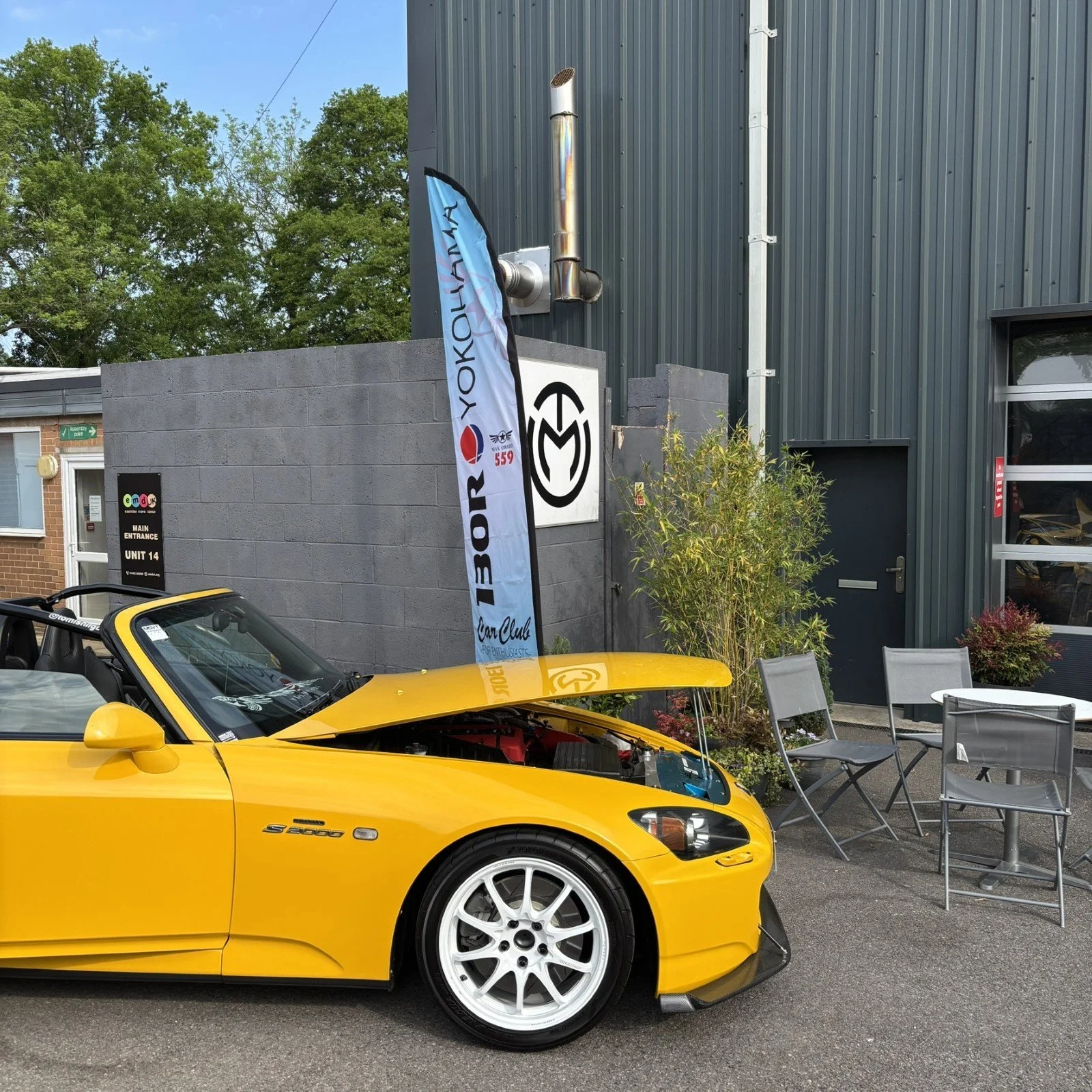
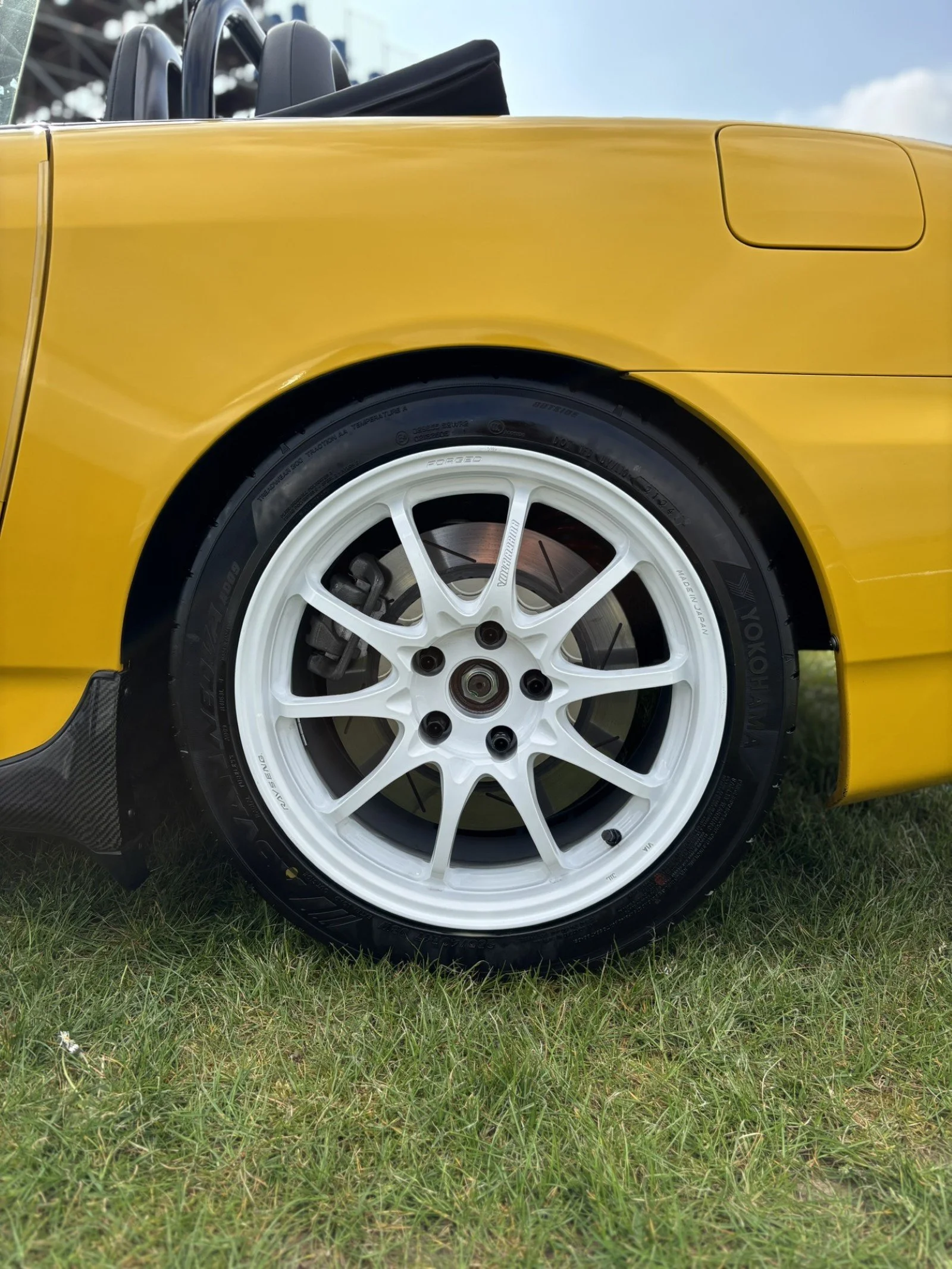
We wanted to keep the car on 17-inch wheels.
Although 18-inch wheels certainly look impressive, we never believed they were the best choice for circuit driving.
Performance always came before appearance.
That created another challenge.
We wanted to fit the largest possible brake discs inside a 17-inch wheel.
After considerable research, we concluded that 330mm was the largest practical rotor size available.
Installing large multi-piston front calipers would actually reduce the available space for the brake disc.
At the rear, fitting a large aftermarket caliper is far from straightforward because of the integrated mechanical handbrake.
Rather than fitting oversized front calipers while leaving the rear almost unchanged, we chose a different direction.
We retained the original Honda calipers front and rear.
This allowed us to install 330mm two-piece discs on both axles, preserving Honda's original brake balance while significantly increasing braking capacity and thermal performance.
Our goal was never simply to make the front brakes stronger.
Our goal was to allow all four tyres to contribute as effectively as possible during braking.
The First Real Test


Theory is one thing.
The real question was whether it would work on the circuit.
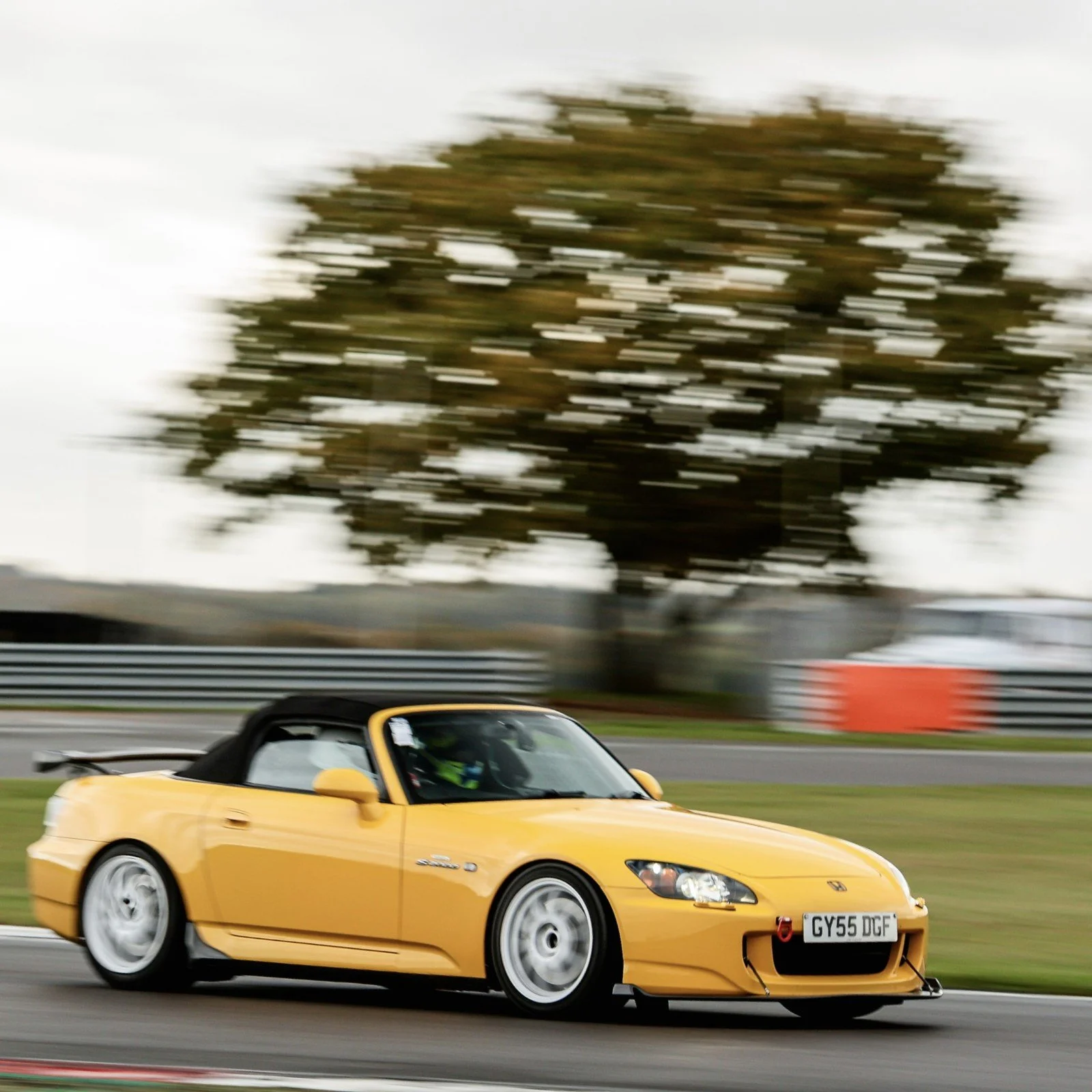
That answer came at Snetterton.
As always, Bradley was sitting beside me, calling braking points and turn-in markers as we accelerated down Bentley Straight at around 125mph.
Bradley is a three-time Radical UK Champion, an active LMP3 Masters driver, and has coached our younger son for more than ten years.
Today, he also coaches many professional racing drivers through TwentyOne Performance's simulator programme.
I'll be honest.
I expected that moment to feel intimidating.
It didn't.
Instead, I noticed something completely different.
The rear of the car seemed to settle into the tarmac as I applied maximum braking.
Rather than feeling all the weight rush forward, the whole car remained composed and stable.
The rear tyres continued contributing to the braking effort, reducing excessive nose dive and maintaining stability right up to corner entry.
The grip never seemed to disappear between braking and turn-in.
That inspired confidence.
Looking Beyond the S2000
At this point, it's worth making something clear.
This philosophy doesn't automatically apply to every performance car.
Vehicle layout matters.
The S2000 is unusual because its engine sits behind the front axle, giving it a front-mid-engine layout and near-perfect weight distribution.
Other cars require different solutions.
For example, our LA400 Copen demonstrator follows a completely different philosophy.
As a front-heavy front-wheel-drive car, increasing front braking capacity with a six-piston brake system makes perfect sense.
During this year's Goodwood Festival of Speed, I found myself studying something many people probably walked straight past.
Not the engines.
Not the aerodynamics.
The rear brakes.
I photographed a variety of race cars, including Porsche, Mustang, NSX, Prelude, Lexus GT and Toyota's latest GT racing technology.


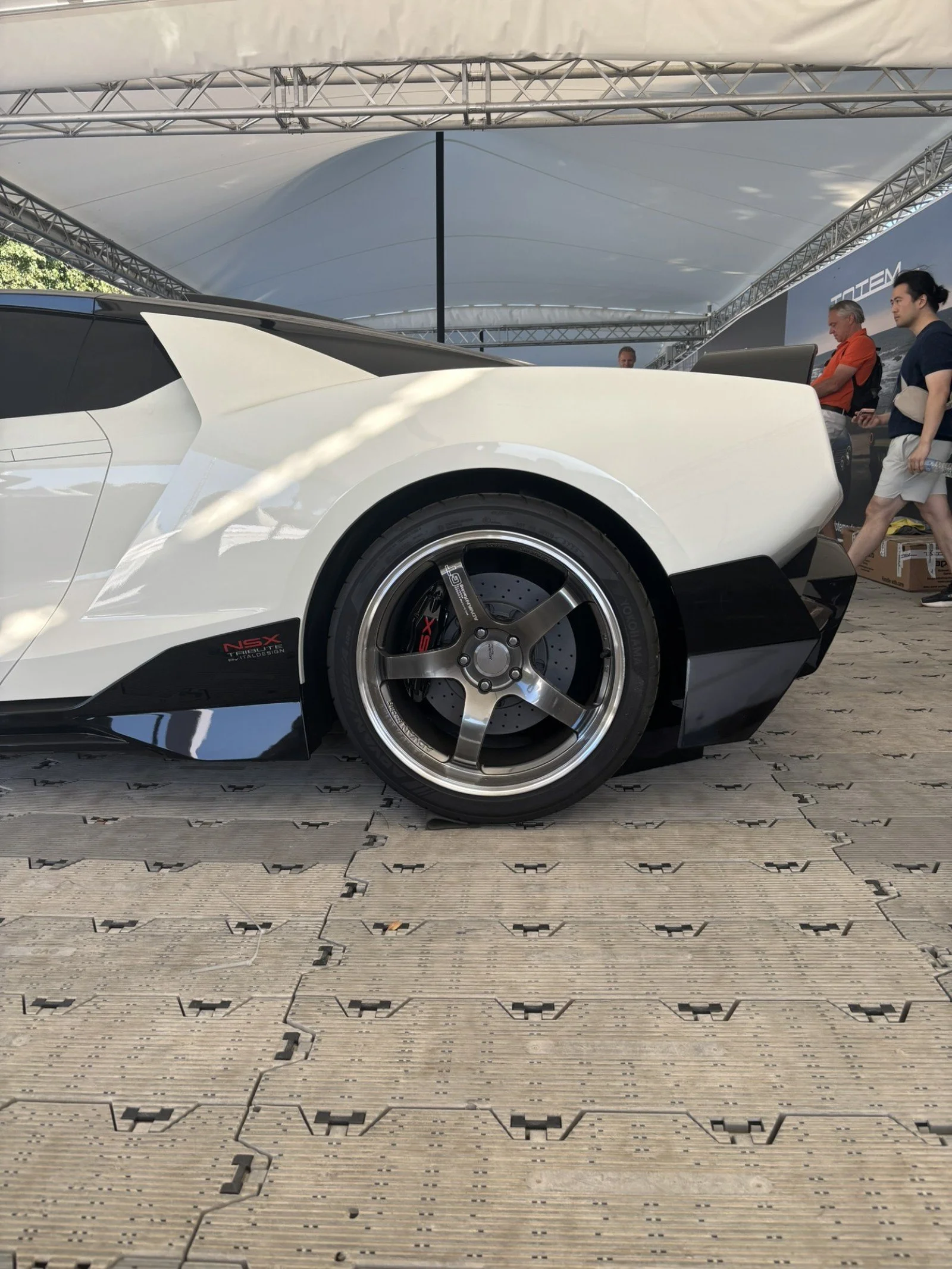


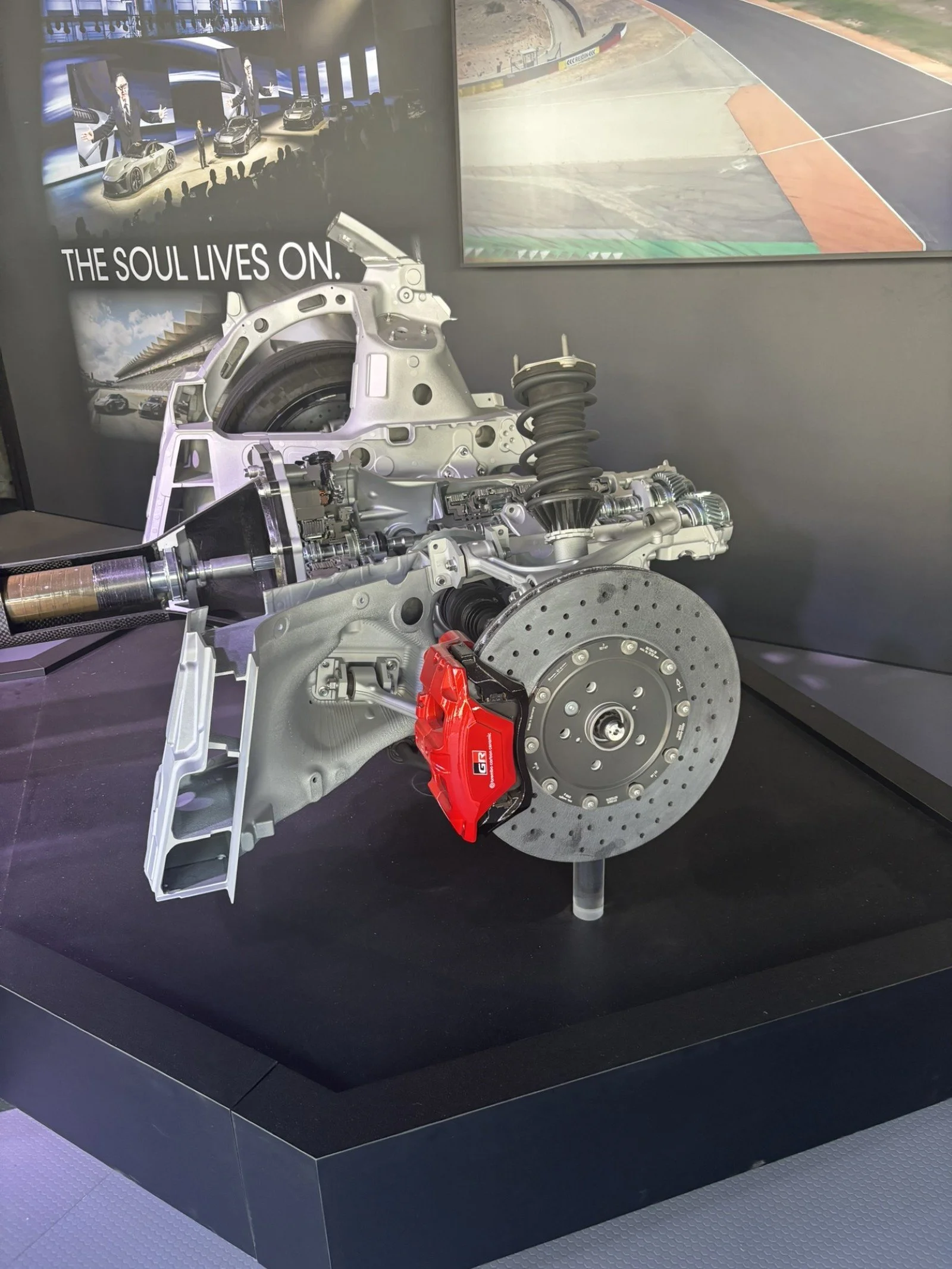

Each one reflected its own engineering priorities.
There isn't one universal brake solution.
The correct brake system is the one that matches the vehicle's weight distribution, drivetrain layout and intended purpose.
Seeing these cars reinforced something I'd been learning throughout this project.
The philosophy behind our S2000 wasn't unusual at all.
It simply followed the same engineering principle.
Testing the Standard Brake Pads
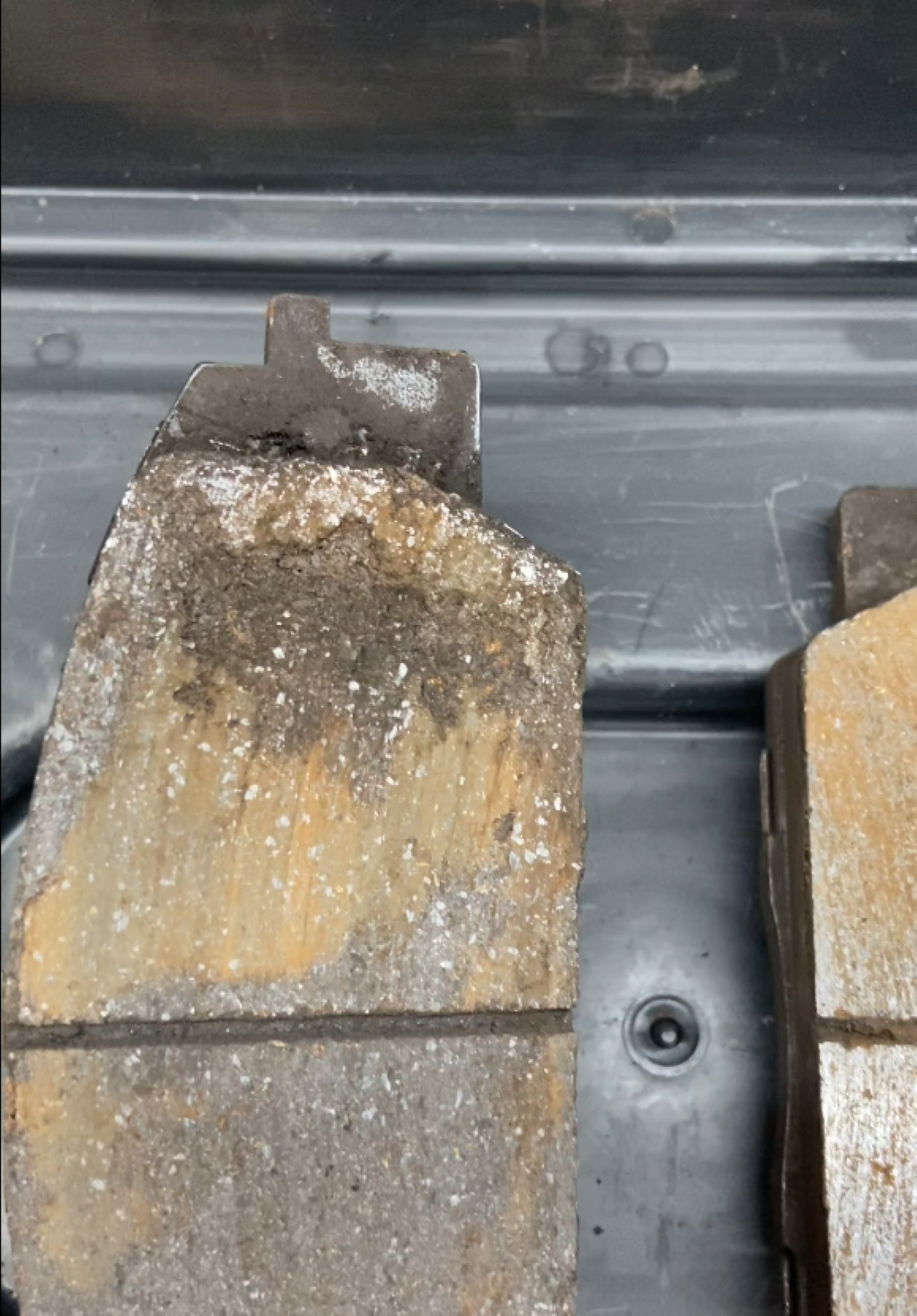
Before changing anything, we wanted a proper baseline.
So we returned to Snetterton with completely standard Honda brake discs fitted with brand-new genuine Honda brake pads.
We completed a flat-out fifteen-minute session.
The surprise came afterwards.
The surface of the brake pad had developed a significant crater.
This wasn't simply normal wear.
It suggested that the standard pad had reached its thermal limit during sustained circuit use.
That experience changed the direction of the project.
Simply changing friction material wasn't enough.
The brake pad itself also needed to become stronger.
The solution was the brake pad jointly developed by CSO and Seidoya, using a substantially thicker backing plate designed specifically for demanding circuit conditions.
Sometimes, failure teaches you more than success.
That damaged brake pad became the starting point for the next stage of development.
Giving Credit Where It's Due


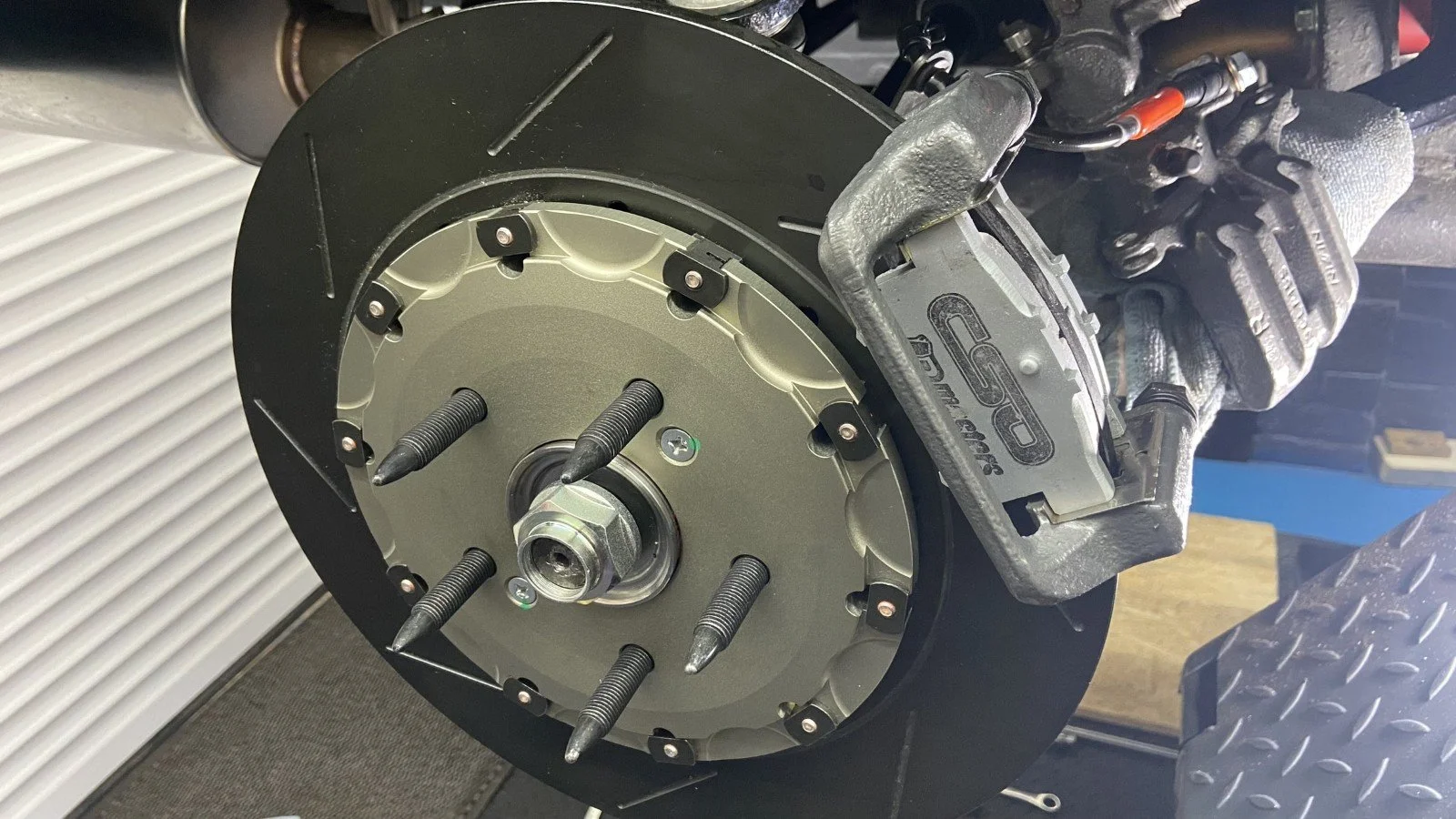
At this point, it's important to make something clear.
The brake package itself was not developed by TR Imports UK.
It was engineered by Mr Ohara at CSO Japan, drawing on many years of experience developing the Honda S2000.
What we have done is something different.
We chose to install that complete package on our own S2000 and evaluate it under UK circuit conditions.
Everything described in this article reflects our own experience after testing the package extensively at Snetterton Circuit.
We don't simply list CSO products in our catalogue.
We believe it's important to understand why they were developed, how they perform, and what they can offer before recommending them to customers.
This article isn't intended to claim that we invented this solution.
Quite the opposite.
It's our way of sharing why we chose to trust CSO's engineering — and what we learned after putting it to the test ourselves.
Final Thoughts
This project has never been about fitting the biggest brake kit or following the latest trend.
It's about understanding the car.
Every modification on our S2000 has been made with one objective:
To allow Honda's original engineering to perform at its very best.
The braking system is only one chapter in that story.
There will be many more to come.
Next in this series: Suspension geometry and alignment — why we spent so much time chasing balance instead of simply lowering the car.