
The Classic JDM World You Cannot Find in English
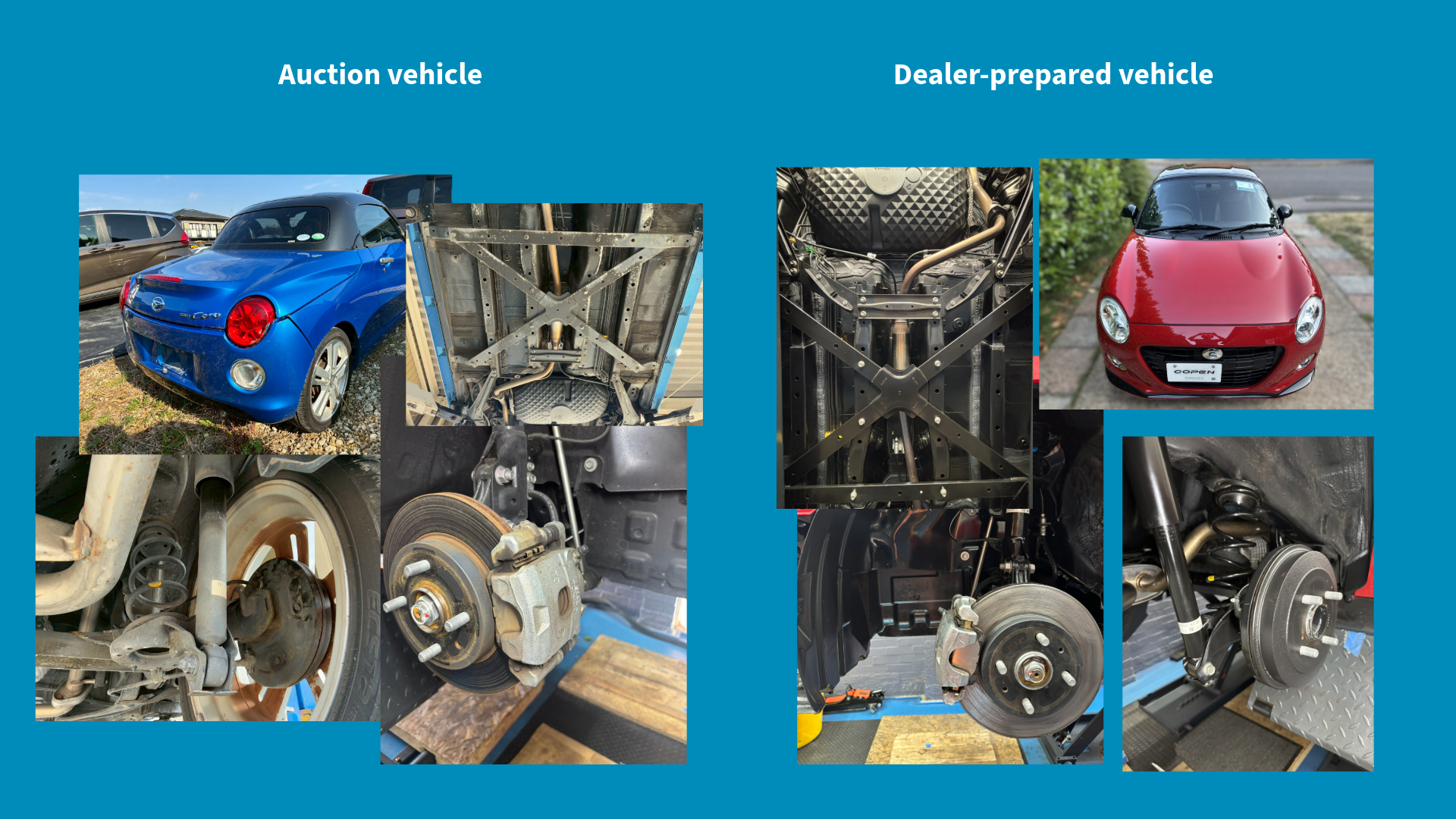
In last week’s article, I explained that Japanese used vehicles generally come from two different sources.
Some are purchased through vehicle auctions before they have been prepared for retail sale.
Others are bought from dealers after they have been inspected, repaired, cleaned and prepared as retail vehicles.
For relatively modern Japanese cars, both routes may be realistic.
Classic JDM cars require a different approach.
Classic JDM Cars Rarely Appear at Auction
The reason is simple: there are not many of them.
Classic Japanese cars do occasionally appear at vehicle auctions, but not in sufficient numbers to make waiting for the right one a reliable buying strategy.
Even when one does appear, it is important to remember what an auction vehicle represents.
It is normally being offered before retail preparation.
With a modern used car, this may mean that it needs routine servicing, minor repairs, paint correction or interior cleaning.
With a classic car, the same description can mean something very different.
It may need extensive corrosion repairs, mechanical rebuilding, discontinued components or the completion of an old restoration project.
Unless you have the facilities, technical knowledge and budget to manage that work yourself, an unprepared classic car can quickly become an unrealistic project.
For most overseas buyers, the practical route is therefore to look for a vehicle that has already been prepared and offered for retail sale by a dealer.
However, this creates another important distinction.
Not All Classic-Car Dealers Are the Same
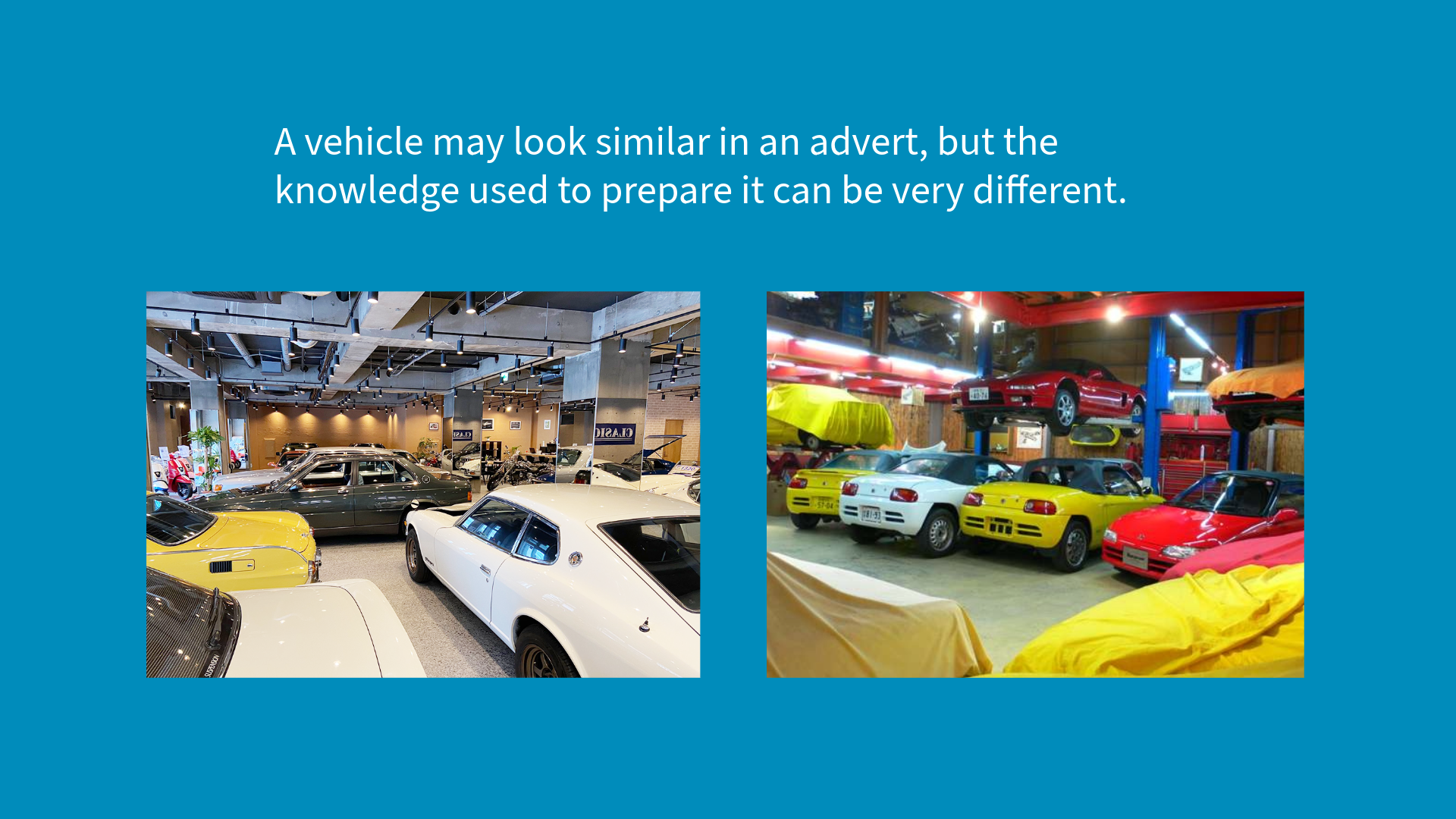
A classic Japanese vehicle may be offered by a dealer handling many different types of older vehicles.
Alternatively, it may be offered by a business specialising in one manufacturer, one vehicle family or even one particular model.
A general classic-car dealer may still offer an excellent vehicle.
However, a model specialist is more likely to understand the details that determine whether that particular car has been prepared correctly.
That may include:
the areas that commonly corrode
the mechanical components that regularly fail
the differences between production years and grades
original and non-original parts
modifications that may cause future problems
components that have become difficult to replace
repair techniques that are specific to the model
This does not guarantee that every vehicle from a specialist will be better.
It does mean that the vehicle may have been prepared using deeper model-specific knowledge.
In some cases, that preparation may also reduce the need for an independent inspection visit before purchase.
A respected model specialist has a reputation to protect within a relatively small community. Its description of the car, restoration records and understanding of known problems may provide a stronger starting point than an advert from a general dealer.
But there is a problem for overseas buyers.
Much of this specialist world operates only in Japanese.
The Market Visible in English Is Only Part of the Market
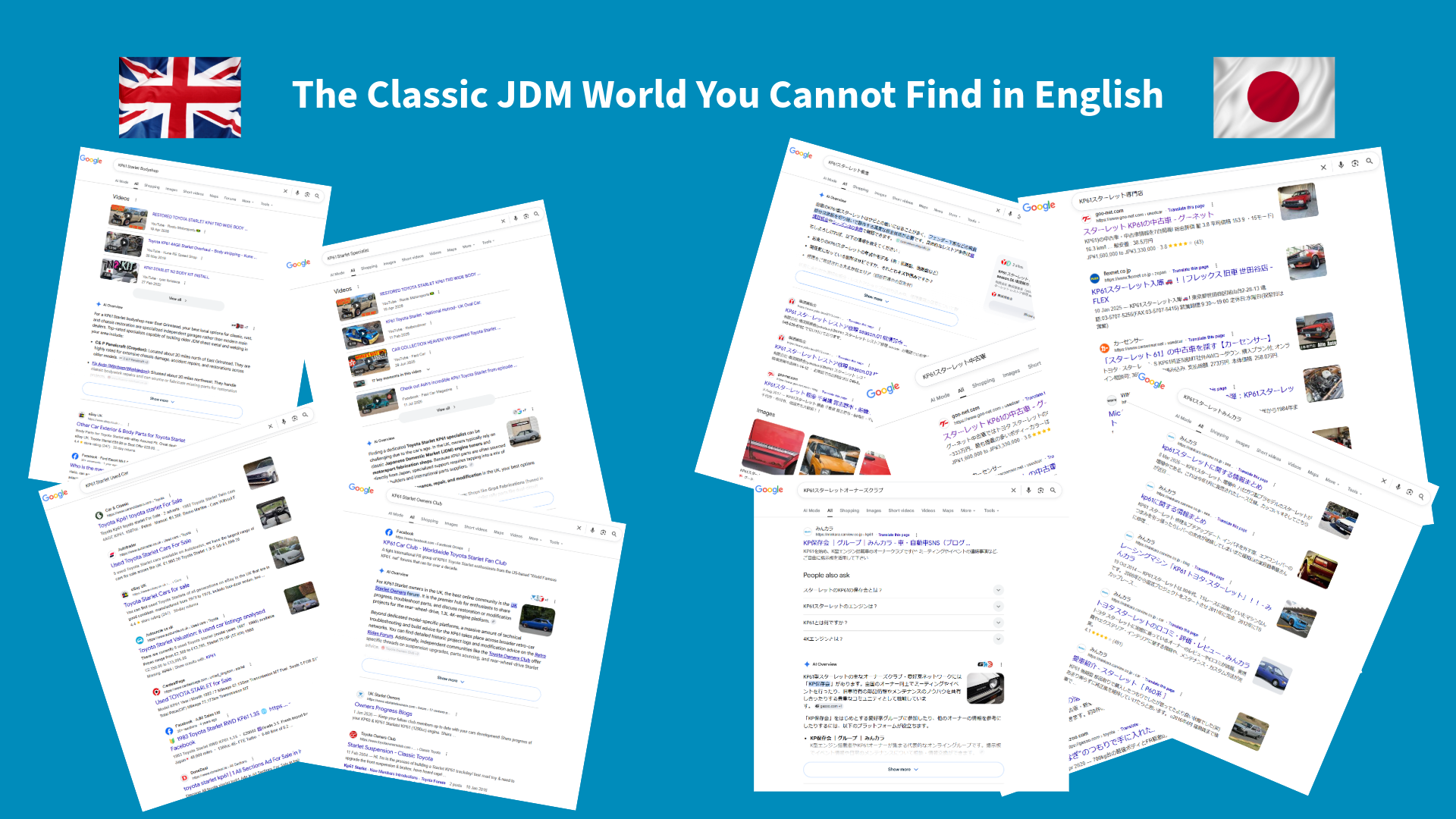
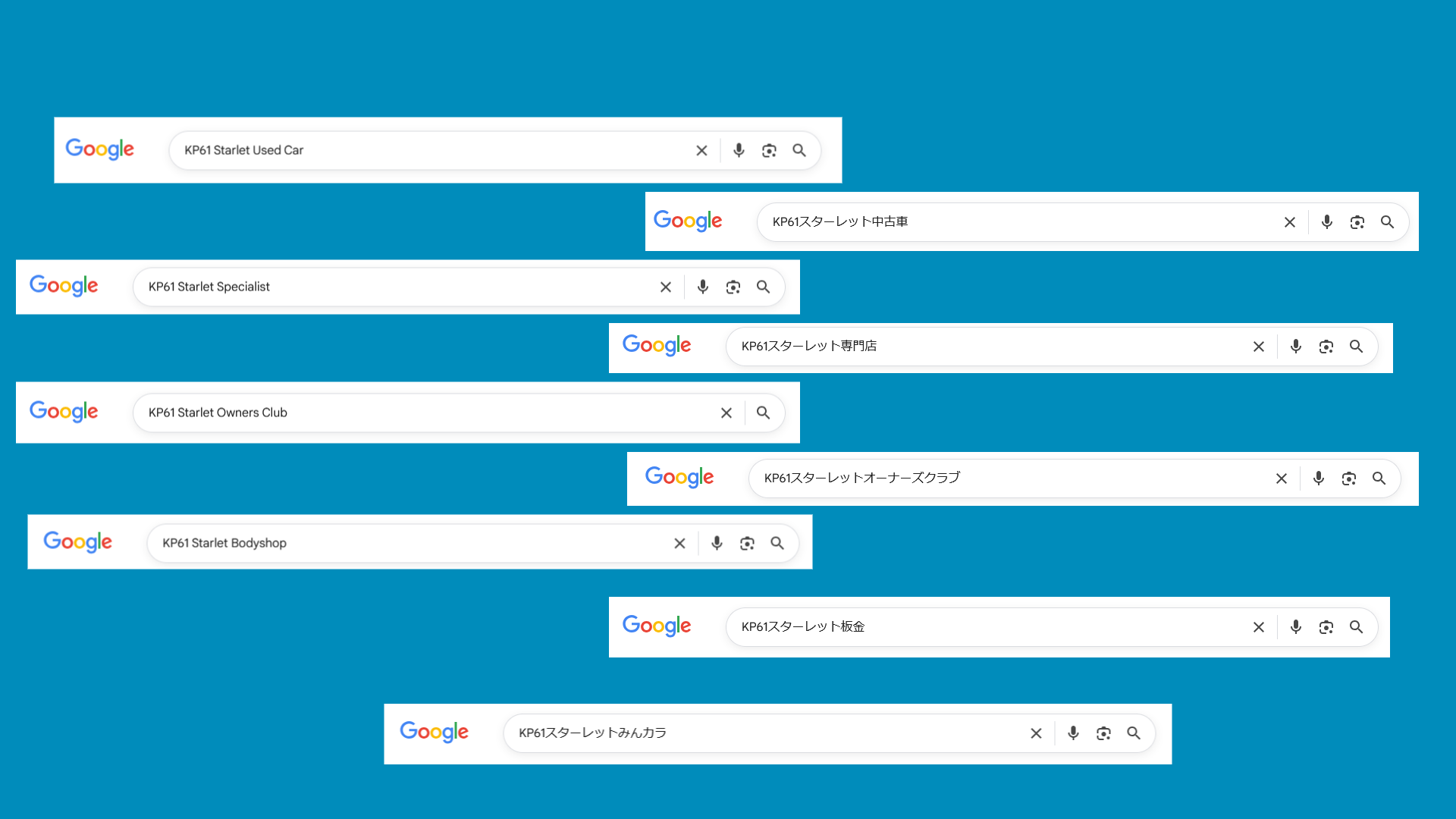
When someone in the UK searches in English for a classic JDM vehicle, the results tend to show businesses that already market their vehicles overseas.
These may include exporters, international sales platforms and dealers with English-language pages.
Those sources are useful.
But they do not represent the whole Japanese market.
Many highly knowledgeable businesses do not publish in English.
Some have simple Japanese websites.
Others communicate mainly through blogs, social media accounts or direct contact.
The same is true of owners’ clubs, restoration workshops, specialist parts suppliers and long-established enthusiast communities.
There may be decades of knowledge available about a particular car, but very little of it will appear in an English-language search.
This is a point that many overseas enthusiasts do not initially recognise:
If the information does not appear in English, that does not mean it does not exist.
The specialist may exist.
The owners’ club may exist.
The restoration knowledge may exist.
The difficult-to-find component may even exist.
But the names, discussions and search terms may all be in Japanese.
Japanese Interest Is Changing the Way British Enthusiasts Search
Interest in Japanese vehicles has grown enormously outside Japan.
As that interest has developed, more enthusiasts have started looking beyond the information already available in English.
As a Japanese person living and working in the UK, I have watched this change at close range.
British enthusiasts are becoming increasingly willing to look directly towards Japan, rather than relying only on information that has already been translated or presented for an overseas audience.
This is an important change.
The language barrier has not disappeared, but the tools available to cross it have improved dramatically.
Modern browser translation, AI-based translation, and VPNs can help people access Japanese websites, understand posts and prepare messages.
However, reading is only the beginning.
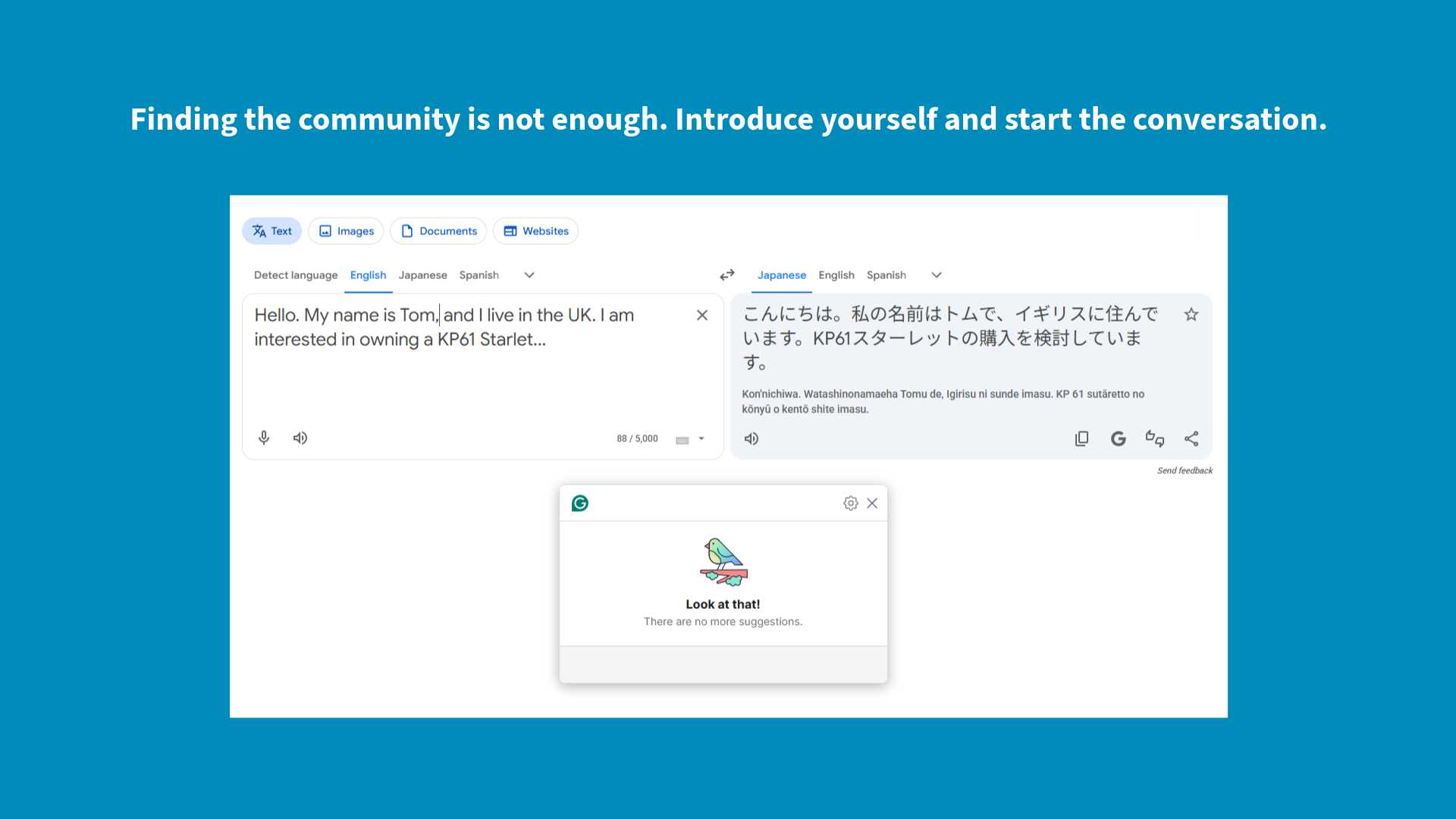
When You Find the Community, Enter It
Finding a Japanese specialist, owners’ club or online group is an important first step.
But do not remain outside the community simply because the conversation is taking place in Japanese.
Introduce yourself.
Explain who you are, where you live and which vehicle you own—or hope to own.
Tell people why you are interested in the model and what you are trying to learn.
Your introduction does not need to be written in perfect Japanese.
Translation software can help you prepare the first message.
It can also help you understand the replies and continue the conversation one message at a time.
The aim is not to pretend that the language barrier no longer exists.
The aim is to stop that barrier from preventing the first conversation.
Many of the most useful details about a classic vehicle are not presented in formal buying guides.
They emerge through conversations between owners, workshops and specialist businesses.
Those conversations may reveal:
which parts commonly fail
which replacement products are trusted
which workshops still understand the model
which components should be repaired before export
which modifications should be avoided
which cars have a known history
which parts are available only through personal networks
This kind of knowledge is built through experience and relationships.
You may not find it by continuing to search.
You may find it only after you introduce yourself and start talking.
Do not stop when you find the Japanese community. Join it.
When an Independent Inspection Is Still Important
Not every car will be available from a recognised model specialist.
Sometimes the right vehicle appears at a general classic-car dealer.
In that situation, an independent inspection in Japan becomes particularly important.
The person inspecting the car must evaluate more than the general condition expected of an ordinary used vehicle.
They may need to assess:
corrosion and previous body repairs
incomplete restoration work
accident damage
missing original components
unsuitable modifications
mechanical noises or poor driving behaviour
evidence that the advertised history may be incomplete
parts that could be exceptionally difficult to replace
A car can look impressive in photographs while still containing problems that are difficult to identify without experience.
A general vehicle inspector may recognise obvious defects.
Someone familiar with classic Japanese vehicles may also recognise that one missing bracket, trim component or mechanical part could turn into a long and expensive search.
Inspection does not remove every risk.
But it can help establish whether the vehicle advertised is a finished retail car or the beginning of another restoration project.
A Toyota Starlet KP61 Enquiry
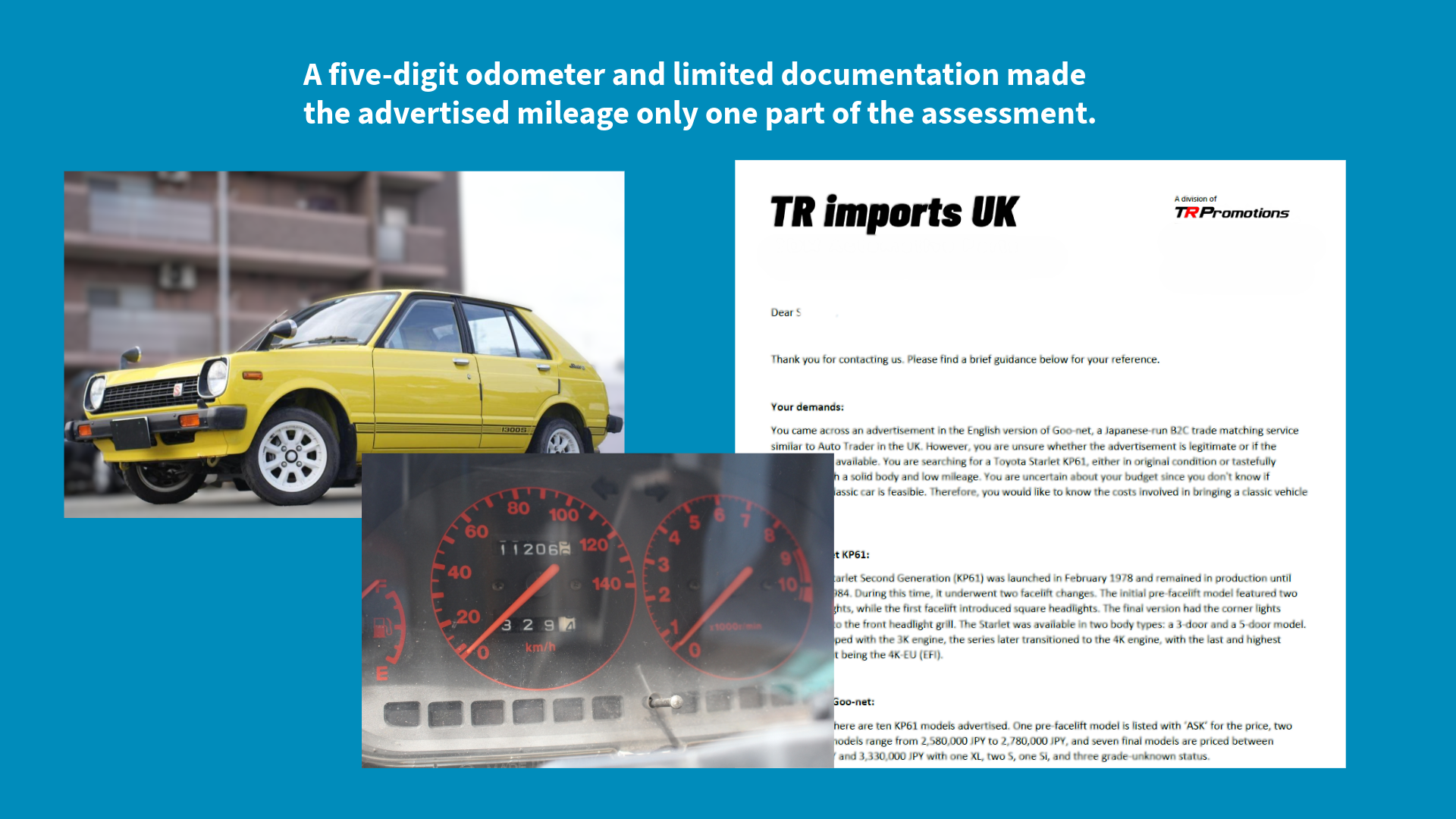
We previously received an enquiry from a customer who had found a Toyota Starlet KP61 advertised on Goo-net.
The vehicle was being sold by a Japanese dealer rather than through an auction.
The customer wanted us to evaluate the advert and explain whether importing the car to the UK would be realistic.
We prepared a detailed proposal.
The proposal did more than estimate the cost of purchasing and importing the vehicle.
It explained the different KP61 generations and specifications, the condition described in the advert, the information obtained from the dealer and the practical limitations of inspecting an older car in Japan.
It also explained an important issue affecting many classic Japanese vehicles: the five-digit odometer.
After 99,999 kilometres, the odometer returns to zero.
A displayed mileage of 42,000 kilometres might therefore mean:
42,000 kilometres
142,000 kilometres
242,000 kilometres
Unless there is complete supporting documentation, the displayed figure alone cannot confirm the true distance travelled.
Condition, previous ownership, maintenance history and the physical evidence on the vehicle all become more important. The KP61 proposal also warned that many original mechanical and chassis components had already been discontinued, making future maintenance the owner’s responsibility.
The customer also needed to understand the UK rules affecting older imported vehicles.
The proposal covered the potential treatment of vehicles over 30 years old at import, as well as the separate MOT and vehicle-tax considerations that may apply once a vehicle is over 40 years old.
Together, these points changed the customer’s understanding of the project.
The vehicle had not necessarily become less attractive.
But the customer now understood that buying the car meant accepting uncertainties extending far beyond the advertised purchase price.
The project did not proceed.
Not Buying the Car Can Be a Successful Result
In the motor trade, success is often measured by completing a purchase.
For a classic-car project, that is not always the correct measure.
Sometimes the best result is identifying the risks before money is committed.
Walking away can protect the buyer from:
an unsuitable vehicle
an incomplete restoration
unavailable parts
uncontrolled costs
a project that cannot be completed properly
Research should not be used to justify buying the car.
It should determine whether buying the car is the right decision.
When searching for a classic JDM car, an English-language search may show you vehicles already being marketed overseas.
It may not show you the specialists, owners’ clubs, workshops and communities supporting those vehicles inside Japan.
The knowledge may already exist.
It may simply be written in Japanese.
Modern translation tools can help you read it.
More importantly, they can help you introduce yourself, share your problems and begin a real conversation.
Finding the community is the first step.
Entering it may be the step that changes the entire project.
Related Article
Buying a Used Japanese Car: Auction Vehicle or Dealer Stock?