
How to read the ratios, where the S2000 reduces speed, and what changes when you alter the gearing
Part of our Honda S2000 Restoration & Tuning Journal Series
Gear ratio, final drive, shorter gearing, Torsen. If you own an S2000, you’ve probably heard all four terms. But could you point to the final drive on the car? Why does a larger ratio make the gearing shorter? And what does a Torsen differential have to do with any of it?
Last week, we took a closer look at what ‘high flow’ means. This week, we’re doing the same with the final drive. We’ll start with something every S2000 driver knows by feel: selecting first gear and pulling away. Once you’ve followed the drive from the engine to the rear wheels, the difference between the factory AP1 and AP2 ratios becomes much easier to understand. So does what you might gain, and what you might give up, by changing them.
Why reduce the speed of the engine’s rotation?
Imagine the engine turning once and the rear wheels also turning once. That’s a 1:1 ratio.
When you’re about to pull away, the rear wheels are stationary but the engine is already idling. The clutch slips as you begin to bring the two together. If the overall ratio from the engine to the wheels were 1:1, the rear wheels would have to turn as fast as the engine once the clutch was fully engaged. To creep away at walking pace, you’d have to keep slipping the clutch or let the engine speed drop towards a stall. And with no torque multiplication through the gears, the engine would have less leverage to get the car moving.
That’s where gear reduction comes in.
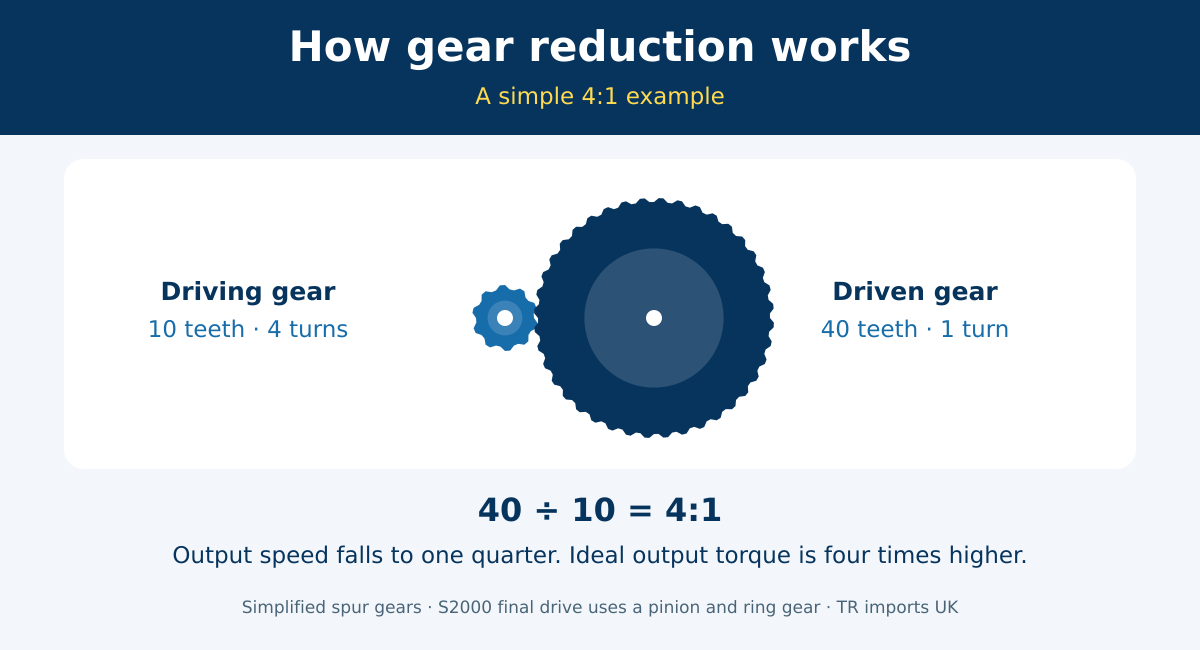
[Figure 1 — A gear pair with a 4:1 reduction]
In the drawing, the smaller input gear turns four times for every one turn of the larger output gear. That’s a 4:1 reduction. The output turns at a quarter of the input speed and, if we set friction and other losses aside, delivers four times the torque. Torque is the twisting effect that turns the shaft.
Think of starting on a bicycle halfway up a hill. In a low gear, each turn of the pedals takes you a shorter distance, but the same push on the pedal gives you more torque at the rear wheel. A car uses the same principle when pulling away. The engine can keep turning at a speed where it runs comfortably while the wheels turn slowly and deliver the force needed to move the car.
From neutral to first gear: how drive reaches the rear wheels
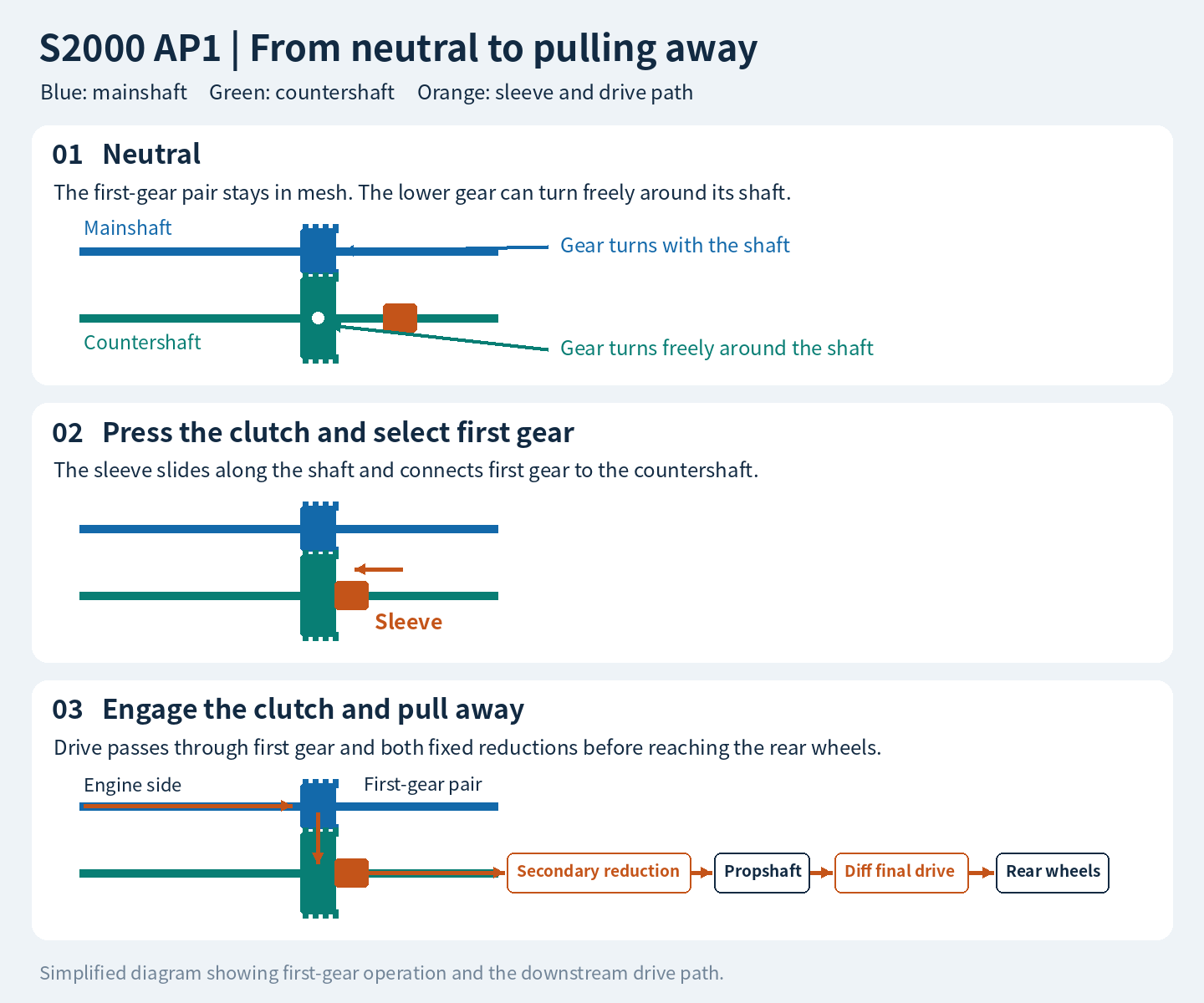
[Figure 2 — S2000 AP1 in neutral, with first gear selected, and pulling away]
1. In neutral, the gears are already in mesh
Start with the two shafts in the drawing. The blue shaft receives rotation from the engine through the clutch. This is the mainshaft. The green shaft running alongside it is the countershaft.
The first-gear pair is already in mesh. The blue gear turns with the mainshaft. Look at the centre of the green gear: it can turn freely around the countershaft. With the clutch engaged in neutral, the blue gear can therefore turn the green gear without driving the green shaft. The teeth are in mesh, but the connection to the shaft is still open.
2. Selecting first gear connects the gear to its shaft
Press the clutch pedal and move the lever into first. The orange ring in the drawing slides along the countershaft towards the first-gear wheel. That ring is the sleeve. When the sleeve engages the gear, the gear that could previously turn freely around the countershaft now turns with it.
The route through first gear is ready. Your foot is still on the clutch pedal.
3. Engaging the clutch sends drive to the rear wheels
As you bring the clutch up, drive passes from the engine’s crankshaft to the blue mainshaft, through the first-gear pair and into the green countershaft. Follow the orange arrows from there.
Before the drive leaves the gearbox, it passes through another pair of gears that reduces the speed again. This is the secondary reduction gearset. The propshaft then carries drive along the underside of the car to the differential between the rear wheels. The diff final-drive gears reduce the speed once more, and the two driveshafts take the drive out to the rear wheels. The CV buckets we covered in an earlier article are part of those driveshaft assemblies.
Where is the ‘final drive’ on an S2000?
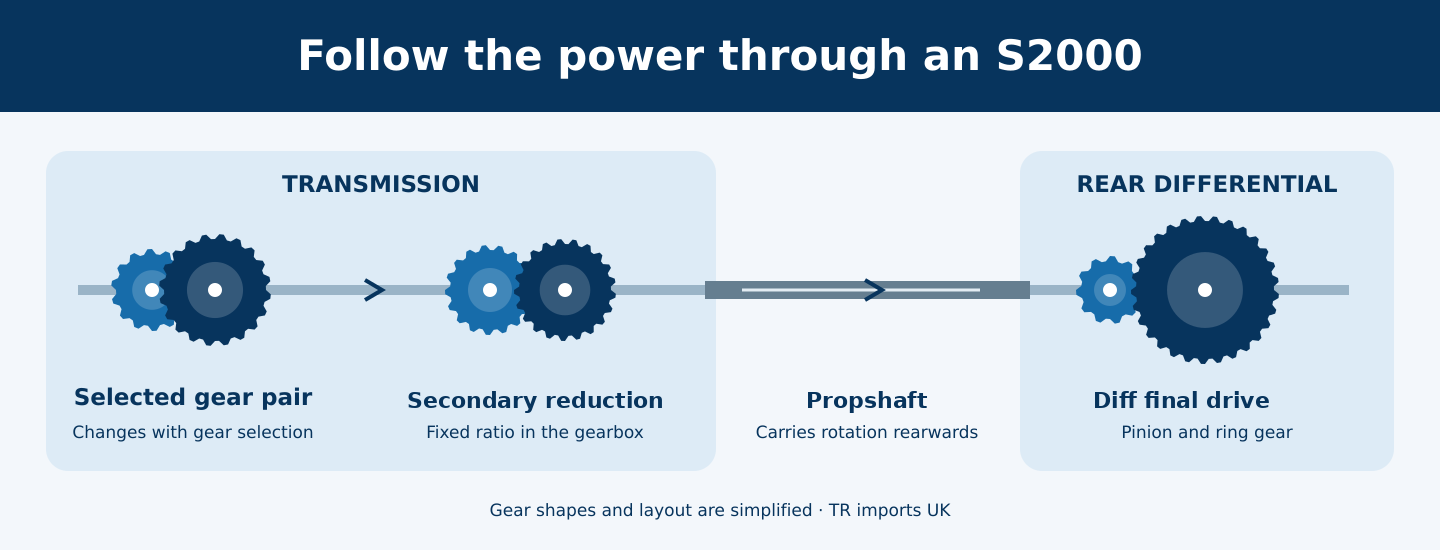
[Figure 3 — The gearbox output, propshaft and rear differential]
Once drive has passed through first gear, there are two more places where the S2000 reduces its speed. The first is the secondary reduction gearset at the gearbox output, often called the gearbox final drive in tuning discussions. The second is the diff final-drive gearset at the other end of the propshaft.
The gear lever selects the ratio inside the gearbox. Whichever forward gear you select, drive then passes through both fixed reductions. Changing either one alters the relationship between engine speed and road speed across the gears.
So when someone says they’ve ‘changed the final drive’ on an S2000, ask which end of the propshaft they mean. The gearbox and the rear diff give you two places to make that change.
AP1 and AP2: what did Honda change?
Honda’s Japanese specification sheets list the individual gear ratios separately from the two fixed reductions. In the line labelled reduction ratio (1st/2nd), the first figure refers to the gearbox output and the second to the rear diff. The gearbox figure is the one we’ve been calling secondary reduction. The labels vary between documents, so it helps to go back to where the two gearsets sit on the car.
For this comparison, set aside the ratio selected with the gear lever and multiply just the two fixed reductions.
The rear diff ratio stayed at 4.100:1. Honda changed the reduction at the gearbox output, giving the Japanese-market AP2 about 4.1% more fixed reduction than the AP1. If you have a UK, an EU or US-market car, check the handbook or specifications for your model year and market before applying these figures to it.
This is where shorter gearing makes sense. Go back to the 4:1 drawing and hold the input speed steady. A larger reduction ratio makes the output turn more slowly. On the road, that means a lower road speed at the same engine rpm in a given gear. That’s why the ratio can be numerically higher while the gearing is shorter.
In its Japanese launch material for the 2.2-litre model, Honda described using revised gearing alongside the larger engine to give stronger performance in the low and middle rev ranges. The table shows where Honda made the change to the fixed reduction. The way the two cars feel on the road also depends on the engine and the ratio of the particular gear you’re using.
What can you change with CSOhara final-drive gears?
Think of a moment in your own S2000 when you’d like it to respond differently. Perhaps the revs drop in town and you’d like the car to pick up more readily. Perhaps you want more drive out of a familiar corner without dropping a gear. Or perhaps you already run out of revs sooner than you’d like and want to hold the gear a little longer. Those are different jobs for a final-drive ratio.
The CSOhara WPC and tin-treated final-drive gearset in the TR imports UK catalogue is a crownwheel and pinion for the rear diff. The listed ratios are 3.9, 4.1, 4.3 and 4.44. Using the standard 4.100:1 diff as the reference, 3.9 is longer, 4.1 retains the factory ratio with a treated gearset, and 4.3 and 4.44 are shorter. If you come across CSOhara’s secondary drive gear in its technical material, that’s the gearset at the gearbox end of the propshaft.
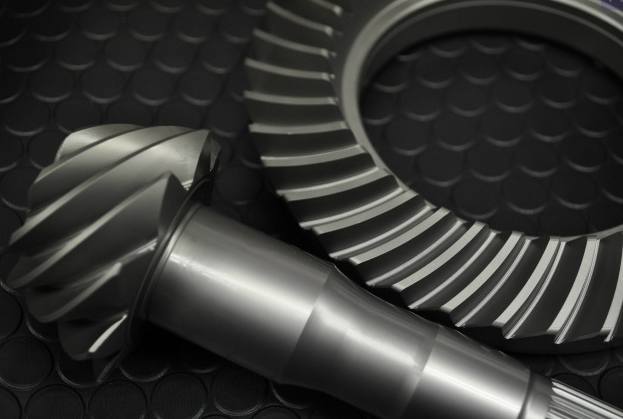
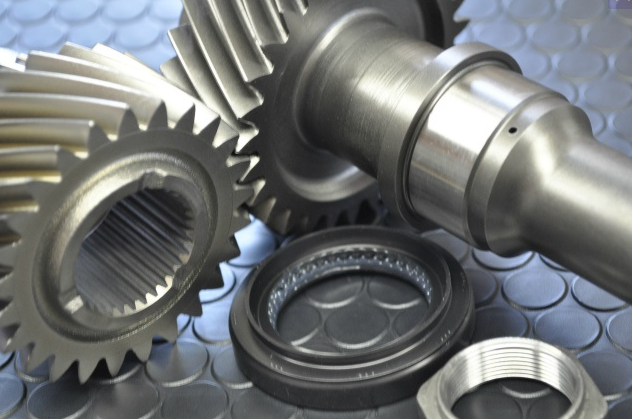
Left: CSOhara Final Gear Set, Right: CSOhara secondary drive gear set
Take a change from 4.1 to 4.3 at the diff, with the gearbox ratios and tyres kept the same. The overall reduction increases by about 4.9% in every gear. What you notice depends on what you hold constant.
On a corner exit, more torque at the rear wheels can be welcome. But say you can currently hold the same gear from that corner to the next braking point. With a shorter final drive, you may reach the rev limit before you get there and need an extra shift. At any given road speed you’ll also be at a different point in the engine’s rev range, so the gearing calculation is only part of what you’ll feel. Think about both ends of the stretch of road: where you want the car to pick up, and how far you want to carry the gear.
Where does the standard Torsen fit in?
Back to the last word from the opening. Inside the rear diff casing, the final-drive gears reduce the speed coming from the propshaft. The differential then passes drive to the left and right wheels while allowing them to turn at different speeds. They need that freedom in a corner because the outside wheel travels farther than the inside wheel.
The S2000’s standard Torsen limited-slip differential can bias torque towards the wheel with more grip when the other wheel is struggling for traction. The two parts share a casing, but they answer different questions. The final-drive ratio determines how engine rpm relates to road speed in a given gear. The Torsen influences how the available drive torque is shared between the rear wheels.
Think back to that corner exit. If the revs have dropped and the engine feels flat, gearing is one place to look. If the inside rear tyre is spinning and the car is struggling to put its power down, that leads us to the differential. In the next Workshop Journal, we’ll look at what changes on corner entry and exit when you go from the standard Torsen to a plate-type mechanical LSD.
Tell Us About Your S2000 and What You’d Like to Change
Would you like more pull out of a familiar corner without changing down? Do you find yourself reaching for the next gear sooner than you’d like? And how much time do you spend cruising on the motorway?
Tell us your S2000’s model year, its current gearbox and diff setup if you know it, and where you’d like the car to feel different. We can compare the ratios with you, work out what each would mean for your shift points and cruising revs, and help with parts supply and installation.
See the Complete S2000 Restoration
Explore the complete restoration and development of our demonstration S2000—and the workshop experience behind it: