
How Accurate Is the Damage Diagram on a Japanese Auction Sheet?
- Our 3.5C-rated Daihatsu Copen Cero LA400K shows what an auction sheet can tell you, what it may leave out—and why the cheapest car to buy is not always the cheapest car to prepare.
A Japanese auction sheet can reveal a great deal about a used car before anyone places a bid.
It records the vehicle’s overall grade, an interior grade, comments from the inspector and a diagram marked with symbols for scratches, dents, repair history and other visible defects.
However, it is not a retail-condition report, nor is it a guarantee that every defect has been found.
Our blue Copen Cero demonstrator provides a useful example. It was deliberately purchased as a lower-grade car because we already had the facilities, tools and experience required to transform it. The finished car now looks remarkably different.
But if the same Cero had been considered as retail stock rather than a demonstrator, would we have bought it?
The answer is 100 per cent no.
To understand why, we first need to understand what the auction sheet was designed to tell us.
How to Read the Damage Diagram
The original auction sheet for our Copen Cero. The damage diagram provides a useful overview, but not a complete list of everything later found during detailed inspection.
The body diagram on a Japanese auction sheet uses letters and numbers to describe visible defects. Although the precise definitions and application can vary, commonly used symbols include:
A — scratch
U — dent
W or P — evidence of previous paintwork or repair
S — rust
C — corrosion
X — a part requiring replacement
XX — a part that has already been replaced
The number following a letter usually indicates the apparent size or severity. An A1, for example, describes a smaller scratch than an A3.
These symbols are useful because they allow a buyer to identify the general location and type of visible damage without standing beside the car. They should, however, be treated as a guide rather than a complete inventory of everything that will require attention.
The grade and damage diagram tell us where the car starts. They do not tell us exactly what it will cost to finish.
Auction Inspection Quality Is Not Identical Everywhere
Japanese vehicle auctions are extremely busy wholesale environments. Large numbers of cars must be processed, inspected, photographed and presented for sale within fixed schedules.
The inspector is not preparing a detailed retail appraisal for the eventual owner in Britain. The objective is to record enough practical information for auction members to assess and bid on the vehicle.
The quality and level of detail can therefore vary between auction operators, individual venues and inspectors. Workload, staffing, lighting, vehicle cleanliness, inspection time and the consistency of local procedures may all affect what is recorded.
Experienced buyers learn that some auction groups and venues have a stronger reputation for dependable inspection information than others. That confidence can also affect bidding. Cars offered at auctions respected for their accuracy may attract stronger prices because buyers feel that they are dealing with less uncertainty.
A previous 4.5B Copen Cero provides a useful contrast. Despite its much stronger grade, its auction sheet contained a detailed damage diagram recording a number of relatively minor defects. A fuller diagram does not necessarily indicate a worse car. It may instead show that the inspection was more thorough.

This 4.5B Cero received a stronger overall grade, yet its auction sheet still recorded numerous minor defects in detail.
This does not mean that every omission is dishonest or that auction sheets are unreliable. It means that the sheet must be read in context.
The symbols may have accepted meanings. Their application in the real world is not always equally thorough.
Our 3.5C-rated Copen Cero

At first glance, the 3.5C Cero looked reasonably presentable in Japan. The full extent of its cosmetic condition only became clear through closer inspection.
Our blue Copen Cero received an overall grade of 3.5 and an interior grade of C.
We did not buy it believing that we had discovered a perfect car at a bargain price. We were intentionally looking for a poorer-condition vehicle that could become a development and demonstrator project.
TR imports UK already had the polishing equipment, bodywork facilities, materials and experience required to recover it. We also intended to replace or upgrade several parts rather than preserve the car in its original specification.
That made this particular Cero suitable for our purpose.
In its auction and arrival photographs, the car did not initially look disastrous. From a normal viewing distance, the blue paint still gave the impression of a reasonably presentable car.
A closer inspection told a different story.
What the Auction Sheet Told Us
The auction sheet did provide useful warnings. It indicated significant damage around the left front wing and bumper area, and it gave us reason to investigate the right rear lamp unit.
The auction sheet correctly warned us about significant damage around the left front corner. This required surface preparation and repainting at the TR imports UK workshop.
The left front corner was heavily scratched and required proper surface preparation and repainting at the TR imports UK workshop. The cracked right rear lamp unit was replaced by our partner facility in Japan before the car was shipped.
These were important defects, and the sheet helped us understand that we were not buying a clean retail-quality car.
The problem was not that the sheet told us nothing. It was that its damage diagram was noticeably less comprehensive than the inspection carried out after the car reached our partner facility in Japan.
A number of scratches, marks and dents were either absent from the diagram or described too generally to show the full amount of work ahead.
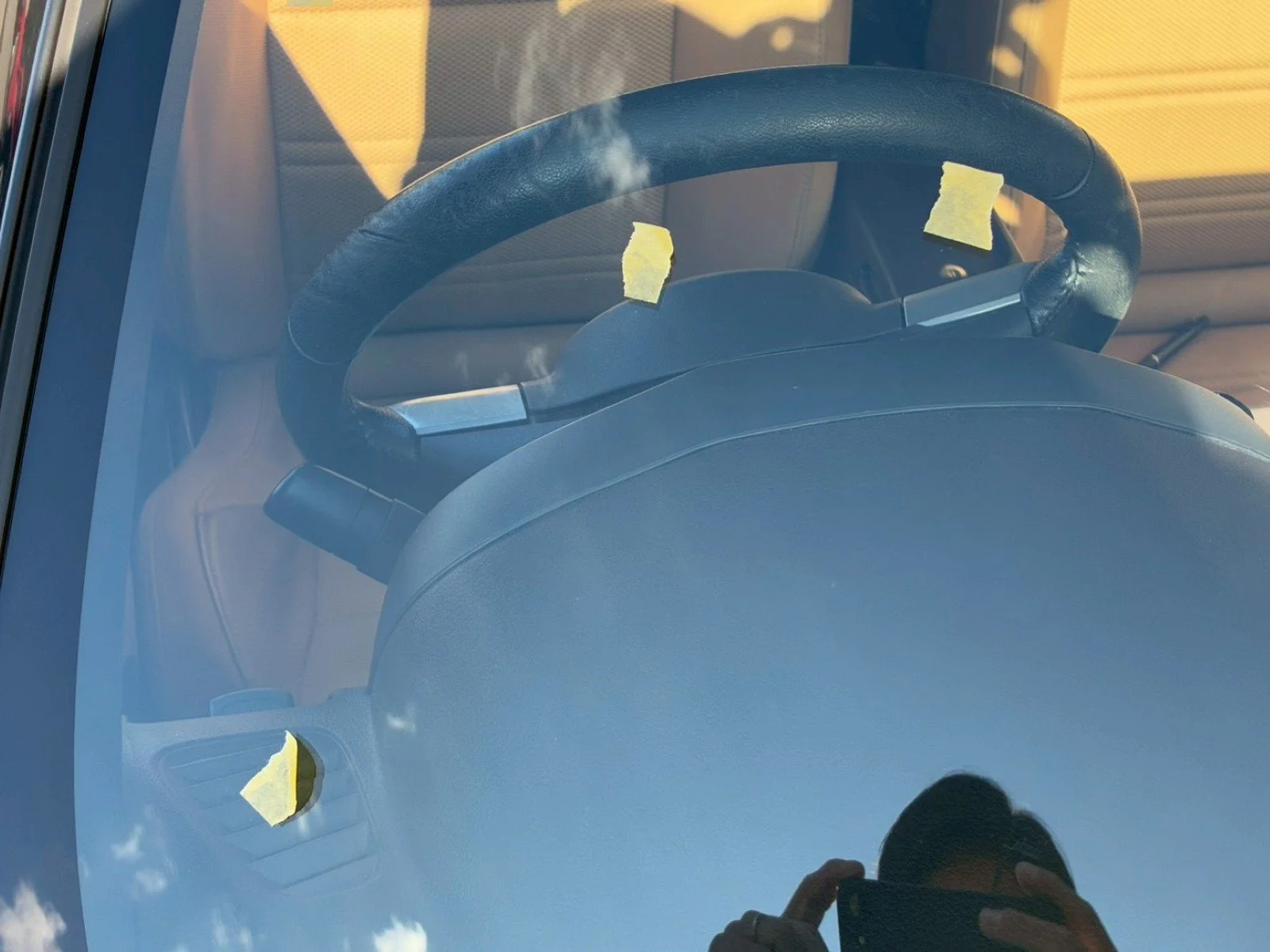
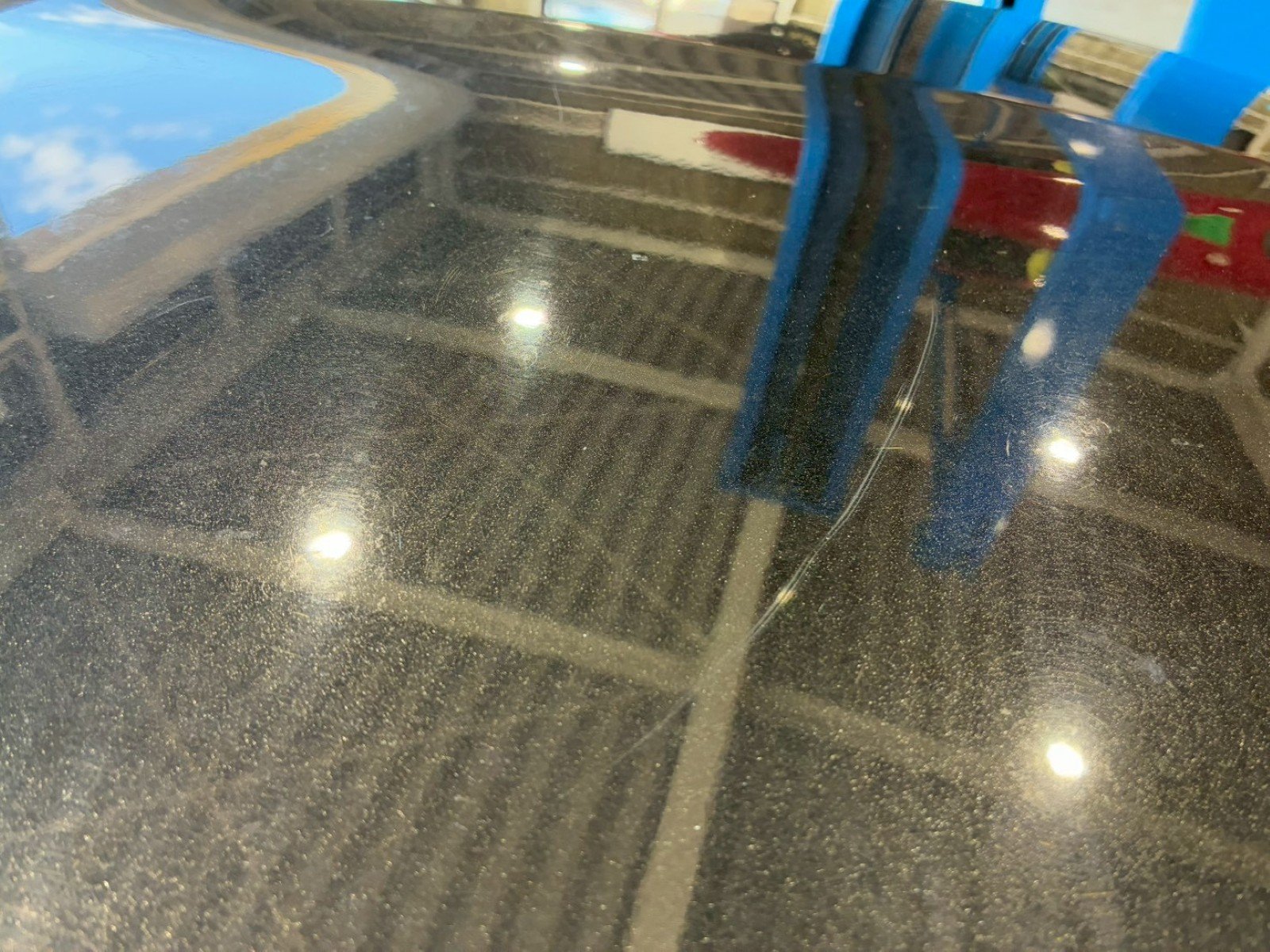
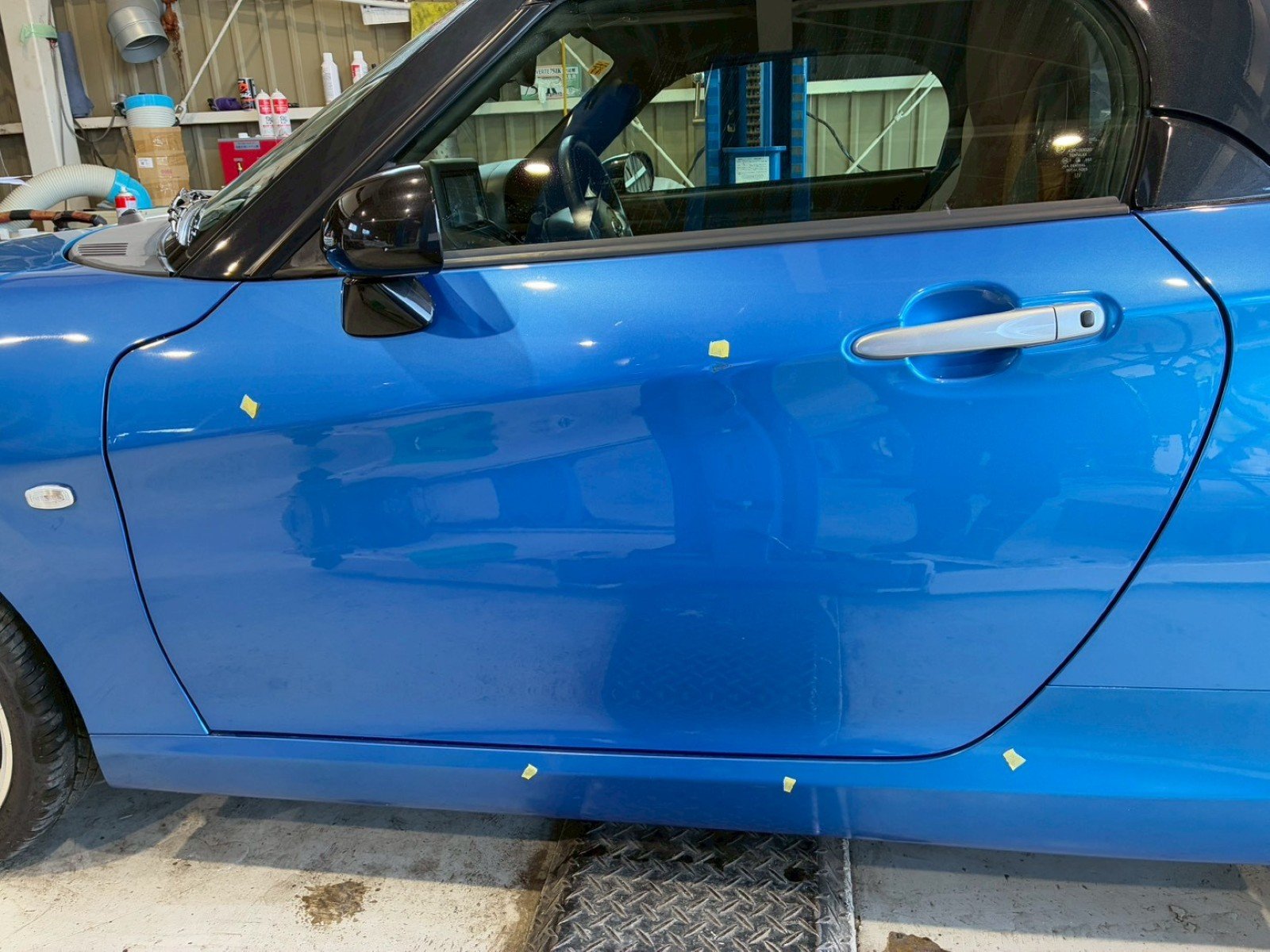
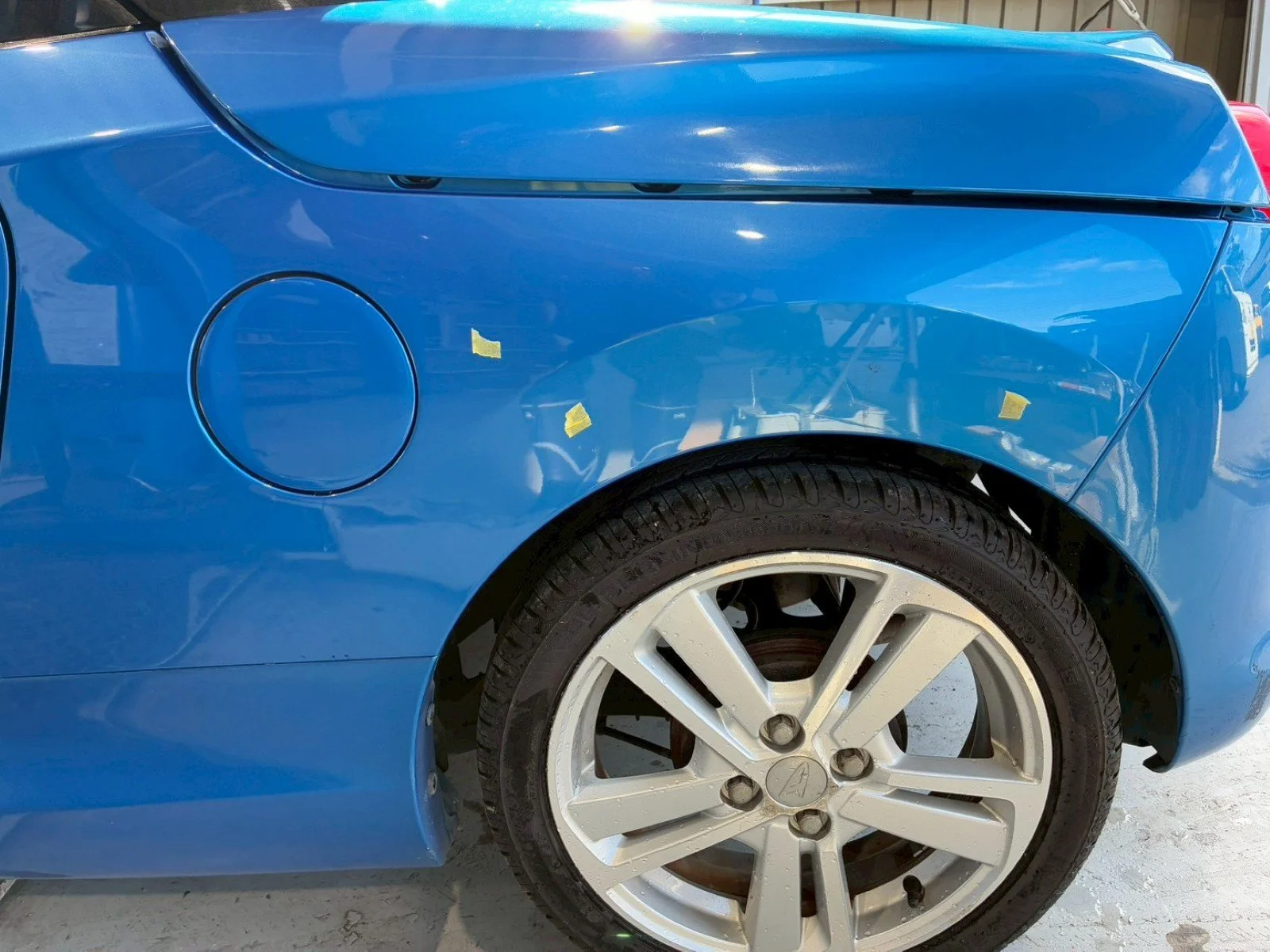
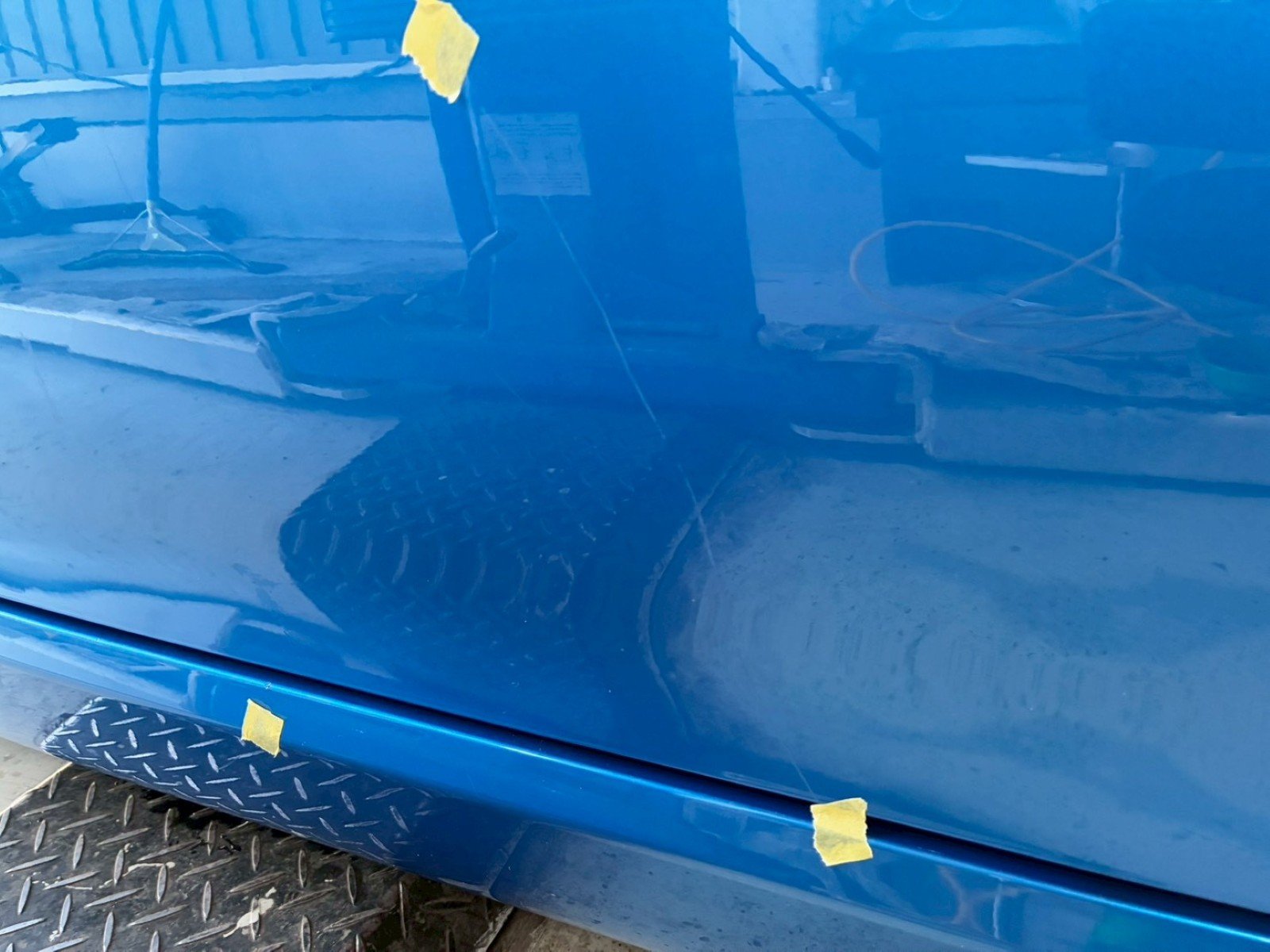
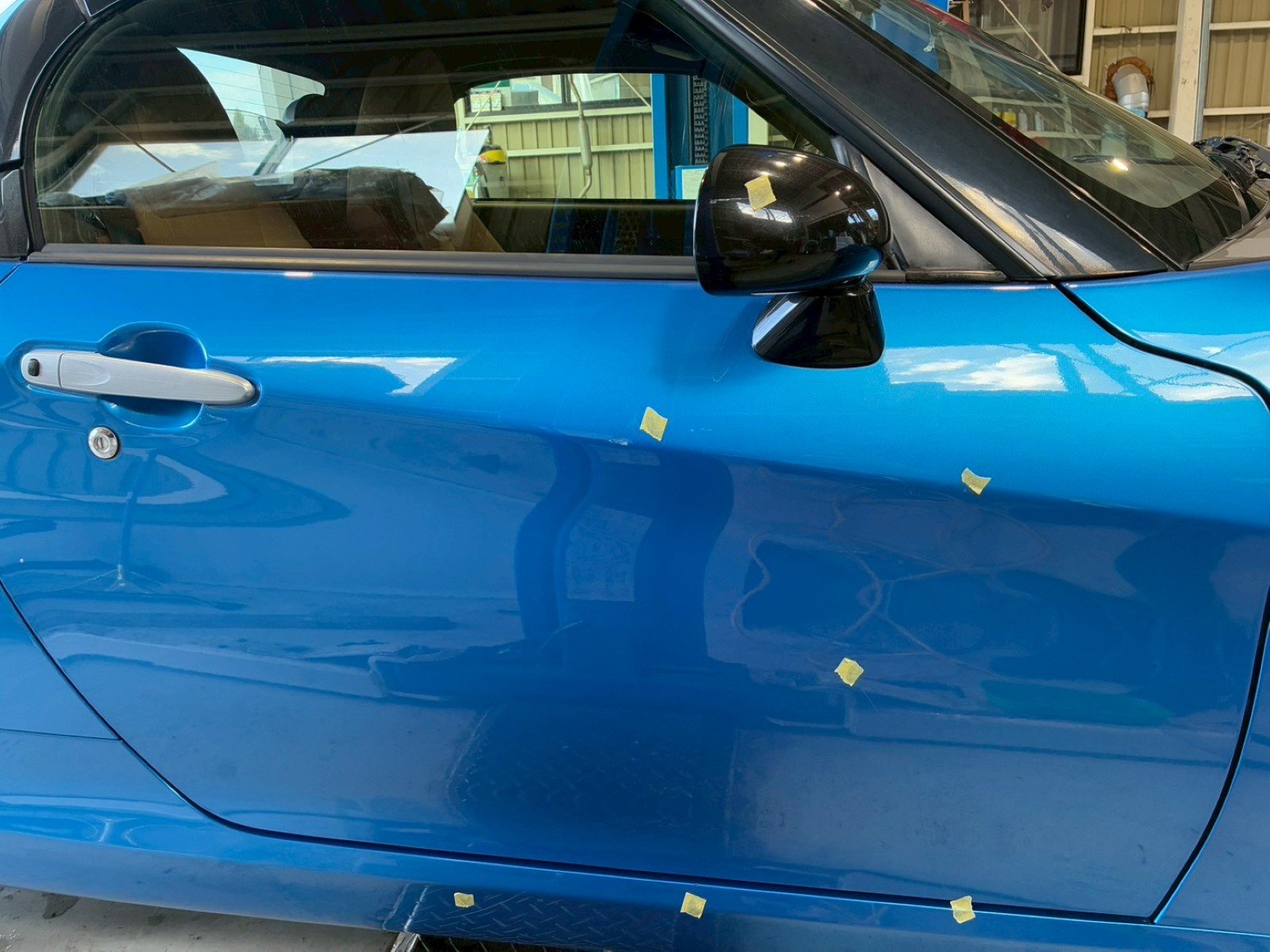
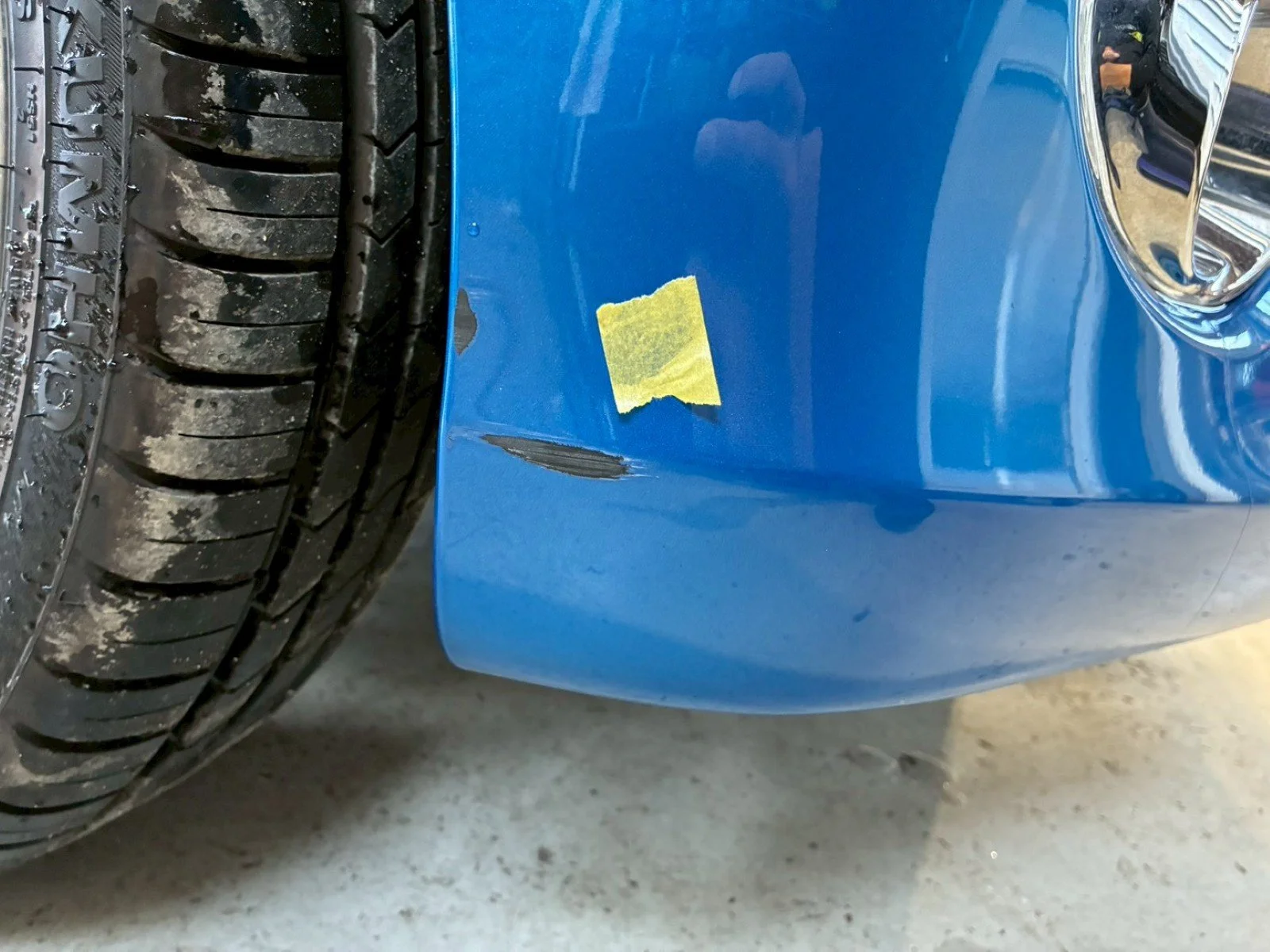
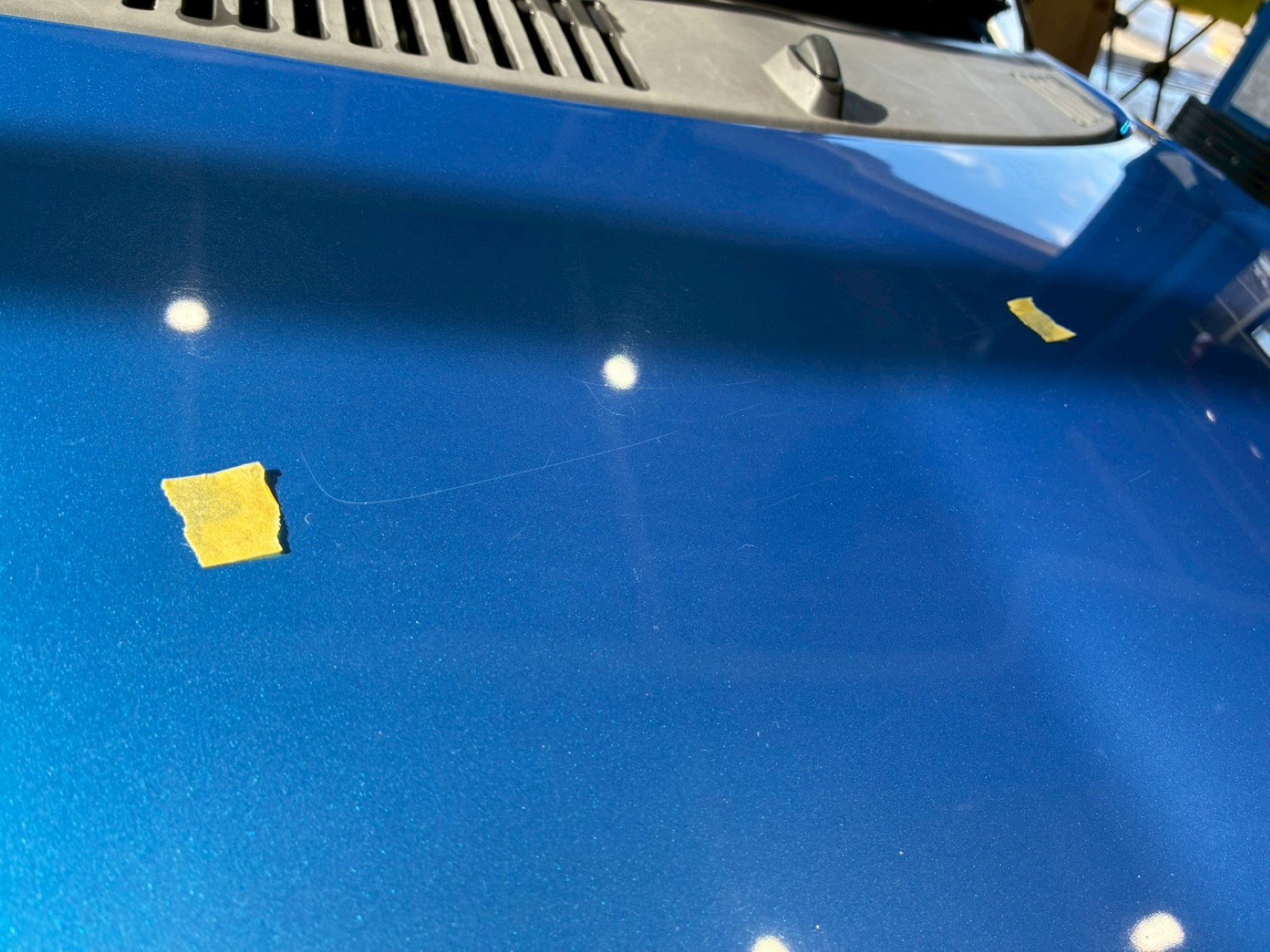
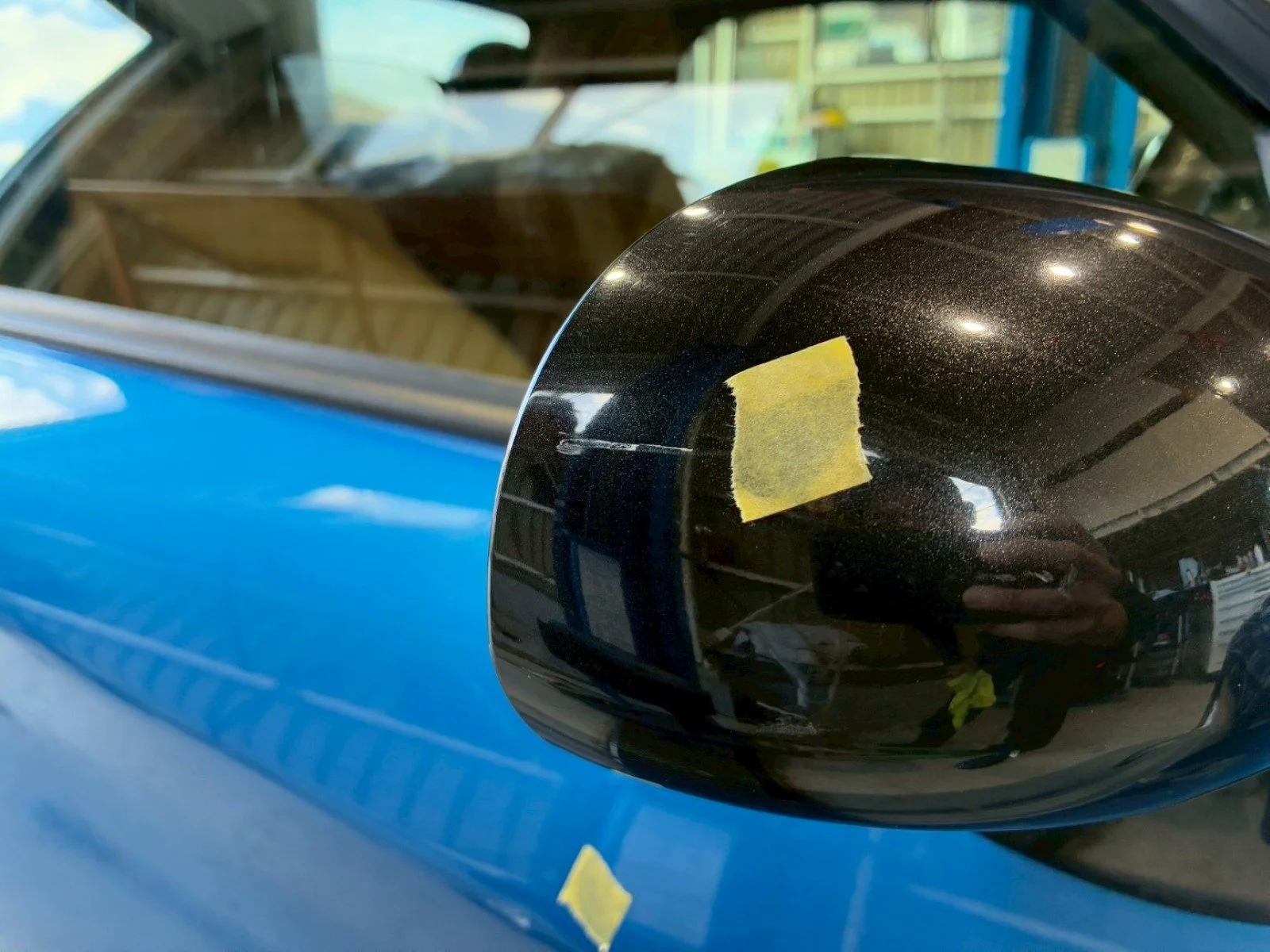
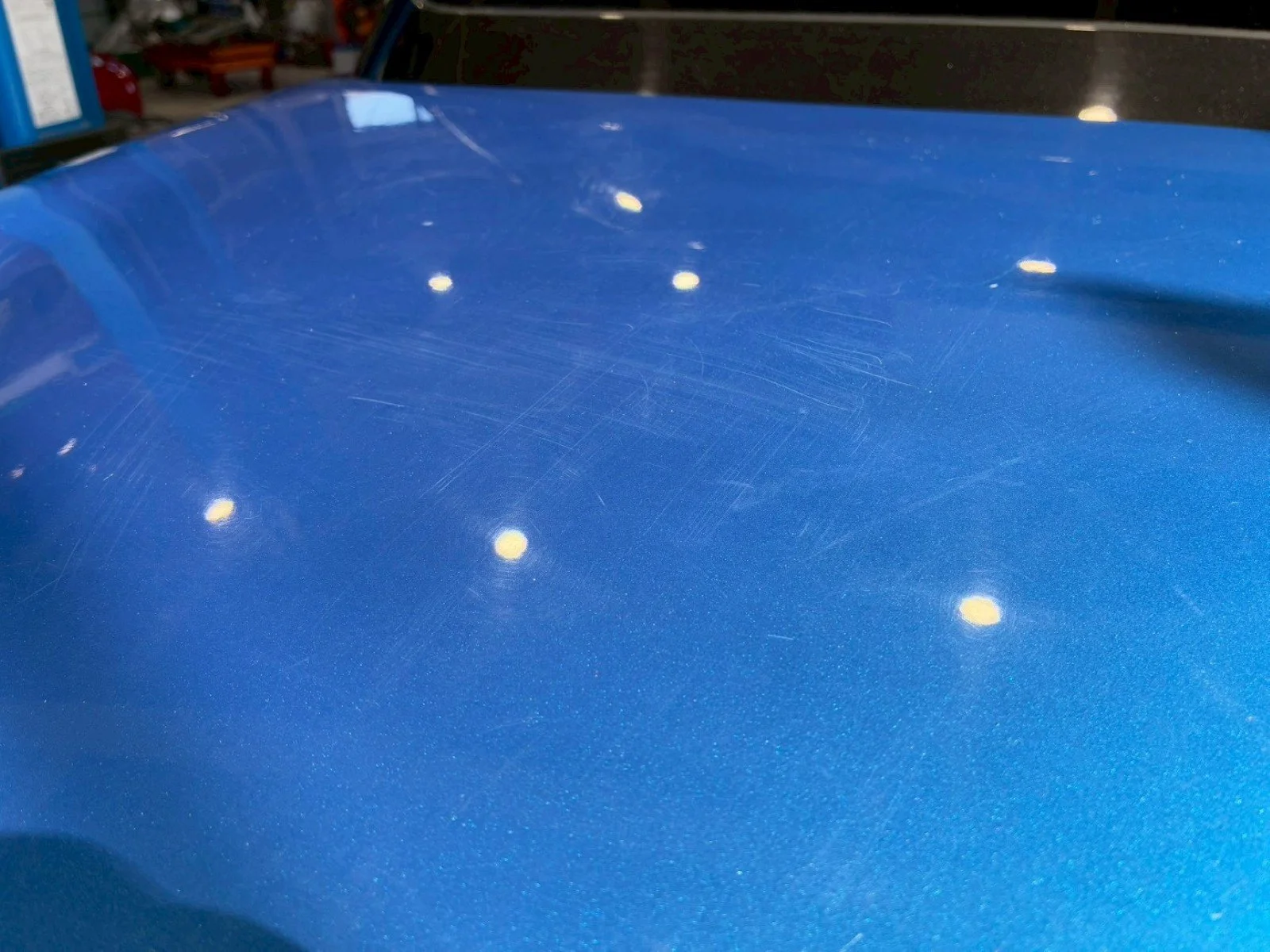
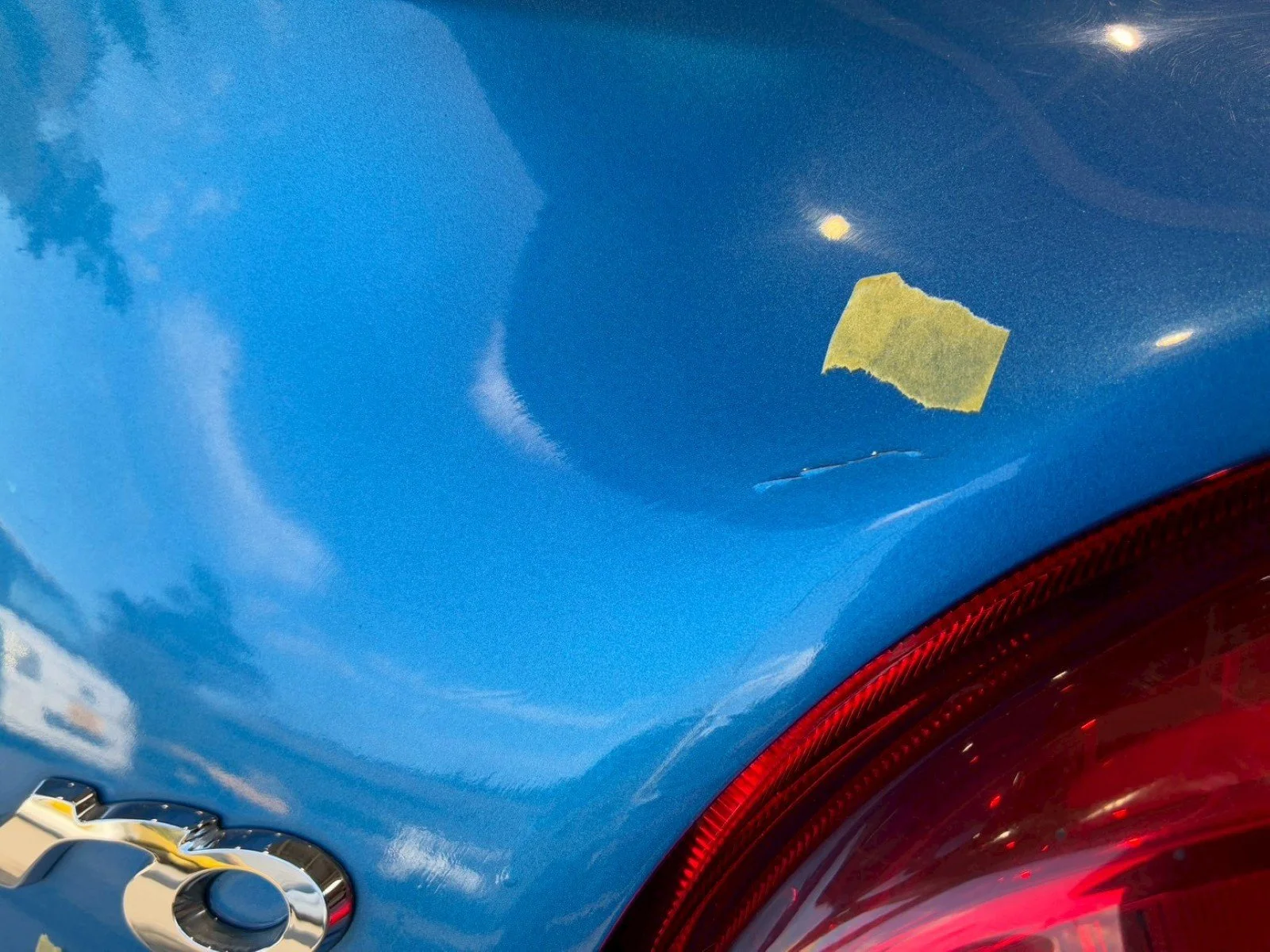
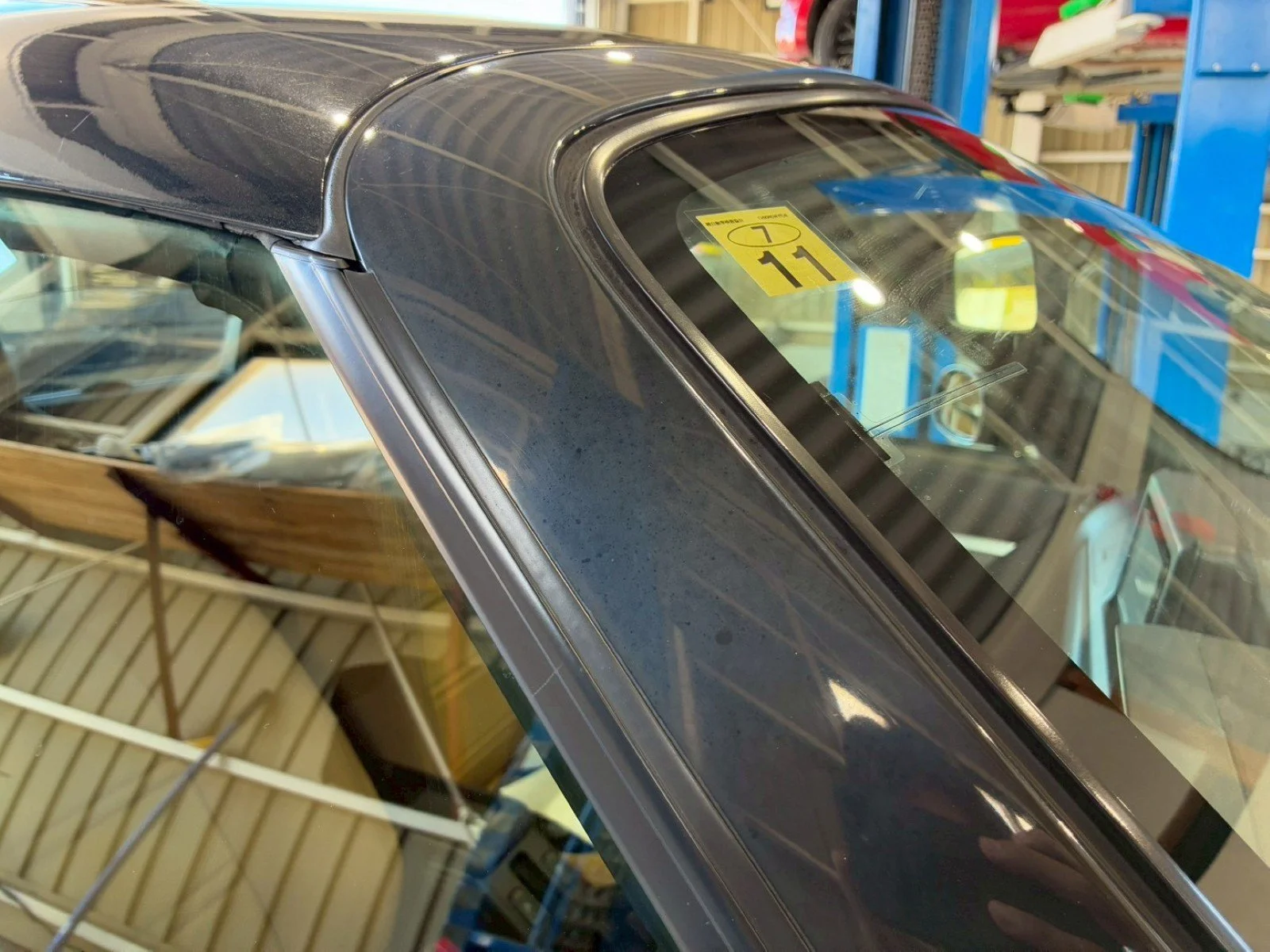
Yellow tape marks the additional scratches, dents, and surface defects identified after the Cero arrived at our partner’s facility for a closer inspection.
This distinction matters. A damage diagram may identify the principal defects while still failing to provide enough detail to calculate the complete preparation cost.
After inspecting the car more closely, our partner facility in Japan marked the additional defects onto a new version of the damage diagram. The blue annotations show how much more comprehensive the picture became once the car was examined beyond the original auction inspection.

The revised damage diagram. The additional blue markings record defects identified after the original auction assessment.
“Interior: Wear and Dirt”
The interior description was technically simple: wear and dirt.
The reality was rather more memorable.

“Wear and dirt” was accurate—but it did not fully communicate the condition a buyer would encounter on arrival.
The seats were extremely dirty, although a thorough deep clean would probably have recovered much of their appearance. We had already planned to replace them, so this did not alter the direction of the project. The original seats were eventually replaced with BRIDE seats.
The more disappointing discoveries were the deep scratches in the door panels and dashboard compartment.
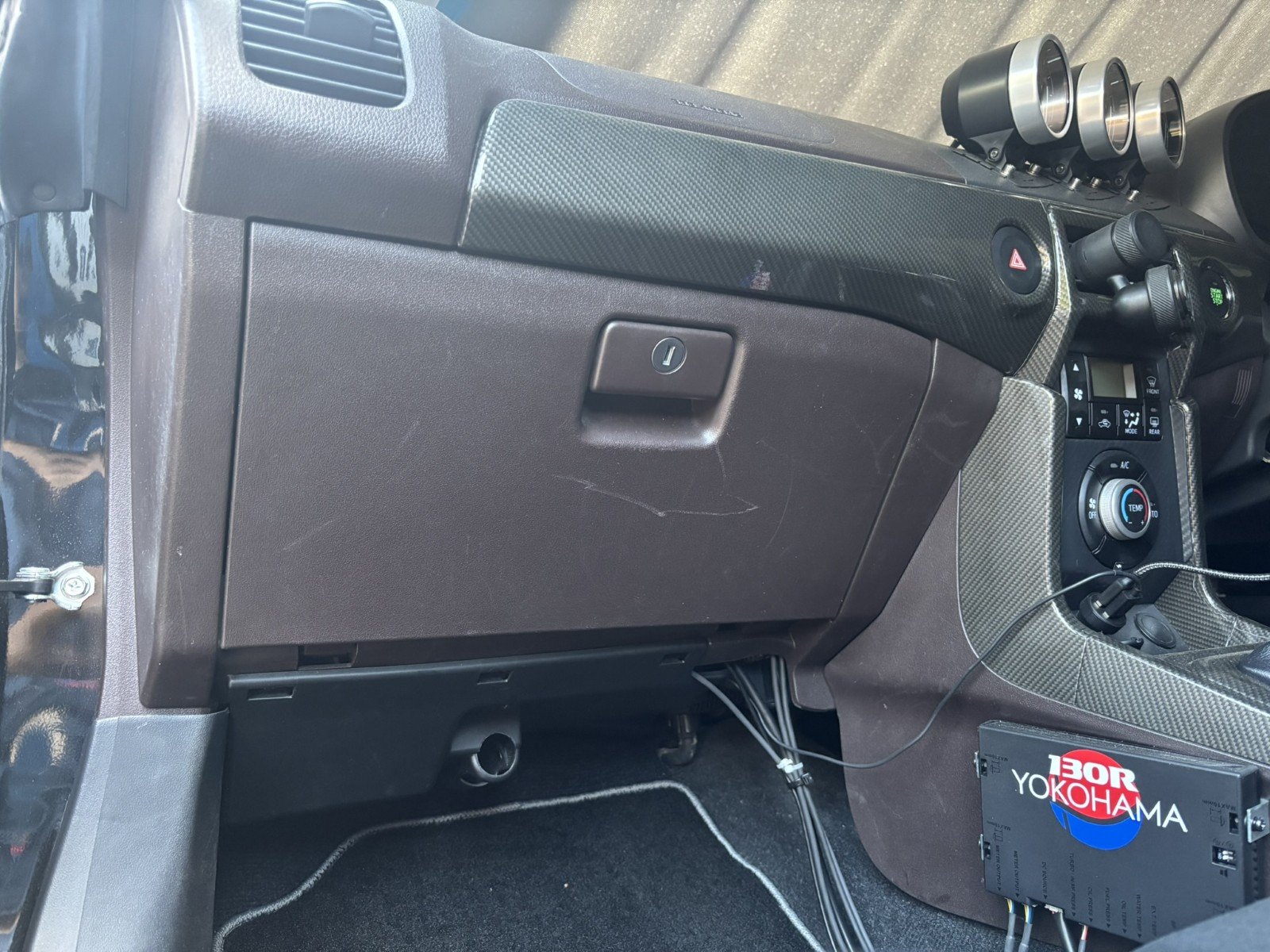

Unlike dirt or shallow paint marks, deep scratches in textured interior plastic cannot simply be polished away.
These components could also be replaced. In that sense, the damage is not impossible to repair. But replacement parts, sourcing, transport and installation all have a cost.
Unlike dirty upholstery, deep damage in textured interior plastic cannot simply be polished away. Those marks remain in the car today, and we still notice them when we drive it.
This is where the short wording on an auction sheet can create an expectation gap. “Wear and dirt” was not necessarily false, but it did not communicate what the next owner might feel when sitting inside the car for the first time.
Even when a lower grade has been accepted, the reality can still produce a small shock.
Five Ways to Recover a Poorer-Condition Car
Once the Cero arrived in Britain, we did not apply one solution to every defect. Each area required a different decision.
1. Replace
The cracked right rear lamp unit was replaced in Japan before shipping.
At our workshop, the original seats were replaced with BRIDE seats. Replacement was also available for the damaged interior panels, although the cost was not justified for this demonstrator at the time.

The heavily stained original seats were replaced as part of the demonstrator plan—not because replacement was the only possible recovery method.
2. Polish
Most of the exterior line scratches were removed through deep polishing and colour correction.
Japanese factory paint does not always leave the reflection as sharp as highly corrected show-car paint. Where sufficient clear coat remains, careful correction can remove or reduce shallow defects and substantially improve gloss and reflections.
This process does not fill scratches or cover them. It levels a small amount of the clear coat around them. That is also why repeated deep correction is not something to undertake indefinitely. Once a car has been properly corrected, the finish should be protected and maintained rather than repeatedly cut back.
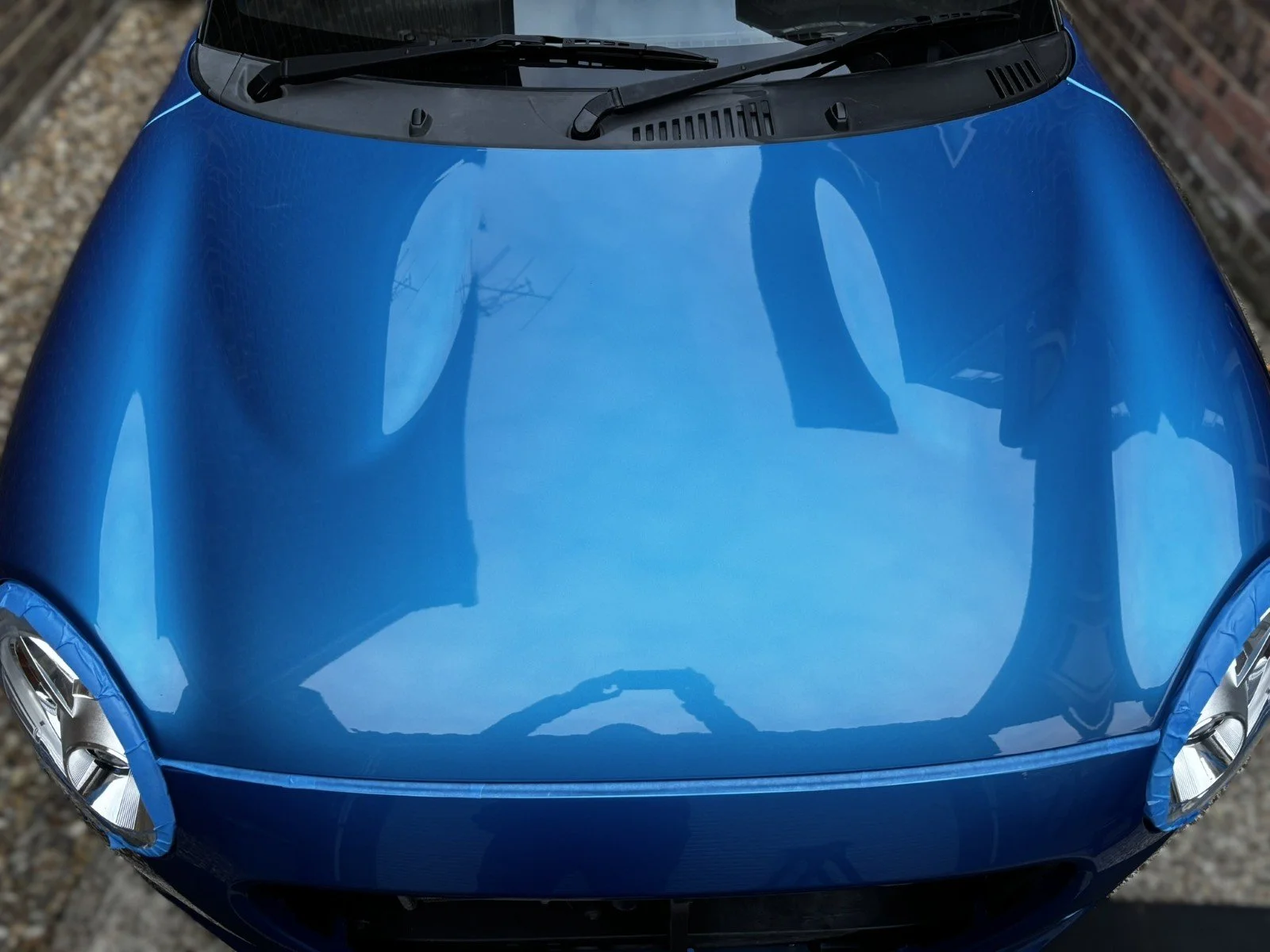
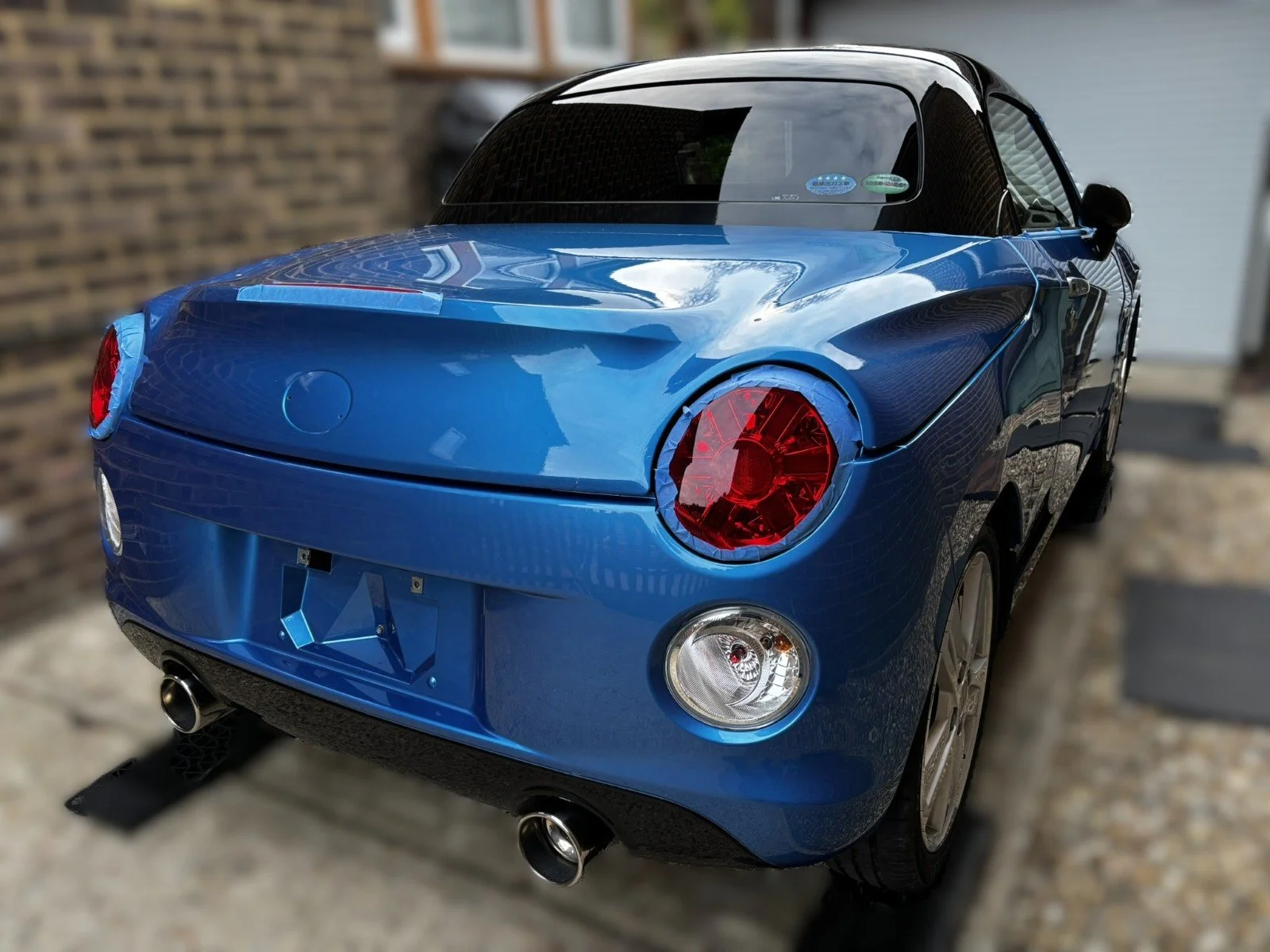
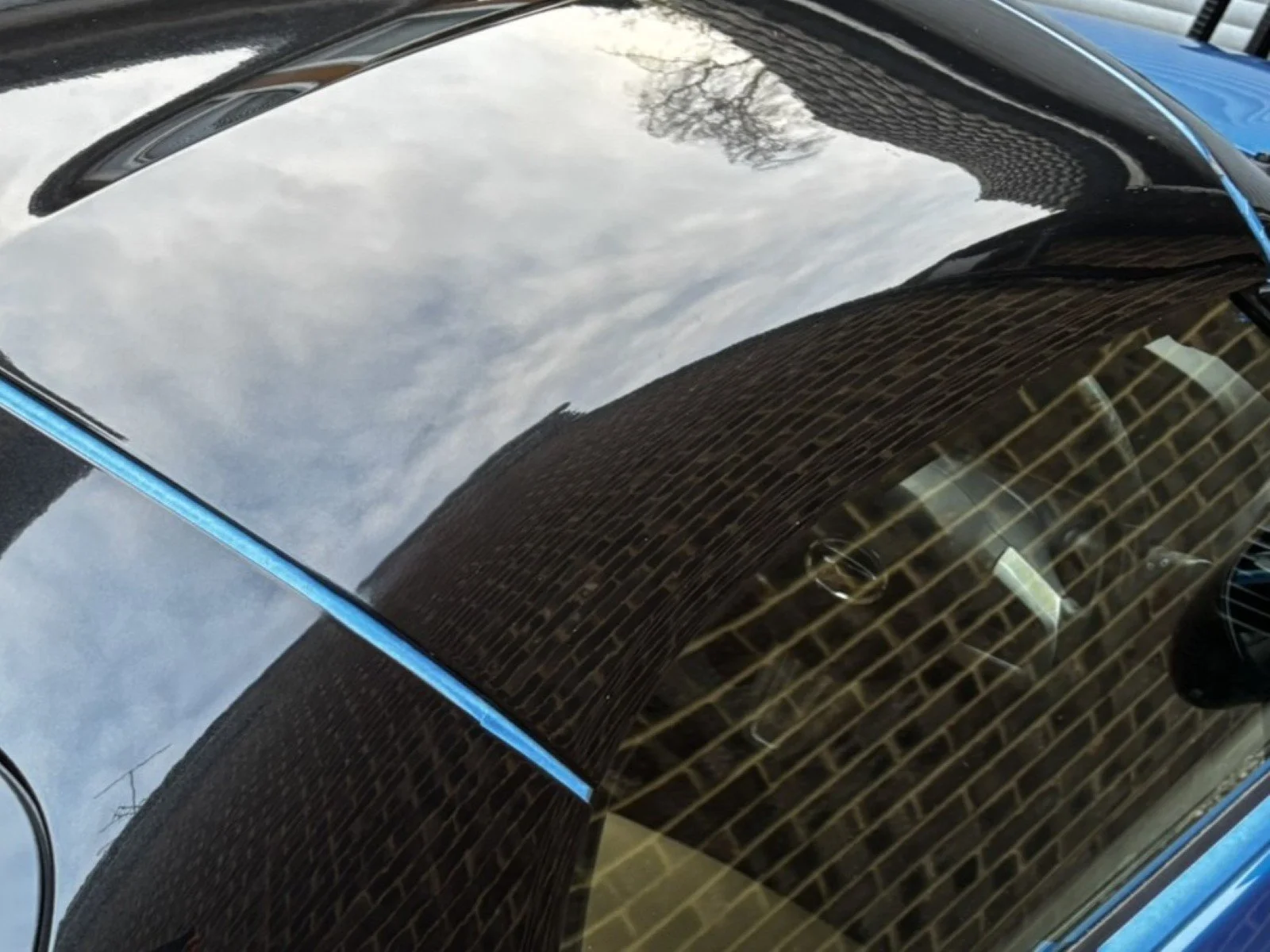
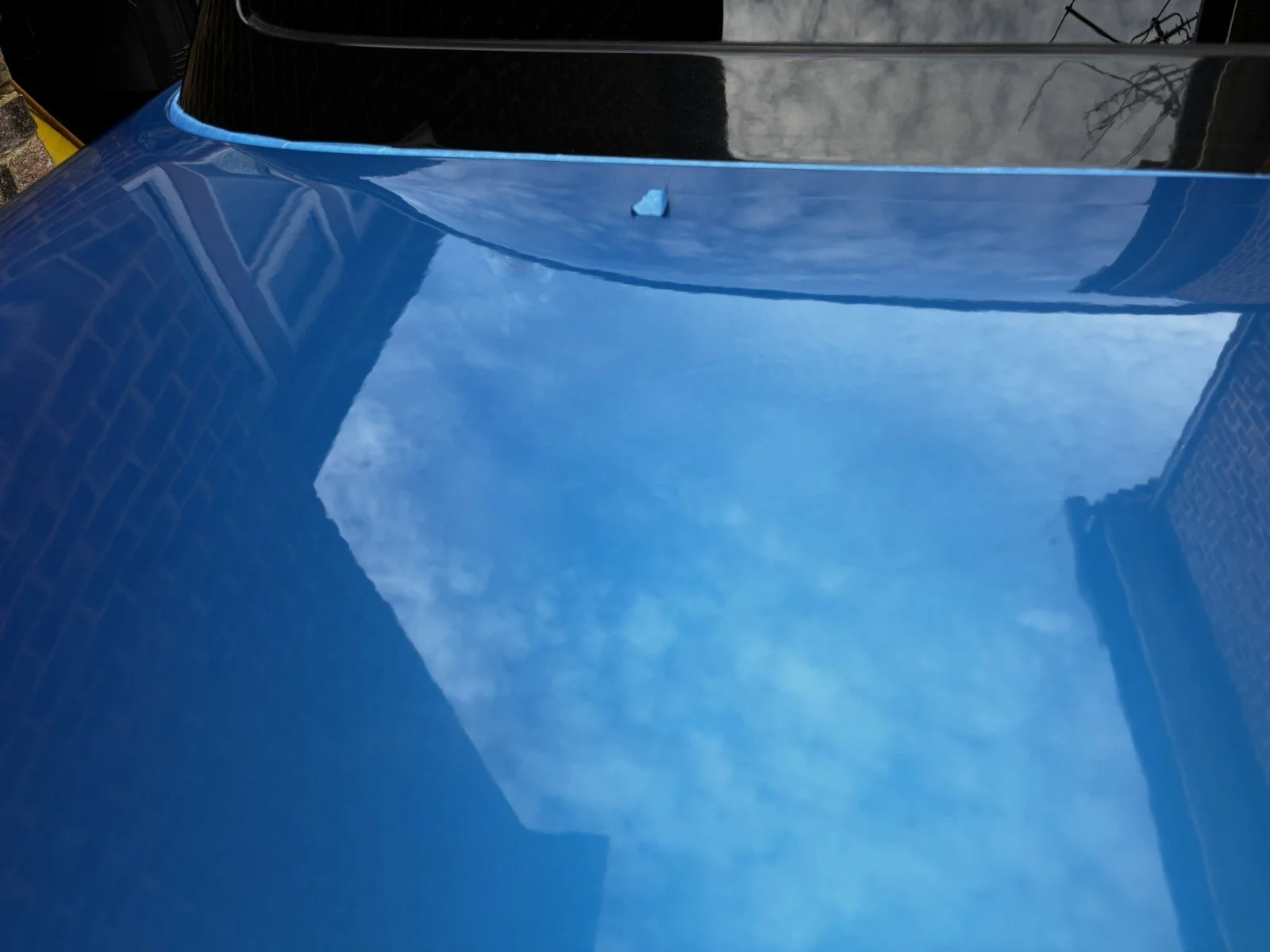
Shallow surface defects could be removed or substantially reduced through careful paint correction, without repainting the panel.
3. Repair
The damage around the left front wing and bumper was prepared, repaired and repainted at the TR imports UK workshop.
A dent in one door also contained a visible surface scratch. Removing the scratch did not remove the dent itself, but it reduced the contrast around it so effectively that the remaining depression became much less noticeable.
By contrast, one area of cracked bumper paint cannot be removed by polishing. The correct repair would involve cutting the damaged finish back and repainting the area. Because it is currently difficult to notice, we have chosen to leave it rather than carry out disproportionate work.


After preparation and repainting at TR imports UK, the previously damaged left front corner no longer defines the appearance of the car.
4. Upgrade
Some tired parts presented an opportunity to change the car rather than simply restore it.
The faded interior garnish pieces were removed and refinished with a carbon-effect wrap. The seats, wheels, aerodynamic components and other details were developed as part of the Cero’s new role.


Faded original garnish pieces were not simply cleaned. They were removed and refinished to become part of the demonstrator’s new interior direction.
This is one of the advantages of a demonstrator. The car does not need to return faithfully to its original specification. Necessary work can become part of a wider development plan.
5. Accept
Not every imperfection has to be repaired immediately.
The remaining scratches in the door panels and dashboard compartment could be addressed by replacing the affected components. The bumper paint crack could be repaired and repainted. We know the solutions.
For now, we have accepted them.
That decision is not the same as failing to notice a defect. Good vehicle preparation also involves deciding where the result justifies the cost.
We know the solutions. For now, we have accepted them.
From a 3.5C Auction Car to a Finished Demonstrator

The same Cero before and after preparation. The finished appearance was achieved through inspection, repair, paint correction, replacement parts and carefully selected upgrades—not through the auction purchase alone.
The finished Cero is now bright, glossy and visually coherent. Most people seeing it at a show would never guess how many defects were identified when the car was first inspected.
It demonstrates what can be achieved by combining:
detailed inspection
parts replacement
deep polishing and colour correction
body repair and repainting
carefully selected upgrades
experience in deciding what to repair and what to leave
The result may look like a transformation. But the shine was not included in the auction price.
Every improvement required parts, materials, equipment, judgement and working time.
Would We Buy It as Retail Stock?
No.
We bought this Cero because we wanted a demonstrator and development car. Its condition gave us opportunities to test our preparation methods, make changes and create something that represented our work.
That does not make it a sensible starting point for retail stock.
Virtually all of its cosmetic defects were repairable. The seats could be cleaned or replaced. The damaged interior panels could be replaced. The scratches could be polished. The dents and paint damage could be repaired.
The question is not whether the car can be restored.
The question is whether the total cost makes sense.
In this case, our commercial judgement is:
Purchase price of a 3.5C car + extensive recovery work
is greater than
purchase price of a 4.5B car + normal vehicle preparation.
In-house work is not free. Workshop hours spent recovering a poor starting point still have a cost and could otherwise be used preparing a better vehicle or working on a customer’s car.
A higher-grade car will still require inspection and preparation. However, more of that expenditure can be used to improve an already sound car instead of paying simply to recover neglected condition.
The cheapest car to buy is not necessarily the cheapest car to prepare.
Reducing the Expectation Gap
A buyer considering a direct import may believe that a low auction result provides room in the budget for a few repairs. Sometimes it does.
The difficulty is knowing whether “a few repairs” means polishing several shallow scratches—or replacing interior panels, repainting multiple sections and spending many workshop hours correcting a long list of smaller defects.
An additional inspection can sometimes be arranged at the auction venue before bidding. This can reduce uncertainty, particularly when specific areas need to be checked. However, the inspector still has limited time, and the usefulness of the report depends on the questions asked, the available lighting and how successfully another person can communicate the severity of a defect.
It reduces risk. It does not reproduce the experience of standing beside the car yourself.
This is also part of the value of buying a vehicle that is already in British stock. You can see the paint from different angles, sit inside the car, touch the materials and decide whether the remaining imperfections are acceptable before committing to the purchase.
With a bespoke import, the alternative is to establish the buyer’s priorities and tolerance in advance, then select the vehicle using more than the winning bid and headline grade. The auction operator, venue, inspection detail and likely preparation work all become part of the decision.
Conclusion
An auction sheet is valuable evidence, but it is not a promise that every scratch, dent or damaged interior surface has been recorded.
Learning the symbols helps. Understanding the limitations of the inspection helps even more.
Our 3.5C Cero was the right purchase for a demonstrator because we deliberately wanted a car that could be recovered, changed and developed. The finished result proves what our workshop can achieve.
It also proves something less glamorous but more useful:
Having the ability to repair a poor car does not automatically make it the right car to buy.
For retail stock, we would rather begin with a better vehicle, carry out the necessary inspection and preparation, and reduce both the total recovery cost and the risk of disappointment for its next owner.
The auction grade tells you where the car starts—not what it will cost to finish.
Choose the Starting Point That Suits You
If you would like us to search for a car in Japan around your priorities, condition expectations and total budget, speak to us before bidding.
If you prefer to inspect a prepared car in Britain before making your decision, view our current UK stock.