
Replacing the Crank Pulley for Honda S2000 - A Simple Job That Became Part of a Much Bigger Story
A Simple Job That Became Part of a Much Bigger Story
A crank pulley replacement sounds like a simple maintenance job.
In reality, this one became part of a much bigger story.
There are usually three reasons why S2000 owners replace the crank pulley.
Reducing or increasing rotational mass to change engine response.
Replacing an ageing pulley as the bonded rubber damper deteriorates over time.
Or simply because they have to remove one of the tightest bolts on the entire car.
Ironically, the bolt turned out to be the most memorable part of this job.
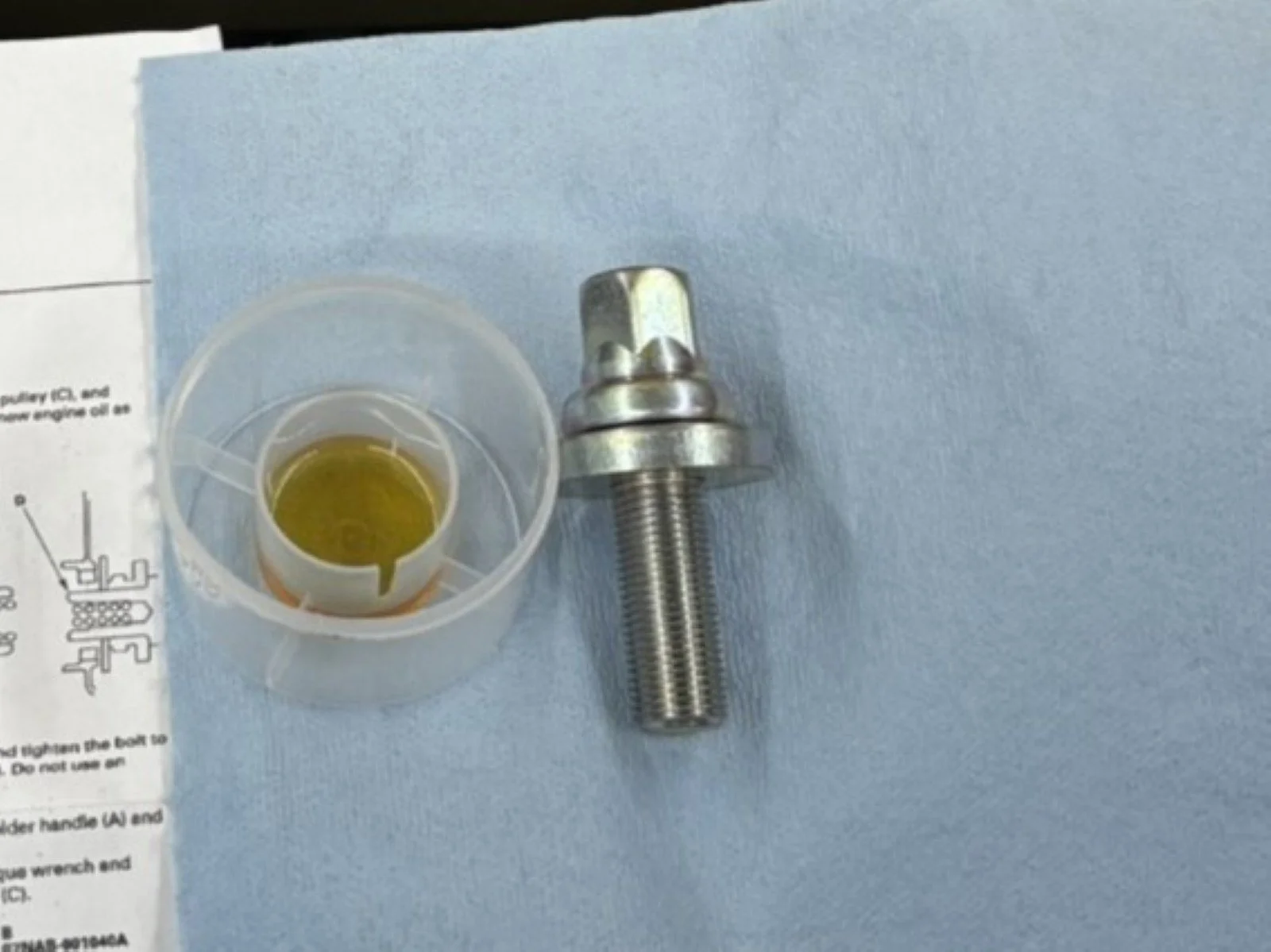
During the work, I managed to record the exact moment the crank bolt finally came loose on video. I also filmed the new stock bolt being tightened to Honda's specified 260 Nm.


Why We Replaced It
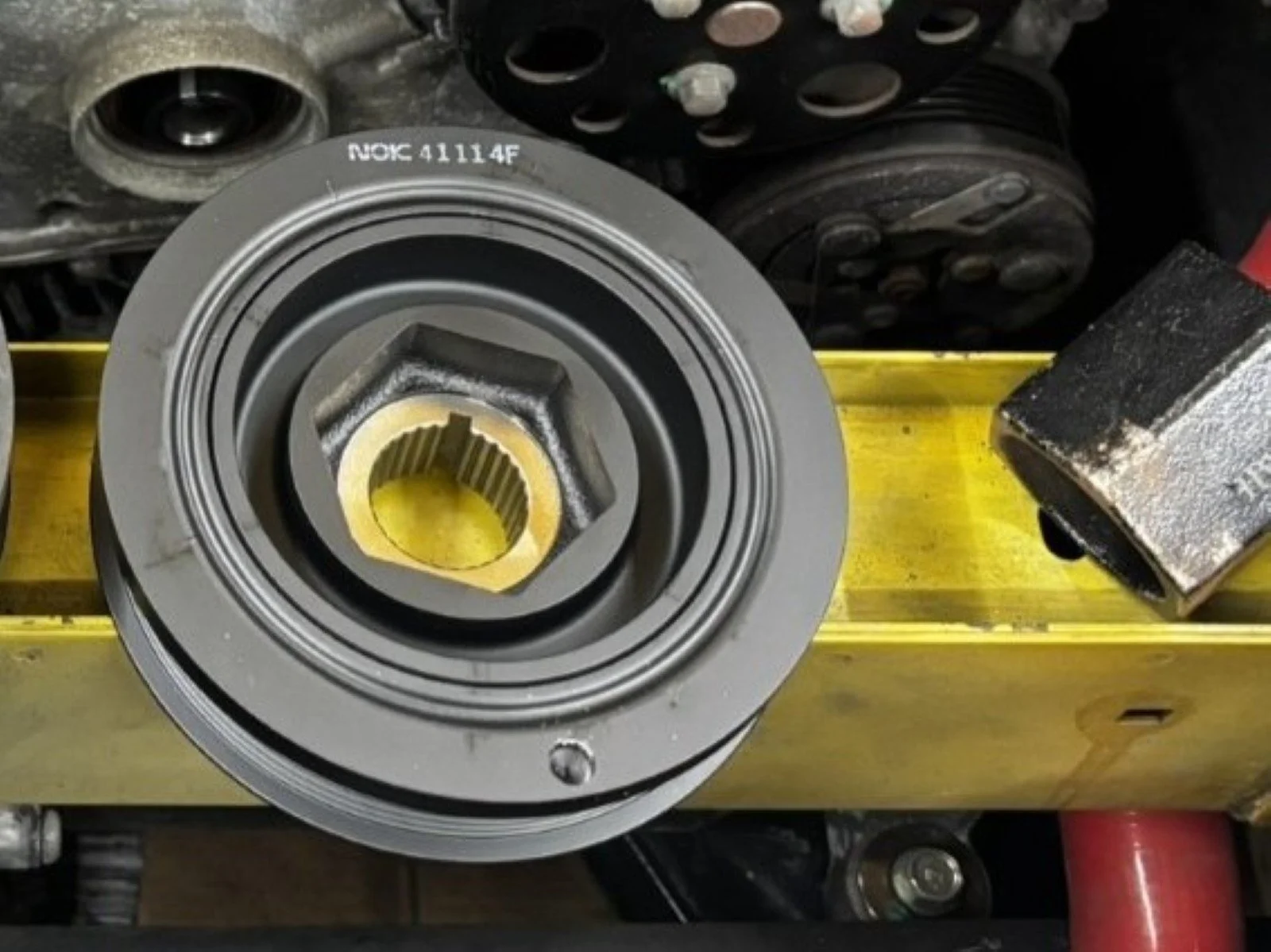
A few weeks earlier, I had been working on one of our customers' S2000s, which suffered from a resonance noise coming from the front of the engine. That job required a new stock crank pulley, a new bolt and the special holding tool.
At the time, our own demo S2000 was completely quiet.
Then something changed.
As I mentioned recently on Instagram and YouTube, during the drive home from Castle Combe, our demo car developed a resonance noise.
That immediately caught my attention.
Was it the same problem?


Diagnosing The Noise
Finding the source wasn't straightforward.
Several possible causes had to be investigated.
Front hub bearings
Crank pulley
Wheel balance
Front tyres
The hub bearings showed no signs of failure or grease leakage.
The crank pulley wasn't making exactly the same noise as the customer's car, but after twenty years and around 90,000 miles, replacing it felt like sensible preventative maintenance anyway.
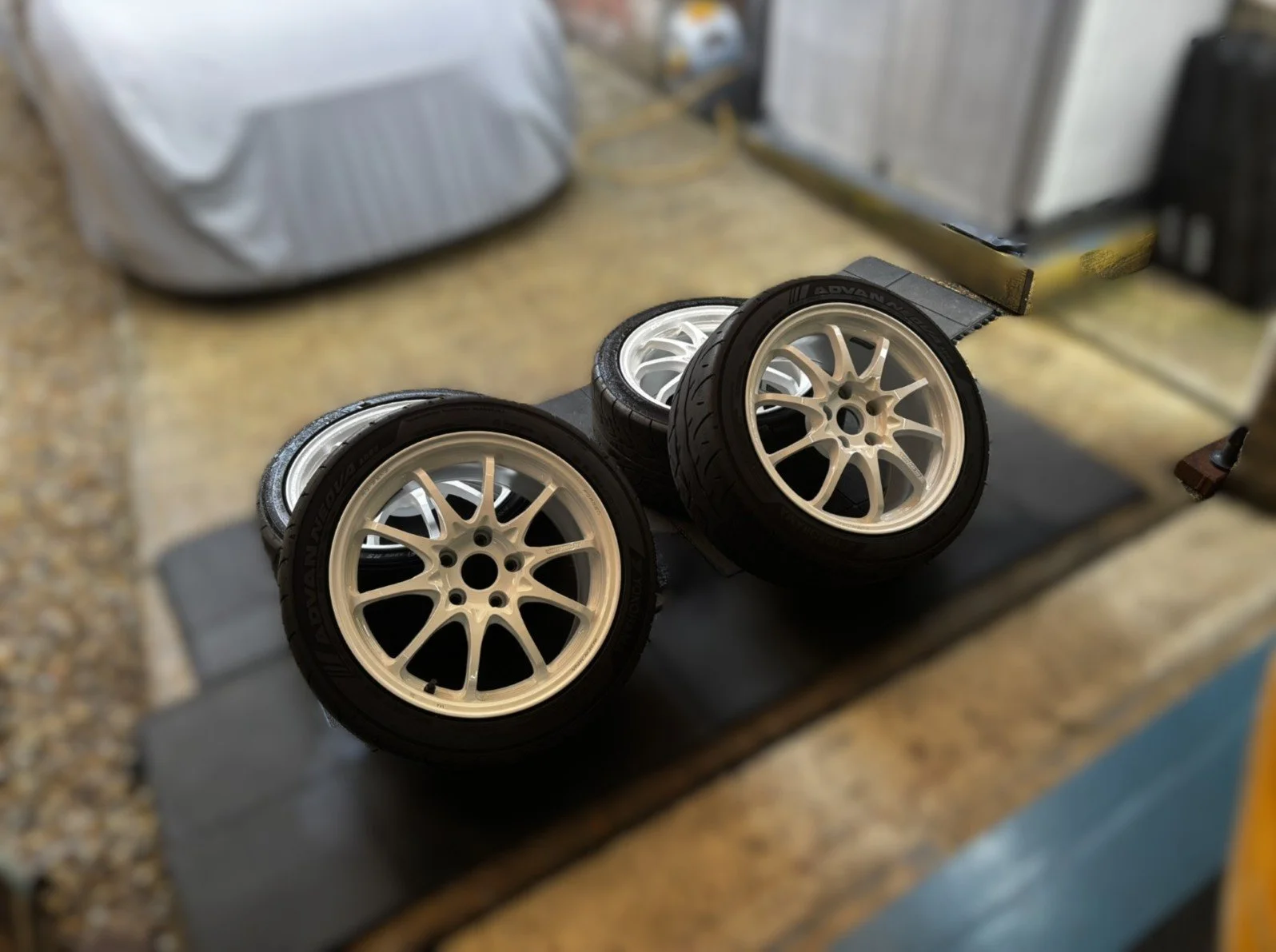
In the end, the resonance was actually caused by the front tyres.
Replacing the worn Advan AD08RS (245/40R17) completely eliminated the vibration.
Even so, replacing the crank pulley turned out not to be wasted work.



The Most Nerve-Wracking Moment
Mechanically, this isn't a complicated job.
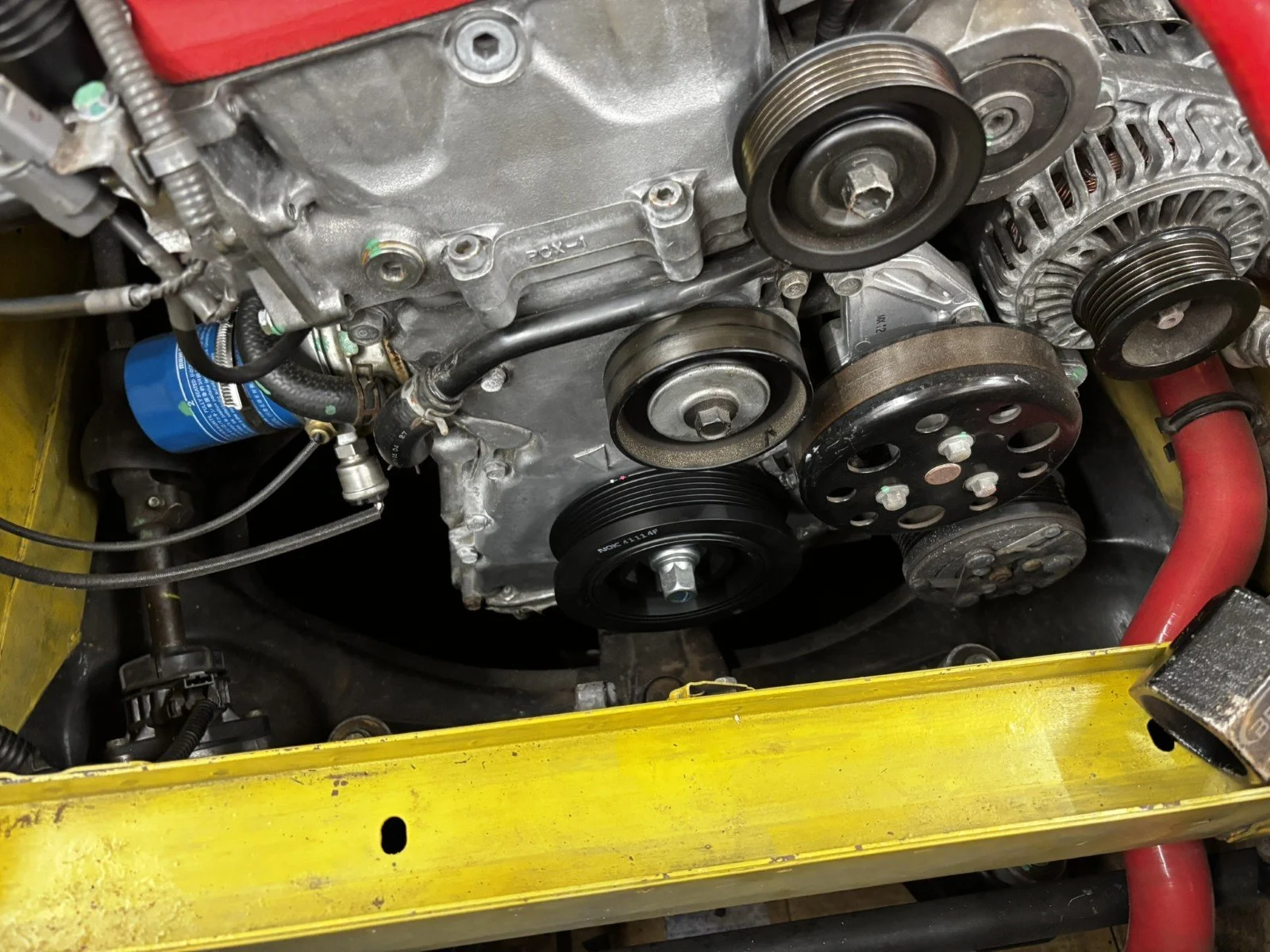
The air cleaner assembly is removed to create space in front of the engine, then a special holding tool is fitted before attacking one very stubborn bolt.
Honda tightened that bolt to 260 Nm.
Twenty years later...
It felt even tighter.
The breaker bar bent further and further.
For a moment, I genuinely wondered whether the tool would break before the bolt finally moved.
Just in case, I even covered the surrounding area with an old curtain to protect myself if anything suddenly let go.
Fortunately...
The bolt lost the battle.
The exact moment the crank bolt finally comes loose.
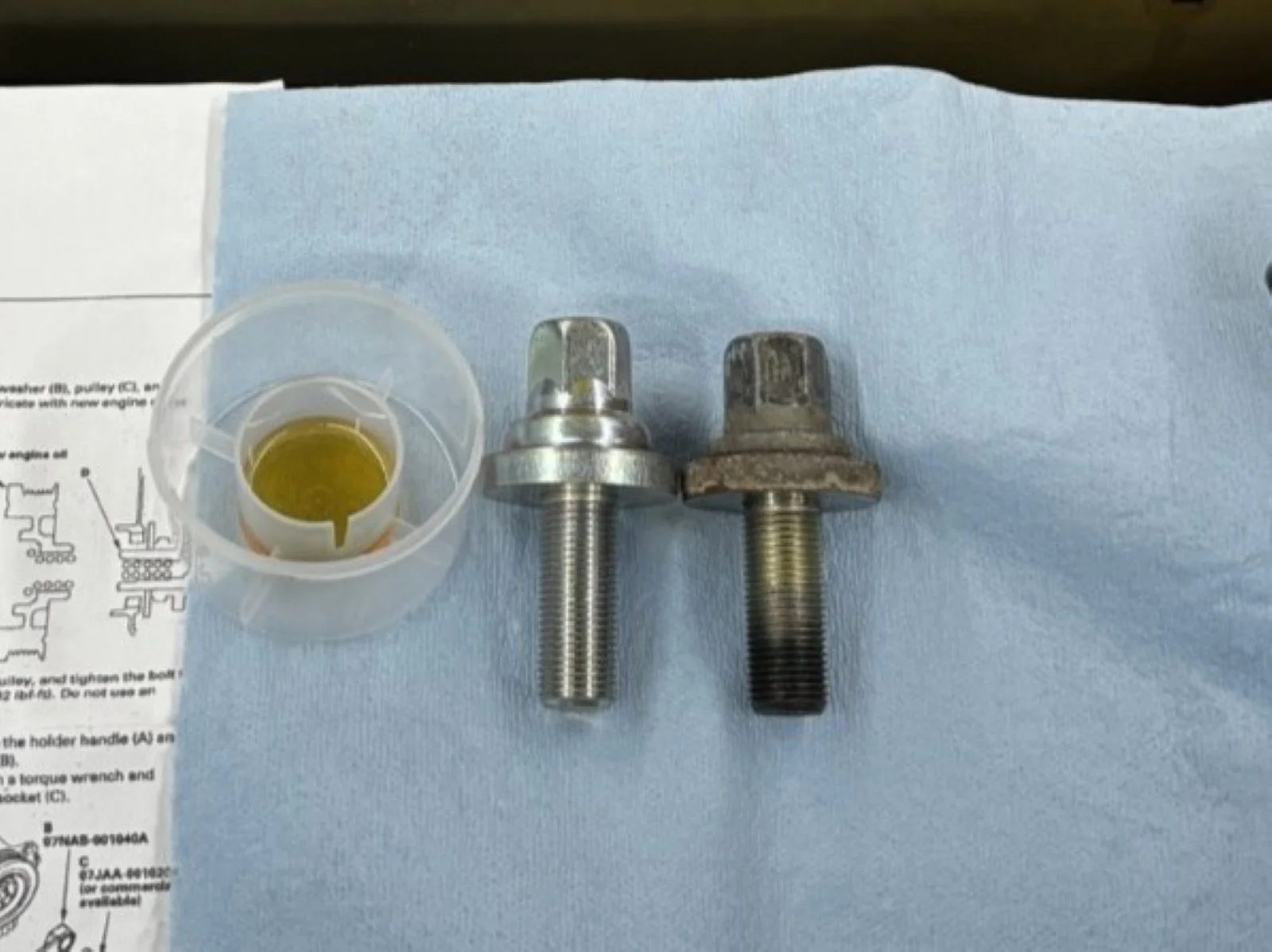
New vs Old
Visually, the old pulley didn't look particularly bad.
The bonded rubber still appeared intact.
But appearance can be deceptive.
After twenty years of absorbing engine vibrations, its damping performance is almost certainly no longer what it once was.


The Result
The resonance noise itself disappeared after replacing the tyres.
That mystery had been solved.
The crank pulley, however, produced an unexpected bonus.
The engine immediately felt smoother.
Not dramatically faster.
Not louder.
Just smoother.
The entire engine seemed more refined and "silky", suggesting that small amounts of vibration had gradually developed over the years without being obvious.

Sometimes Diagnostics Tell A Better Story
One of the biggest lessons from this job is that diagnosing strange noises is rarely straightforward.
Sometimes the part you replace isn't actually the part that caused the symptom.
But replacing it can still improve the car.
That's why I rarely rush to conclusions.
I prefer to investigate each possibility, eliminate them one by one, and understand what the car is trying to tell me.
For me, that's one of the most enjoyable parts of owning and developing an S2000.
Need fitting? Contact us.